
Photojournalist Says Most People Missed These 6 Details About Vanity Fair’s Pictures Of Trump’s Inner Circle

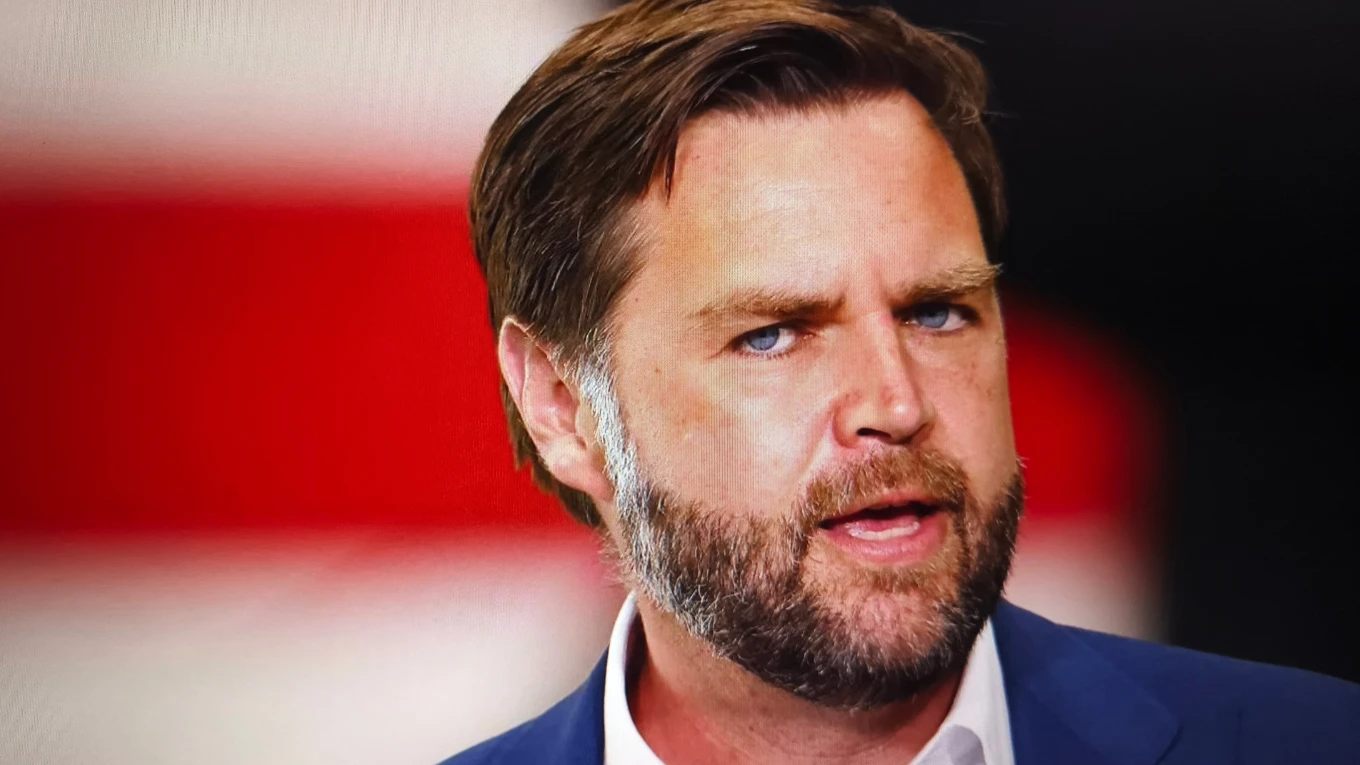
On Tuesday, Vanity Fair published its two-part interview with President Donald Trump’s Chief of Staff, Susie Wiles. While talk initially swirled around the revelations from Wiles’ interview, it quickly turned to the photos that were included. Photojournalist Christopher Anderson captured not just Wiles for the piece, but other members of the president’s inner circle, including Marco Rubio, JD Vance, and Stephen Miller.
Of course, all people really wanted to talk about were the discoveries that seemed more suitable for a tabloid than Vanity Fair. (Were those injection marks on Karoline Leavitt’s upper lip?) In the race to find the best fodder for gossip, many of the pictures were overlooked altogether. But Kendall Brown, a former photojournalist herself, picked up on some very telling details. She shared the things we all should have been paying attention to in those pictures, but probably weren’t, in a TikTok video.
Most people missed these 6 subtle, yet powerful details about Vanity Fair’s pictures of Trump’s inner circle:
1. Why the group shot was split right down the middle
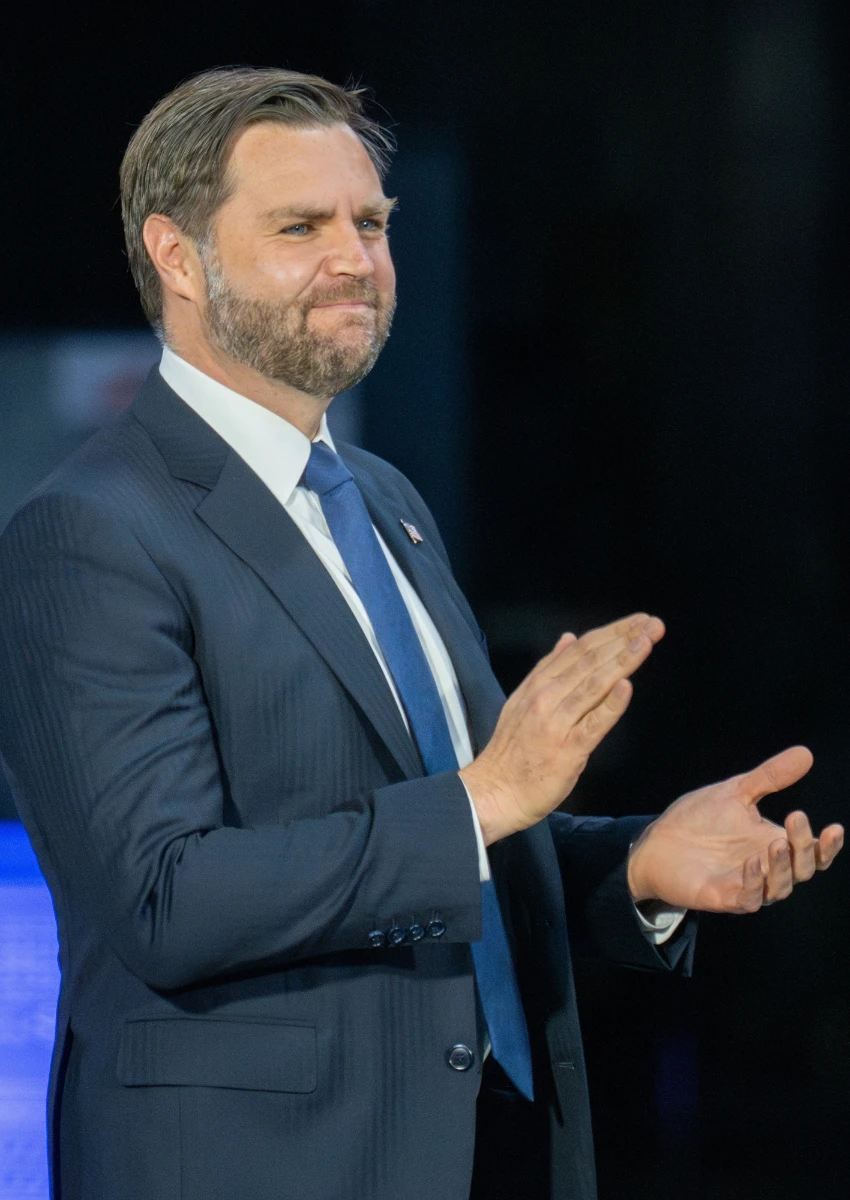
Many of the photos for the piece were individual shots of the different members of President Trump’s inner circle, but there were a few group shots, including one particularly notable one that was split down the middle, leaving Marco Rubio, JD Vance, Stephen Miller, and Dan Scavino on the left and Susie Wiles, Karoline Leavitt, James Blair, and, interestingly, JD Vance once again on the right.
“The fact that they are depicted as being in two separate factions,” Brown argued. “Specifically, I think that they are grouped by the people who are, um, who are most gung ho about aggressive immigration action, and the ones that are not as gung ho for it.”
And, what are we to make of Vance’s double appearance? “Notably, JD Vance is in both sides, and there are two faces to him in this photograph,” Brown said. “I don’t think that is an accident. I think this photo directly shows JD Vance has two faces.”
2. What the artwork behind Stephen Miller meant
lev radin | Shutterstock
In another shot, Miller is seated on a couch with a large painting partially visible on the wall behind him. “So the painting that he is sitting under is a painting called ‘Indian Encampment on the Platte River’ by Thomas Worthington Whittredge,” Brown explained. “Whittredge was an Impressionist artist, and he was notable because his subject matter was very, very different for the time.”
“So you have to understand that in the time when this painting was made, Native American communities were still very much depicted as, you know, dangerous savages that represented a threat to white people,” she continued. “Whittredge … did focus very heavily on Native American communities in his art, and universally across the board, he always depicted those communities as peacefully interacting with their natural surroundings, as representing no threat at all, and always set back from the viewer, which he would have presumed to be a white person.”
Miller is the president’s Deputy Chief of Staff for Policy and Homeland Security Advisor. Vanity Fair’s Chris Whipple described him as “the tip of the spear for the president’s weaponized roundups of immigrants.” The painting was certainly an interesting choice, then. As Brown said, “The fact that they put Stephen Miller underneath a painting by an artist pushing back against white people who demonize brown-skinned people … I’m not saying that it’s on purpose, but I am saying I don’t think it was accidental.”
3. What the artwork behind Karoline Leavitt meant
 Joshua Sukoff | Shutterstock
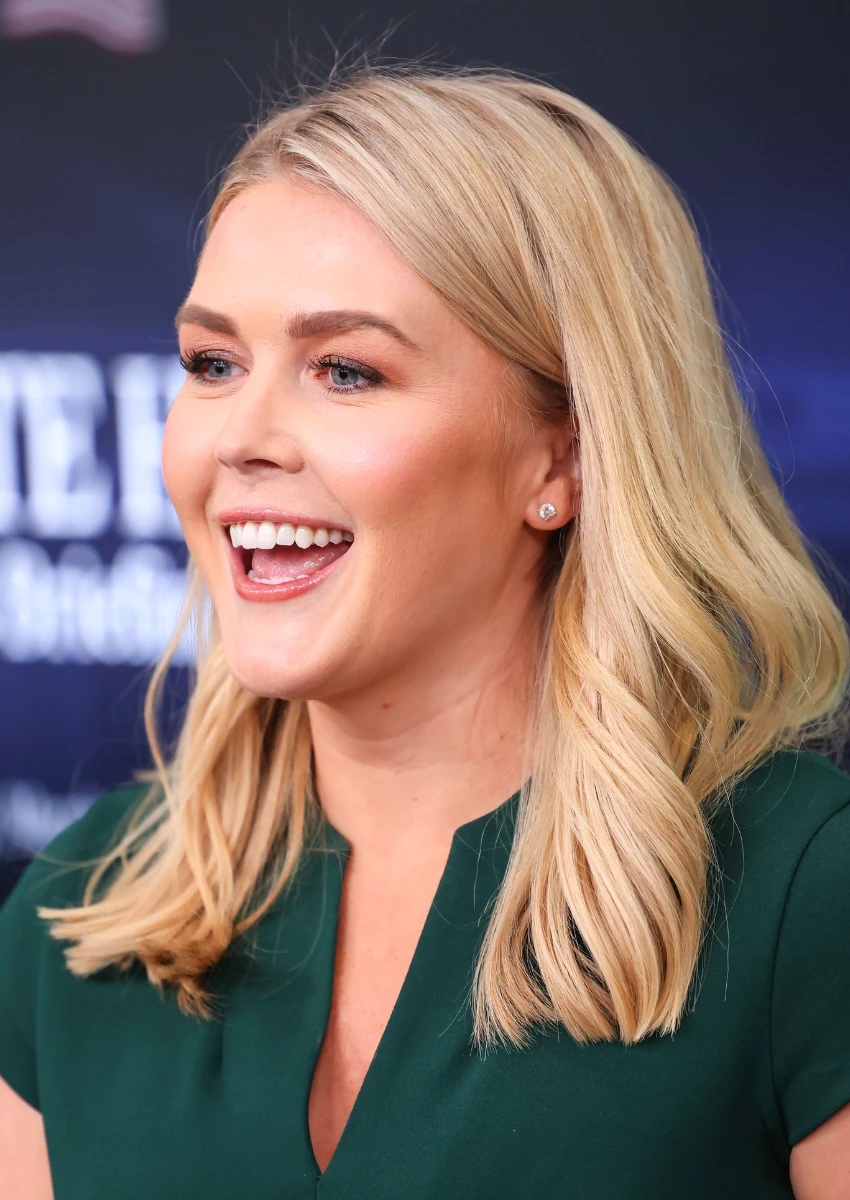
In another picture, Leavitt, the White House Press Secretary, struck a power pose in front of a mantle that had another painting hanging on the wall above it. “She is standing in front of a painting by a female artist named Berthe Morisot, one of the founding artists of the Impressionist movement,” Brown shared. “But unlike her male counterparts who also co-founded the Impressionist movement, she has been largely forgotten by most of the public, largely due to her gender.”
One could argue that Anderson was trying to send a message about Leavitt based on that information alone, but there is more to the painting. “I thought it was interesting that this painting, it’s a painting of peonies,” Brown said. “Peonies have an incredibly short bloom time. They have an incredibly short shelf life before they go bad, which could be a metaphor.”
There’s no evidence to suggest that Leavitt will be leaving her role in the administration anytime soon. In fact, according to Politico, she has been a fixture in conservative politics for some time now. However, press secretaries don’t have a great track record of holding up long under the intense scrutiny they face.
Things are particularly tense under Leavitt. New York Times chief White House correspondent Peter Baker told Politico that what he’s seeing in the briefing room “goes beyond anything that is traditional to the point of open hostility, and mockery and disparagement in a way that’s meant for the larger audience, not for the people in the room.” Maybe Anderson was trying to predict the future before anyone else did.
4. Why the photographer chose to use uncomfortably close-up images
One of the things that drew people’s attention the quickest in the photo shoot for the piece was portraits of each member of the inner circle at an extremely close-up angle. “Obviously, all of the individual portraits are important,” Brown said. “This photo of Karoline Leavitt, it is one of the most unfortunate things I think I’ve ever seen in my entire life. The fact that you can see all of the injection marks along the top lip. Ugh, definitely not an accident. Definitely uncomfortable.”
The possibility that Leavitt had some kind of cosmetic work done on her lips took over the conversation surrounding the photos, but that wasn’t the only one that evoked a feeling of discomfort. “But the fact that most of the portraits are cropped in so close, I think, is meant to create visual tension and, like, a feeling of uncomfortableness for the viewer,” Brown added.
5. Why Marco Rubio is never looking at the camera
 Maxim Elramsisy | Shutterstock
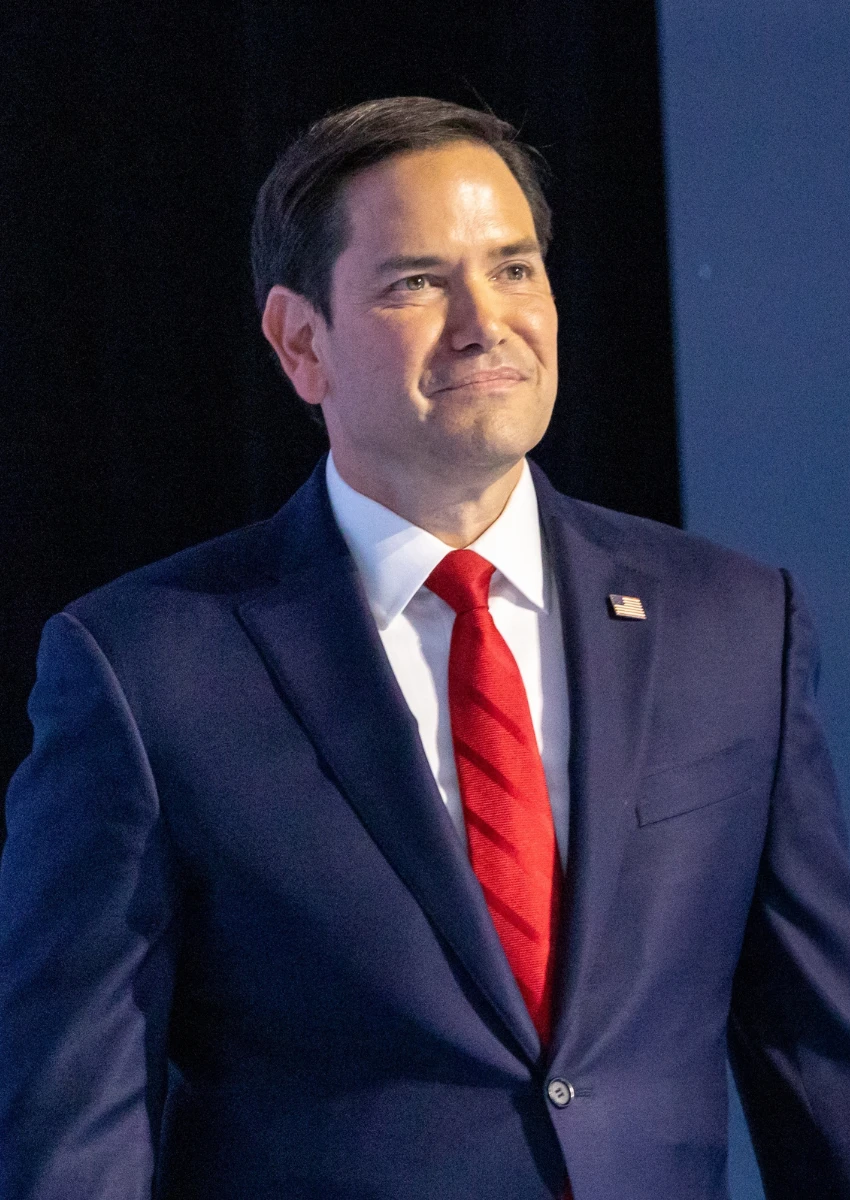
There are two pictures of Secretary of State Rubio featured in the piece, and Brown thinks that they’re both sending a message. “I also wanted to point out the commonality that both individual photos of Marco Rubio, the thing that both of those photos have in common is that Marco Rubio is not looking at the viewer,” she said. It’s true. In one photo, Rubio is looking out a window, and in the other, a more close-up shot, he’s not focused on the camera, but rather looking down and to the left.
This wasn’t just some random artistic choice on Anderson’s part, Brown said. “And I think that both photographs are meant to show him in this, like, very longing, morose sort of state where, um, he might be regretting tying himself to this administration, or he’s just wishing he was elsewhere,” she added. “I think that is the feeling that those photographs are meant to evoke.”
It’s certainly an interesting take to consider. When Trump ran his first successful campaign for president in 2016, Rubio was one of his opponents in the GOP presidential race. They weren’t quite so close then. Rubio openly spoke out against Trump during that race, and Trump dubbed him “Little Marco,” per Reuters. It left some people confused about why he held such an elite role in Trump’s second administration. But, as a senior U.S. official told Reuters, “He’s done everything that Trump has asked him to do. Why wouldn’t you trust him?”
6. Why JD Vance’s Bible was used as a prop in one of his photos
 Joey Sussman | Shutterstock
Brown included one more tidbit in her rundown, “just because I think it’s hilarious,” she said. There were several photos included in the piece of random objects found around the White House, like a statuette of President Trump located in the office for Wiles’ support staff. One of those objects was a Bible owned by Vance; however, it was inscribed with a different name: James D. Hamel.
“I loved the petty inclusion of JD Vance’s Bible, which displays one of his, uh, many previous names, since he’s continued to change his name over and over again to find the one that, you know, polls the best with the public,” Brown said.
USA Today reported that Vance was born James Donald Bowman. At some point during his childhood, his parents divorced, after which his mother changed his middle name to David. She then remarried his stepfather, Robert Hamel, whose last name he took as his own. While he was in the Marines, he abbreviated his first and middle name to J.D. In 2013, he changed his last name to Vance to honor his grandmother, and he removed the periods from J.D. in 2021 when he entered the political arena.
The Trump administration was probably hoping for a bit of good publicity from the Vanity Fair piece, but it seems like they received the opposite. From average Joes wondering why a portrait of JD Vance was so close-up that you could see every line on his face, to professionals like Brown pointing out the inclusion of specific artwork, it doesn’t seem like Anderson endeavored to portray Trump’s inner circle in a particularly positive light.
Mary-Faith Martinez is a writer with a bachelor’s degree in English and Journalism who covers news, psychology, lifestyle, and human interest topics.

Comments are closed.