
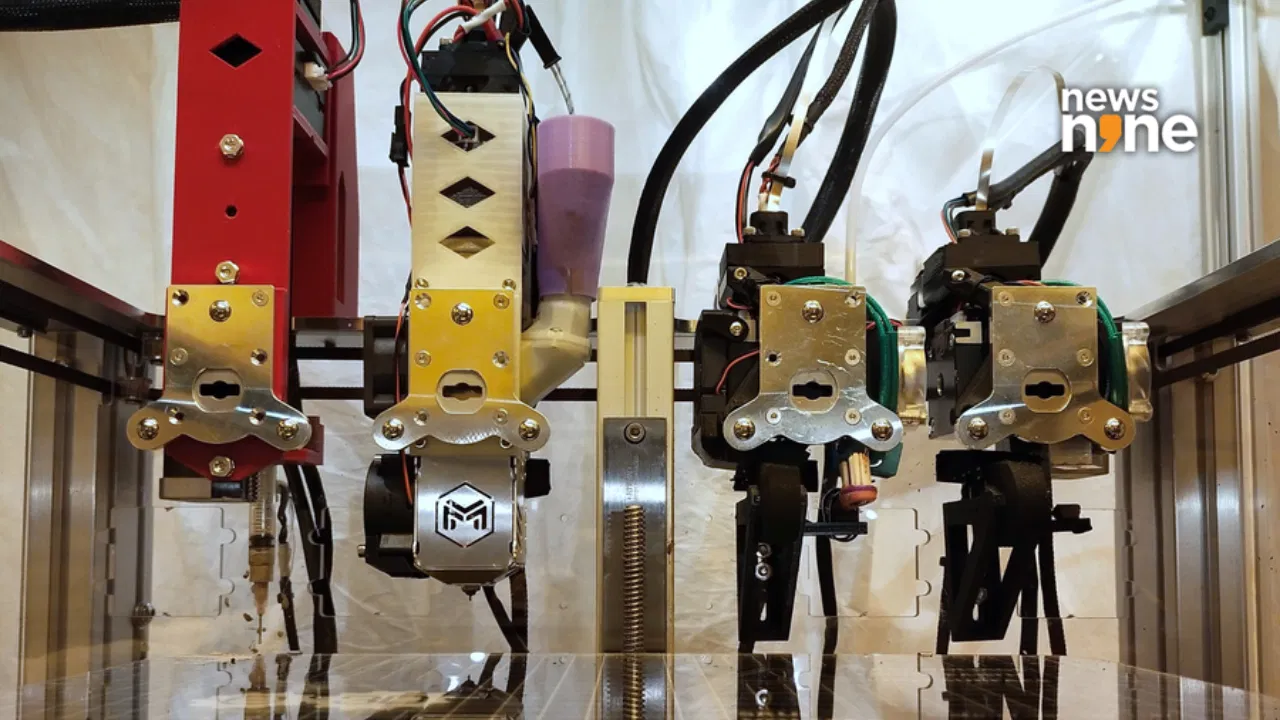

New Delhi: A machine failure on a production line can turn into a costly scramble. MIT researchers are now pitching a way to cut that delay, by 3D-printing complete electric machines on-site, instead of waiting on shipments and suppliers. The team says its new multimaterial printing platform can fabricate complex hardware in one build, using multiple materials and tool heads.
The work, highlighted by MIT on February 18, is getting fresh attention as industries push for faster, local manufacturing and more resilient supply chains. In a demonstration, the researchers printed a working electric linear motor in a few hours using five materials, with an estimated material cost of around50 cents per device.
A multi-tool printer built for real hardware, not just plastic parts
MIT’s setup uses four extrusion tools in one platform, letting it switch between different feedstocks such as conductive and magnetic materials. The goal is to print integrated electric machines where the “functional” parts like conductors and magnets are built into the same object, rather than assembled later from separate components.
Luis Fernando Velásquez-García, a principal research scientist at MIT’s Microsystems Technology Laboratories, framed the objective as reducing dependence on long supply chains: “We have an opportunity to fundamentally change the way things are made by making hardware onsite in one step, rather than relying on a global supply chain. With this demonstration, we’ve shown that this is feasible,” he said.
The engineering hurdle: making different extruders behave like one system
Most multimaterial extrusion printers combine materials that behave similarly. MIT’s team tried to integrate multiple “forms” of extrusion into one coordinated workflow, then keep every nozzle aligned and consistent during a long print. Velásquez-García described the challenge in simple terms: “There were significant engineering challenges. We had to figure out how to marry together many different expressions of the same printing method, extrusion, seamlessly into one platform,” he said.
The demo motor and why industry cares
To show the platform works, the researchers printed a linear motor, a component commonly used in automation systems such as pick-and-place robotics, optical platforms, and baggage conveyors. The team said the motor took about three hours to print and needed only one post-step, magnetising the hard magnetic material. They also said the printed motor’s performance matched or beat similar devices made using more complex processes.
Velásquez-García said the motor is just one example of what the platform could produce: “Even though we are excited by this engine and its performance, we are equally inspired because this is just an example of so many other things to come that could dramatically change how electronics are manufactured,” he said.

Comments are closed.