
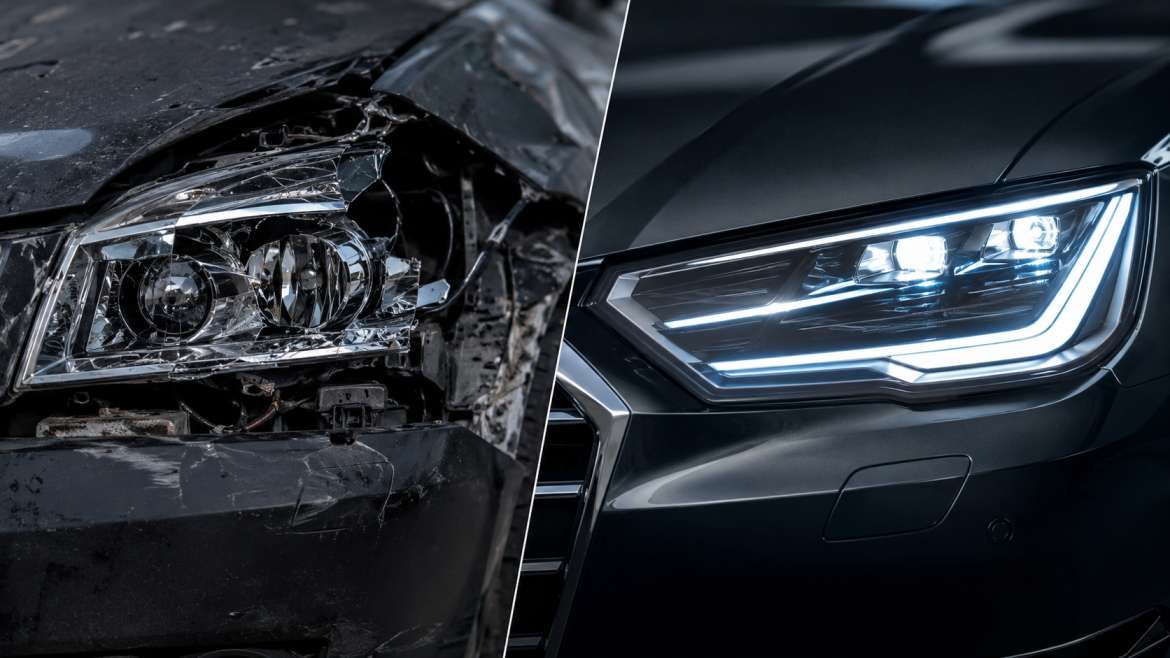

There was a time when replacing a broken headlight was one of the simplest and cheapest repairs a car owner could face. A trip to the local auto parts store, a replacement halogen bulb costing a few hundred rupees or around $20, and ten minutes with a screwdriver were often enough to get the job done.
That reality has changed dramatically.
Today, a cracked headlight on many modern vehicles can leave owners staring at repair bills ranging from ₹30,000 to well over ₹2 lakh in India, or between $1,000 and $5,000 in global markets. Luxury models equipped with premium lighting technology can push replacement costs even higher, sometimes exceeding the cost of repairing an entire front bumper just a decade ago.
The obvious question is: why has something designed to illuminate the road become so expensive? The answer lies in the remarkable transformation of automotive lighting. What was once simply a bulb inside a plastic housing has evolved into one of the most sophisticated electronic systems on any modern vehicle.
From Bulbs to Intelligent Lighting Systems
For decades, headlights had one purpose: help drivers see in the dark. Modern headlights do far more.
Today’s vehicles increasingly use LED and laser lighting systems instead of traditional halogen bulbs. These newer technologies produce brighter illumination, consume less power, last significantly longer, and offer designers greater freedom to create distinctive lighting signatures that define a vehicle’s identity. Look at almost any new car, and its headlights have become part of the brand itself. Thin LED strips, animated welcome sequences, sequential indicators, and intricate daytime running lights are no longer exclusive to luxury cars. Many mainstream vehicles now feature similar designs.
That design sophistication comes at a price. Unlike older systems where only the bulb needed replacement, many modern headlights are sealed units. If a major internal component fails, technicians often replace the complete assembly rather than repairing individual parts. This instantly increases repair costs.
LEDs Changed Everything
LED technology has become the industry standard because it offers several advantages over halogen lighting. LEDs generate brighter, whiter light while consuming less electricity. They produce less heat, respond instantly, and can last tens of thousands of hours under normal operating conditions. However, LED headlights are far more complex.
Inside each housing are multiple LED chips, cooling systems, circuit boards, heat sinks, voltage regulators, optical lenses, reflectors, and electronic control modules working together. Even a minor internal failure may require replacing an entire assembly because manufacturers often integrate these components into one sealed unit. Repairing them individually is frequently impractical or impossible.
Adaptive Headlights Add Another Layer
Many newer vehicles also feature adaptive lighting systems. These headlights don’t simply shine straight ahead.
Instead, they actively respond to steering input, vehicle speed, road conditions, and traffic. When turning around a corner, the beams pivot to illuminate the road before the driver reaches it. At higher speeds, the light pattern extends farther down the road. During city driving, the beam widens to improve visibility near intersections.
Some systems even detect oncoming traffic and automatically adjust sections of the beam to avoid dazzling other drivers while still keeping the rest of the road brightly illuminated. Achieving this requires electric motors, sensors, cameras, software, processors, and communication with multiple onboard control systems. If one component is damaged in a collision, repairing it becomes significantly more complicated than replacing a simple bulb.
Cameras and Sensors Are Often Hidden Inside
Many drivers don’t realise that headlights increasingly serve as mounting points for advanced driver assistance systems. Depending on the vehicle, the headlight assembly may interact with cameras, radar units, steering sensors, rain sensors, ambient light sensors, and forward-facing safety systems. Some vehicles also integrate automatic high-beam control directly with front cameras mounted near or within the lighting system.
After replacing a damaged headlight, technicians may need to recalibrate these systems to ensure everything communicates correctly. That calibration requires specialised diagnostic equipment, manufacturer software, and trained technicians. Labour costs therefore rise alongside the cost of replacement parts.
Design Has Become Part of the Brand
Automakers now use lighting as a major styling element. A vehicle’s headlights have become its visual signature, helping distinguish one brand from another both day and night.
Manufacturers invest heavily in developing unique lighting patterns that customers instantly recognise. This means every headlight assembly is carefully engineered to match a vehicle’s body lines, airflow requirements, and crash standards. Unlike generic round headlights used decades ago, modern units are often custom-designed for a single model or even a specific trim level. Limited production volumes increase manufacturing costs, especially for premium vehicles where replacement demand remains relatively low.
Manufacturing Precision Raises Prices
Producing modern headlights involves far more than moulding plastic.
Each assembly contains precision optics designed to direct light exactly where regulations require. The lenses, reflectors, LED arrays, electronic boards, waterproof seals, cooling components, and decorative lighting elements must all function flawlessly under extreme temperatures, rain, dust, vibration, and years of daily use. Manufacturing tolerances are extremely tight because even slight misalignment can affect beam performance.
Every unit undergoes extensive quality testing before reaching dealerships. That level of engineering naturally raises production costs long before a replacement ever reaches a repair shop.
Even a Minor Accident Can Mean a Major Bill
One of the biggest reasons repair costs have climbed is that headlights are often among the first components damaged in a front-end collision. A low-speed bump that once required nothing more than a new plastic lens may now involve replacing an entire lighting unit, along with brackets, wiring, and sensors mounted nearby.
In many modern vehicles, the headlight assembly is closely integrated with the front bumper, grille, fenders, and electronic safety systems. If the impact shifts the alignment even slightly, technicians must ensure everything is correctly positioned before the vehicle returns to the road.
The repair doesn’t stop with installing a new headlight. In many cases, the vehicle also needs electronic diagnostics and calibration to verify that lighting functions and driver assistance systems are working as intended.
These additional procedures increase labour time and, ultimately, the final repair bill.
Premium Features Come With Premium Prices
Luxury vehicles have turned headlights into showcases of engineering.
Many premium models now offer matrix LED systems that can individually control dozens, or even hundreds, of tiny light segments. Instead of switching between high and low beams, these systems selectively dim only the portion of the beam that would shine into the eyes of oncoming drivers, allowing the rest of the road to remain brightly illuminated.
Some manufacturers have gone even further with Digital Light technology, capable of projecting highly detailed light patterns onto the road surface. Future applications include displaying lane guidance, warning symbols, pedestrian alerts, and navigation cues directly ahead of the vehicle.
Laser headlights, available on certain high-end models, provide an even longer illumination range while consuming relatively little energy. Although these systems are used only in specific driving conditions, they require highly specialised components that are expensive to manufacture and replace.
When any of these advanced systems are damaged, replacement costs can quickly climb into several thousand dollars.
Supply Chains Also Influence Pricing
The cost of modern headlights isn’t determined solely by technology.
Global supply chains play an important role as well.
Unlike conventional bulbs that could be sourced from numerous suppliers, advanced headlight assemblies contain specialised semiconductors, LED chips, microcontrollers, cooling systems, sensors, and precision optical components.
Many of these parts are manufactured by a limited number of suppliers, making production more vulnerable to shortages and disruptions.
Over the past few years, semiconductor shortages, rising raw material costs, shipping delays, and inflation have increased the price of automotive components worldwide. Even as supply chains have improved, replacement parts for newer vehicles remain expensive because they involve sophisticated electronics produced in relatively small volumes.
Repair Isn’t Always an Option
Many vehicle owners wonder why technicians cannot simply replace the damaged section of a headlight.
In many cases, the answer comes down to design.
Manufacturers often build headlights as sealed assemblies to protect sensitive electronics from moisture, dust, and vibration. Opening the unit can compromise waterproof seals and affect long-term reliability.
As a result, if an internal LED module, control board, or optical component fails, replacing the entire assembly is usually the recommended repair.
Independent repair specialists have started offering services such as replacing lenses, repairing circuit boards, or fixing moisture damage, but these options aren’t available for every model. Some repairs also require specialised tools and technical expertise that smaller workshops may not have.
Insurance Companies Are Feeling the Impact
The rising cost of headlights isn’t just affecting vehicle owners. Insurance companies are paying attention too.
As replacement parts become more expensive, the average cost of repairing even relatively minor accidents has increased. A collision that once involved replacing a bumper and a headlight bulb may now require thousands of dollars’ worth of electronic components.
These higher repair costs contribute to increased insurance claims, which can eventually influence insurance premiums, particularly for vehicles equipped with expensive technology packages.
Some insurers have even noted that advanced safety features reduce the likelihood of severe crashes but increase the cost of repairing smaller ones when they do occur.
The Right-to-Repair Debate
The growing complexity of automotive lighting has also sparked discussions about repairability.
Consumer advocates argue that manufacturers should make it easier to replace individual components rather than entire assemblies. They believe this would lower repair costs, reduce electronic waste, and make vehicle ownership more affordable.
Automakers, however, maintain that sealed units ensure consistent performance, weather resistance, and compliance with safety regulations. Since headlight beam patterns are carefully engineered, replacing individual internal components could affect performance if not done correctly.
Finding the right balance between reliability, safety, and affordability remains an ongoing challenge for the industry.
Can Drivers Reduce Replacement Costs?
While accidents can’t always be avoided, there are practical ways to reduce the risk of expensive headlight repairs.
Maintaining a safe following distance, parking carefully in tight spaces, and addressing minor bumper damage before it affects nearby components can help protect lighting assemblies.
If replacement becomes necessary, it’s worth comparing dealership quotes with reputable independent repair shops. In some cases, certified aftermarket or refurbished headlight assemblies may offer significant savings without compromising quality, provided they meet local safety standards.
Vehicle owners should also check whether their insurance policy covers original equipment replacement or allows equivalent approved parts.
Smarter Lights, Costlier Repairs
Modern headlights represent one of the biggest technological leaps in automotive design over the past two decades. They improve visibility, enhance safety, reduce driver fatigue, and support advanced driver assistance systems in ways that older lighting technologies never could.
However, that innovation comes with an unavoidable trade-off.
Today’s headlights are no longer simple bulbs hidden behind a plastic cover. They are intelligent electronic systems combining optics, software, sensors, processors, motors, and precision engineering into a single component.
For drivers, that means brighter roads and safer night-time journeys. But when damage occurs, replacing one of these sophisticated assemblies is far more expensive than it was in the past.
As vehicles continue to become increasingly connected and technology-driven, headlights are likely to become even smarter. The challenge for manufacturers will be ensuring that future innovations deliver not only better performance but also greater affordability and easier repairability for the people who ultimately own them.

Comments are closed.