
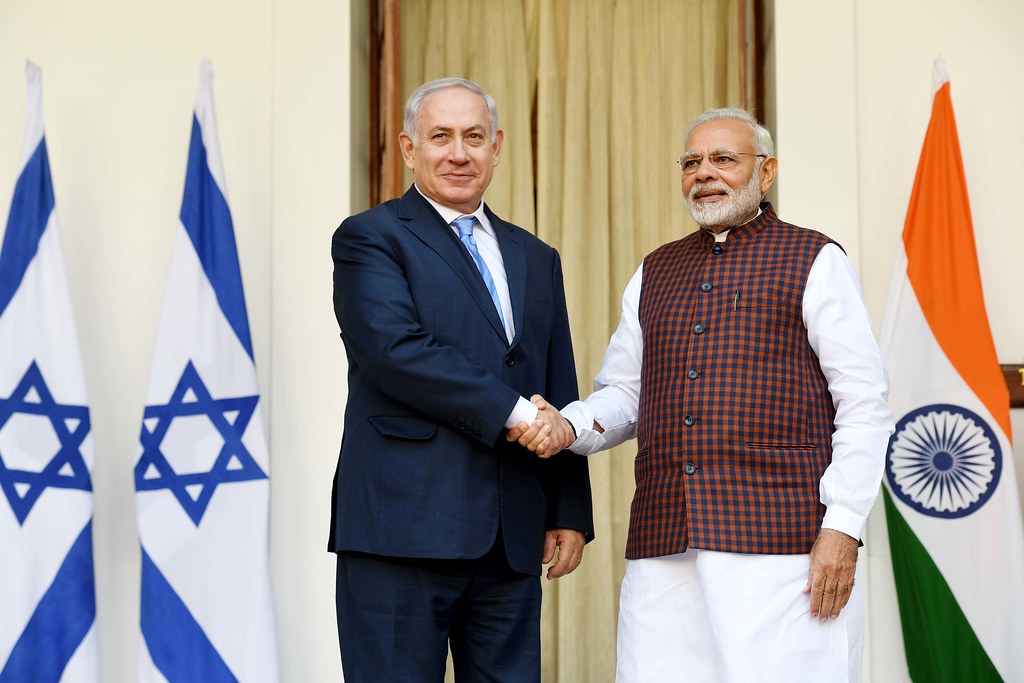
Modi and Netanyahu Unveil a New India Israel Strategic Tier With Defence, AI, Cybersecurity and UPI on the Table

India and Israel have issued a sweeping joint statement after Prime Minister Narendra Modi met Prime Minister Benjamin Netanyahu in Jerusalem, formally elevating bilateral ties to what they call a Special Strategic Partnership for Peace, Innovation and Prosperity. The announcement, released after the leaders addressed a joint press interaction, frames the relationship as a long term, multi sector collaboration spanning security, trade, technology and people to people links.
At the core of the statement is an effort to institutionalise cooperation across government, business and civil society, with explicit emphasis on critical and emerging technologies. The leaders highlighted areas such as artificial intelligence, cybersecurity, semiconductors, quantum, biotechnology, space, agriculture and water management, describing them as complementary strengths that can be combined through structured mechanisms and joint programmes. India’s Ministry of External Affairs and India’s public information releases also described the upgrade as a major step meant to translate policy priorities into measurable outcomes through deeper bilateral coordination.
On defence and security, both sides pointed to an existing defence cooperation framework and signalled an expanded roadmap that includes closer collaboration, including joint development and production goals that have been referenced in broader coverage of the visit. Counter terrorism messaging was central, with both leaders reiterating a shared position that terrorism and its supporters must be opposed through sustained international action.
Technology and cyber received unusually detailed treatment in the joint text. The statement referenced a national security advisor led initiative on critical and emerging tech, upgrades to joint research funding between universities, and plans to deepen AI cooperation through enabling frameworks that connect talent, research institutions and companies. On cyber, the two countries pointed to policy dialogue already underway and endorsed building a multi year programme with practical components such as capacity building, applied research, security by design principles and joint exercises, alongside plans for an India Israel cybersecurity centre of excellence.
Economics and connectivity were positioned as the delivery engine of the new strategic tier. The leaders welcomed progress on investment protections and urged faster movement toward a free trade agreement, while also pushing for expanded direct air links between Tel Aviv and major Indian cities. A major headline item was payments: both sides said they would explore interoperability between India’s UPI rails and Israel’s fast payment ecosystem, supported by an MoU between NPCI International and Israel’s MASAV to examine cross border linkages.

The statement also leaned into workforce mobility and social ties, recognising the role of Indian workers in Israel and outlining a pathway for expanded labour intake over the coming years, alongside commitments focused on safety, legal rights and broader opportunities in high skill sectors. Beyond labour, the document called for deeper cooperation in health, education, research exchanges, and cultural collaboration including cinema, aiming to strengthen public facing ties that can outlast political cycles.
Strategically, the two leaders framed the partnership as part of a wider push to shape resilient trade corridors and regional connectivity, including discussion of initiatives such as IMEC and I2U2. Israel’s Prime Minister’s Office also published a parallel readout of the joint appearance, reflecting the political significance both sides are placing on the upgraded relationship at a moment when technology, supply chains and security partnerships are being redefined across regions.

Comments are closed.