
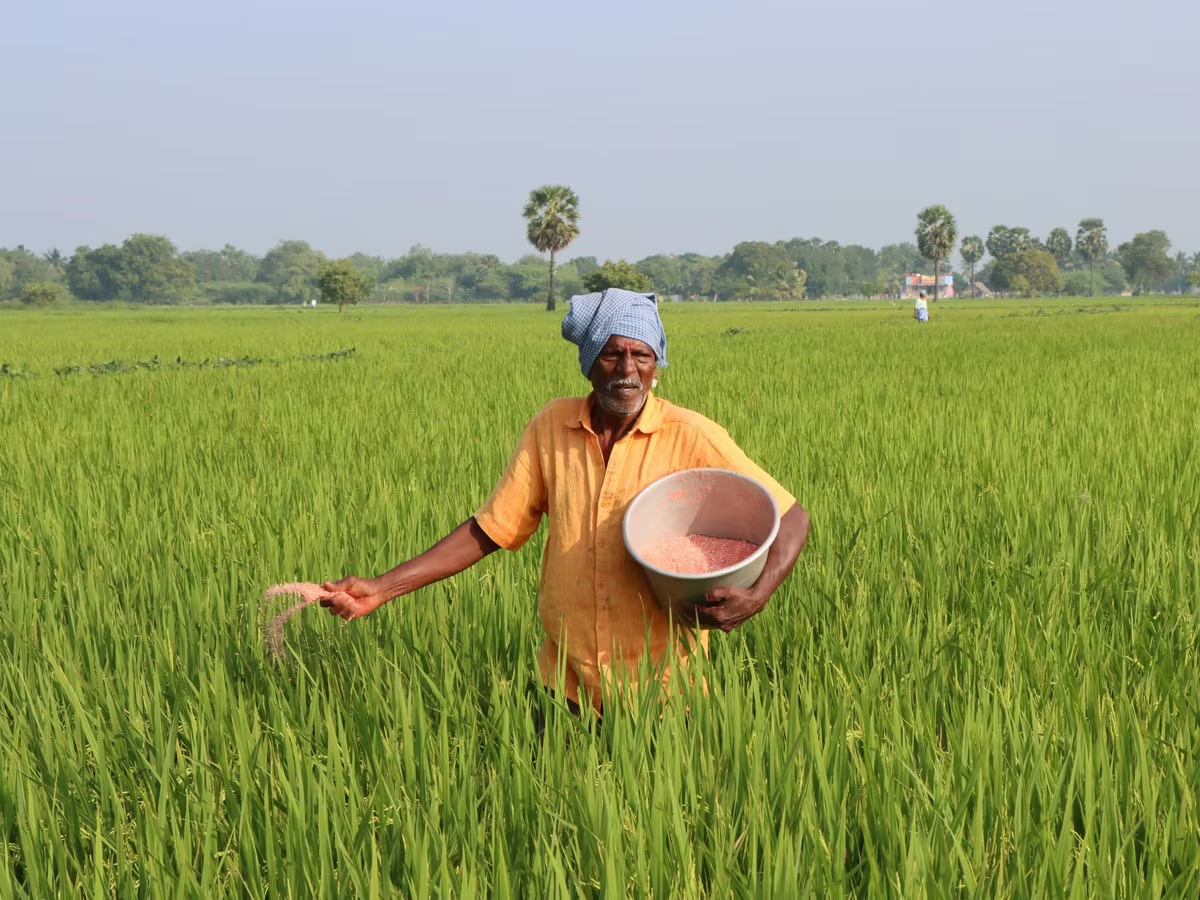

Another big challenge has arisen before India’s economy, which is already facing the brunt of inflation and rising prices of crude oil in the international market due to the Iran war. The central government has predicted a very weak monsoon for the year 2026 due to the effect of El Nino. According to government data, this year is expected to receive the least rainfall in the last 11 years. This could prove to be a double whammy for the world’s fifth largest economy, which will have a direct impact on the country’s economic development, crop production and your kitchen budget. After all, why is monsoon the lifeline for India? Monsoon in India is not just a season but is the backbone of the economic health of the country. The monsoon alone provides about 70% of India’s annual rainfall for agriculture, feeding its vital reservoirs, rivers and water sources. Even today, almost half of the farms in the country do not have permanent or modern irrigation facilities, which means these farms are completely dependent on rain water from the sky. Apart from this, almost half of the country’s population is still directly associated with farming for their livelihood and employment. Chances of drought in July-August, inflation rate may go up to 5.5%. Gaura Sengupta, Chief Economist of IDFC First Bank, believes that due to less rainfall especially in the main months of July and August, inflationary pressure in the market may increase considerably. If essential food items become expensive, retail inflation could rise to an average of 5.5%. India’s retail inflation rate was recorded at 3.48% in the month of April, but due to the ongoing war and tension in the Middle East, there is already a cloud of uncertainty looming over the prices of crude oil and energy. The weakest monsoon since 2015, know what the figures say. According to M. Ravichandran, Secretary of the Ministry of Earth Sciences, this year the monsoon is expected to be only 90% of the long period average (LPA). This figure is less than the estimate of 92% made in April. This year is going to prove to be the weakest monsoon since 2015. Even in the year 2015, due to the severe outbreak of El Nino, only 87% rainfall was recorded in the country. According to the Meteorological Department (IMD), rainfall between 96% and 104% of the 50-year average (which is 87 cm) is considered ‘normal’, making this estimate much lower. What is El Nino, which is spoiling the weather patterns? El Nino is a global meteorological phenomenon in which water temperatures in the central and eastern Pacific Ocean become warmer than normal. This has a direct impact on the direction of the winds, causing hot and dry weather in India, South-East Asia and its surrounding areas. According to meteorologists, there is a strong possibility that the effect of El Nino will be moderate to very strong in the second part (later part) of the monsoon this year. Crisis on the income of rural India, the pace of auto and electronics will slow down. Although the Government of India currently has adequate buffer stock of major food grains like rice and wheat, the real concern is about the rural economy. If rains do not occur properly, a large part (about two-thirds) of the country’s 1.4 billion population who live in villages will lose their income. The direct impact of low income of people in villages is visible on the market, due to which there is a possibility of a huge decline in the sales of motorcycles, tractors, refrigerators and other consumer goods. The biggest threat looms on these crops including paddy, pulses and oilseeds. According to commodity experts, due to less rainfall in June and July, early sowing of major Kharif crops like pulses, cotton, edible oilseeds (like soybean and groundnut) and maize can be badly affected. Moreover, in areas of northern and north-western states (such as Punjab, Haryana and Uttar Pradesh) where there is no permanent means of irrigation, the main crop of paddy (rice) is at greatest risk. There will be a stir in the world markets too, the business equation will change. India is a big center of agricultural products not only for its domestic needs but also for the global market. India is currently the largest exporter of rice and onion worldwide, while coming second in the world in terms of sugar production. In contrast, India imports about two-thirds of its edible oil needs from abroad. In such a situation, due to poor monsoon, it is sure to have a big impact not only within the country but also on global business equations and prices.

Comments are closed.