
Mosaic Defense is Iran’s security shield: Showed success in the war against America-Israel, know what is the ‘Fourth Successor’ model

Tehran/Delhi. In the war waged by America and Israel against Iran, two terms have emerged prominently – ‘Mosaic Defense’ model of war strategy and ‘Fourth Successor’ model of leadership. Both of these have shown the success of the Iranian regime in the war so far. The world first heard the term in an ‘X’ post by Iranian Foreign Minister Seyed Abbas Araghchi on March 1, when he wrote, “…decentralized ‘mosaic defense’ enables us to decide when and how a war will end.”
Here, two main pillars of Iran’s strategy were presented – first, observing and adapting to US military weaknesses and second, complete decentralization of its ‘command and control’ to ensure flexibility and continuity in the event of an attack targeting the top leadership.
This decentralized defense strategy, referred to by Araghchi, dubbed ‘Mosaic Defence’, aims to neutralize the impact of US or Israeli attacks targeting leadership or ‘command-and-control’ and ensure continuity in the event of any major attack.
Iran’s defense approach, unfolding in real time since the start of ‘Operation Epic Fury’, is the result of decades of preparation. This was further reinforced by the Iran–Iraq War of 1980–88, as well as the Israeli invasion and occupation of Lebanon during the civil war. Both of these events have played a significant role in shaping the approach of Iran and its primary ally, Lebanese Hezbollah, towards the ongoing conflict.
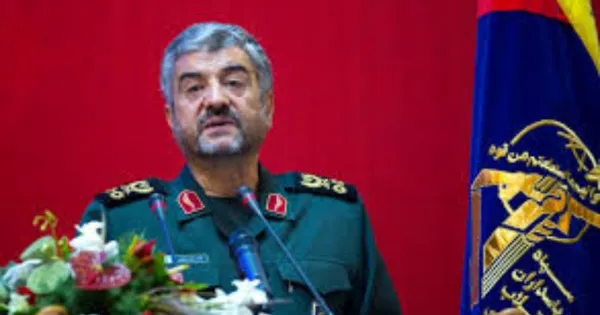
This three-dimensional defense doctrine was further developed in 2005, when the ‘Islamic Revolutionary Guard Corps’ (IRGC) under the supervision of General Mohammad Jafari announced its ‘Mosaic Defence’ model, which is essentially a decentralized ‘command-and-control’ system. According to analysis by Dr. Michael Connell, an expert on Iranian military culture, this strategy led to the reorganization of the IRGC’s ‘command and control’ structure into 31 separate chains of command. These commands can start a rebellion in case of any attack. This makes any attempt to weaken Iran’s defense system extremely difficult.
According to a report by the Rand Organization, in 2003 the Iraqi military was crippled by a command structure that centered around Iraqi dictator Saddam Hussein. According to the report, this prevented regular Iraqi Army and Republican Guard units from coordinating with each other, while division and corps level officers could not conduct even basic military activities without Saddam’s approval.
This 2010 report suggests that the rapid defeat of Saddam Hussein’s regime made Jafari and other Iranian officials realize that they needed to ensure that the IRGC and the regular Iranian armed forces ‘Artash’ could operate independently without interference and would not disintegrate if contact with the high command was lost.
According to the Rand Organization, Iran’s ‘Mosaic Doctrine’ was first outlined in 2005, when Mr. Jafari, as director of the IRGC’s Center for Strategic Studies, identified two serious threats to the ‘Ayatollah’s regime’ – “first, a foreign effort to stage a non-violent coup with the support of Iranian NGOs and activists, and second, US military action to overthrow the regime.” Attack.” Iran began implementing this doctrine in 2005, which accelerated after Jafari was appointed commander-in-chief of the IRGC in 2007.
The 2010 report of the ‘US Institute of Peace’ also confirms this. According to the Sufan Center report, the Mosaic Doctrine strategy emphasized a ‘layered and distributed’ defense system to take advantage of Iran’s geography, rugged mountains, vast interior regions, and scattered population centers, to provide prolonged resistance against invaders with superior military power.
Its main innovation was to reorganize the IRGC into a series of 31 semi-autonomous provincial commands (one for each province). Each command functions as an independent unit, with its own headquarters, command-and-control nodes, missile and drone stores, integrated ‘Basij’ paramilitary volunteer force units, fast-strike naval fleet, intelligence assets and ammunition reserves.
They also have pre-assigned powers for emergency operations. After taking command of the IRGC in 2007, Mr. Jafari oversaw its full implementation, integrating Basij forces into the IRGC and enhancing their ‘unconventional’ warfare capabilities. This decentralization, approved by the late Supreme Leader Khamenei, gave local commanders complete freedom of action to accomplish broad objectives without central monitoring in real time.
According to a report by the Rand Organization, in 2003 the Iraqi military was crippled by a command structure that centered around Iraqi dictator Saddam Hussein. According to the report, this prevented regular Iraqi Army and Republican Guard units from coordinating with each other, while division and corps level officers could not conduct even basic military activities without Saddam’s approval.
This 2010 report suggests that the rapid defeat of Saddam Hussein’s regime made Jafari and other Iranian officials realize that they needed to ensure that the IRGC and the regular Iranian armed forces ‘Artash’ could operate independently without interference and would not disintegrate if contact with the high command was lost.
According to the Rand Organization, Iran’s ‘Mosaic Doctrine’ was first outlined in 2005, when Mr. Jafari, as director of the IRGC’s Center for Strategic Studies, identified two serious threats to the ‘Ayatollah’s regime’ – “first, a foreign effort to stage a non-violent coup with the support of Iranian NGOs and activists, and second, US military action to overthrow the regime.” Attack.”
Iran began implementing this doctrine in 2005, which accelerated after Jafari was appointed commander-in-chief of the IRGC in 2007. The 2010 report of the ‘US Institute of Peace’ also confirms this. According to the Sufan Center report, the Mosaic Doctrine strategy emphasized a ‘layered and distributed’ defense system to take advantage of Iran’s geography, rugged mountains, vast interior regions, and scattered population centers, to provide prolonged resistance against invaders with superior military power.
Its main innovation was to reorganize the IRGC into a series of 31 semi-autonomous provincial commands (one for each province). Each command functions as an independent unit, with its own headquarters, command-and-control nodes, missile and drone stores, integrated ‘Basij’ paramilitary volunteer force units, fast-strike naval fleet, intelligence assets and ammunition reserves.
They also have pre-assigned powers for emergency operations. After taking command of the IRGC in 2007, Mr. Jafari oversaw its full implementation, integrating Basij forces into the IRGC and enhancing their ‘unconventional’ warfare capabilities. This decentralization, approved by the late Supreme Leader Khamenei, gave local commanders complete freedom of action to accomplish broad objectives without central monitoring in real time.
Meanwhile, Iran has also developed a tiered leadership system, designed to prevent a power vacuum in times of war. This concept is sometimes called the ‘Forth Successor’ model. This ensures that if senior figures are killed in a conflict, multiple levels of leadership are ready to take over. Iranian planners have long feared that top leaders could be targeted in a war with powerful adversaries such as the US or Israel. This may include the supreme leader and the first few people in the line of succession.
To prevent this crisis, the state has maintained a deep hierarchy of leadership, so that power can flow down several levels without hindering governance or military command. Under Iran’s political system, the ‘Assembly of Experts’ is responsible for electing the Supreme Leader. If the current leader dies or becomes incapacitated, the Interim Leadership Council may temporarily assume the responsibilities of his or her office until a permanent successor is selected.
A form of this system was seen for a short time after the assassination of Mr. Ayatollah Ali Khamenei. During that period, a three-member council composed of Massoud Pezeshkian and other senior officials assumed leadership duties until a new supreme leader was appointed. The idea of ’Forth Successor’ is based on this mechanism. This ensures that others in the leadership group are ready to take over if the supreme leader and his immediate replacement are eliminated. This tiered system of leadership is meant to guarantee that the country, especially its security and military apparatus, continues to function despite loss of leadership.

Comments are closed.