
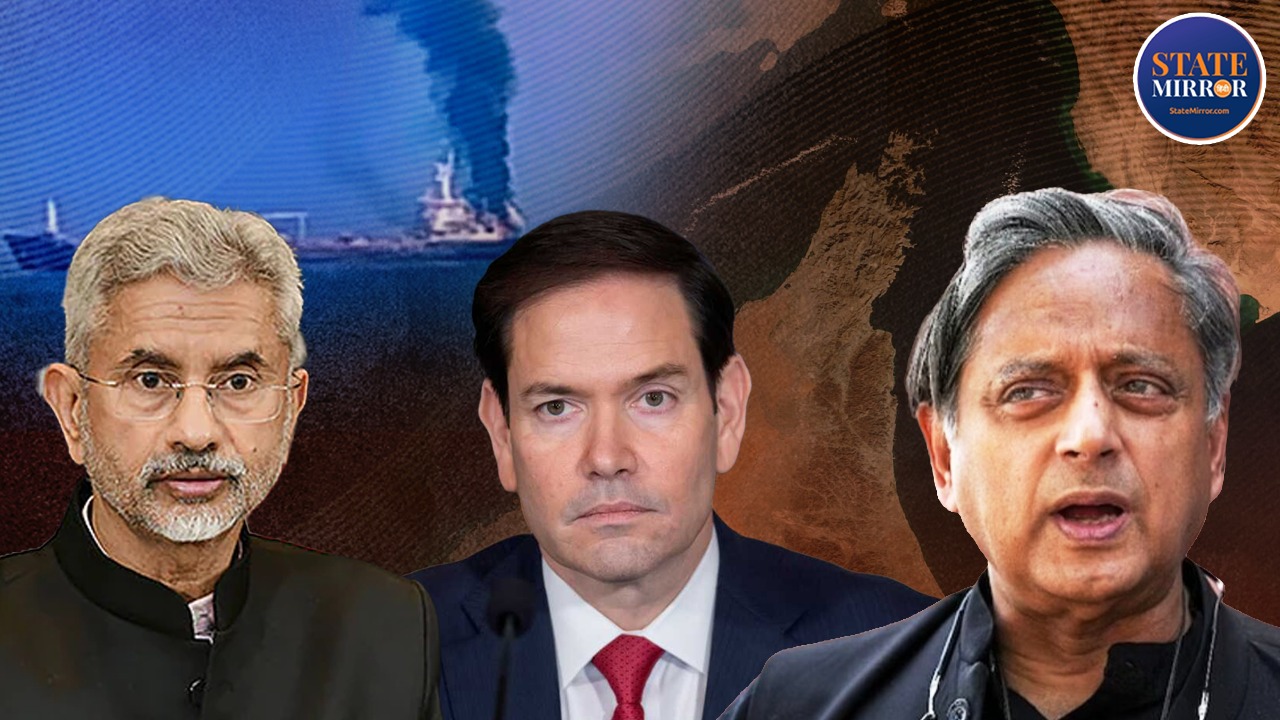
From MT Jalveer to Settebello: American ‘missile’ hit in the Gulf – will there be a rift in India-US friendship?

The death of three Indian sailors in US military action near the Strait of Hormuz has raised a new diplomatic question in India-US relations. This matter has come to light at a time when PM Narendra Modi is likely to meet US President Donald Trump during the G7 summit. On one hand, India has lodged a strong protest against the military action taken on a commercial ship, while on the other hand, America is justifying its action by linking it to security and sanctions.
Foreign Minister S. US Secretary of State Marco Rubio’s statements in opposition to Jaishankar’s stand have brought this controversy further into the limelight. According to the report of Indian Express, Congress MP Shashi Tharoor has also raised many questions, terming the American stance as “Deeply shocking”.
From MT Jalveer to Settebello, what’s the matter?
In the last few days, the names of two ships have been in discussion- MT Jalveer and MT Settebello. Initially news came that the ship MT Jalveer with Indian crew had been attacked. However, the Ministry of External Affairs later clarified that all the Indian crew of that ship are safe and no new attack has been confirmed. Attention then focused on MT Settebello, a Palau-flagged oil tanker. American action took place on this ship and three Indian sailors died in it. This is the reason why the incident from MT Jalveer to MT Settebello has become a symbol of this entire controversy.
10–11 June: Attack and death of three Indians
The incident began between June 10 and 11 when MT Settebello came under target during US military operations in the Hormuz area near the Oman coast. Three members of the Indian crew on board the ship (Suresh Patnala, Aditya Sharma and Shivanand Chaurasia) were first reported missing and later confirmed dead. 21 other Indian sailors present on the ship were rescued safely. The US claimed that the ship was violating sanctions related to Iranian oil and was not following American warnings. At the same time, the ship management raised questions on these allegations.
June 11: India lodged a strong protest
As soon as the death of three Indian citizens was confirmed, the Indian government took a tough stance. New Delhi summoned a senior official of the US Embassy and lodged a formal protest. The Ministry of External Affairs clarified that such military action against civilian ships is a matter of serious concern. India demanded full information and accountability of the incident and stressed on ensuring the safety of civilian ships on sea routes.
June 12: Political pressure and international concern
The matter was not limited to diplomacy only. Seafarers’ organizations, opposition parties and maritime experts demanded the government to strongly raise this issue with America. Questions also arose in the international maritime community as to whether lethal military action was the only option if a ship was suspected.
June 13: What did Jaishankar say to Rubio?
The matter took a new turn when Foreign Minister S. Jaishankar spoke directly to US Secretary of State Marco Rubio. Jaishankar clearly said that such lethal action against commercial ships cannot be justified. He described the deaths of civilian sailors as unacceptable and demanded accountability from the US and concrete steps to prevent such incidents in the future. India’s message was clear that this is not just a maritime incident but a matter of safety of Indian citizens.
Rubio’s statement in response further increased the controversy
After Jaishankar’s protest, the reaction of the American side deepened the controversy. According to the US State Department, Marco Rubio said that all commercial ships operating in the Strait of Hormuz should immediately follow the instructions of US forces. He also said that violations of the US blockade and illegal transportation of Iranian oil will not be tolerated. The major reason for the controversy was that the American statement did not even publicly mention condolences or regret over the death of three Indian sailors. Opposition parties have raised many questions on the government regarding this.
Why did Shashi Tharoor get angry? What do the statements ‘Deeply Shocking’ and ‘Deeply Insensitive’ mean?
Congress MP Shashi Tharoor has expressed strong displeasure over the American response after the death of three Indian sailors in US military action near the Strait of Hormuz. According to the Indian Express report, Tharoor said that after reading the official statement of the US State Department, he found it “deeply shocking” because it neither expressed regret nor condoled the death of Indian citizens.
Tharoor raised the question why America, which calls India its friend and strategic partner, could not show human sensitivity after such a big incident. He said, “How can a friend and strategic partner be so “deeply insensitive”?”
According to him, the first reaction after the death of three Indian citizens should have been of condolences and sorrow, but in the American statement, the warning to the ships to follow the orders of the American forces appeared more prominent.
Tharoor also raised questions on the nature of American action. He said that if a ship was suspicious or was not following American instructions, could not “non-lethal means” be used to stop it?
What are the arguments of India and America?
India argues that the safety of civilian ships and sailors should be the top priority under any circumstances. New Delhi is demanding accountability, investigation and clear protocols to prevent such incidents in future. On the other hand, America is calling its action a security operation. Washington says US forces in the Hormuz area are enforcing sanctions and maritime security rules and all ships should follow their instructions.
Will the tension between India and America increase?
At present, it is too early to call this a full-fledged diplomatic crisis. However, this incident is serious and has increased the uneasiness between the two countries. India has lodged a protest and America has defended its action. But the common interests of both the countries regarding defense cooperation, Quad, Indo-Pacific strategy, trade, technology and China are so big that the possibility of a major breakdown in relations due to one incident is considered less. Nevertheless, this issue will remain an important part of bilateral talks in the times to come.
Will Modi raise this issue with Trump?
This is the biggest question. This issue is becoming increasingly discussed before the possible meeting of Modi and Trump at the G7 conference. The official agenda is not public, but diplomatic signals suggest that the deaths of Indian sailors, maritime security and measures to prevent such incidents in future may form part of the talks. India would likely want US assurances on compensation, accountability and the safety of civilian ships. Both the leaders can talk about strategic partnership on public platform, but in closed door talks, this dispute of Hormuz can be included in the major issues.
Now what next?
At present, the case of death of three Indian sailors is no longer just a maritime accident. This has become a big diplomatic question related to India-US relations, global maritime security and security of civilian ships. In the coming days, the investigation, US reaction and Modi-Trump talks will decide whether this dispute remains limited to merely registering a protest or becomes a reason for some new debate and pressure in the relations between the two countries.

Comments are closed.