
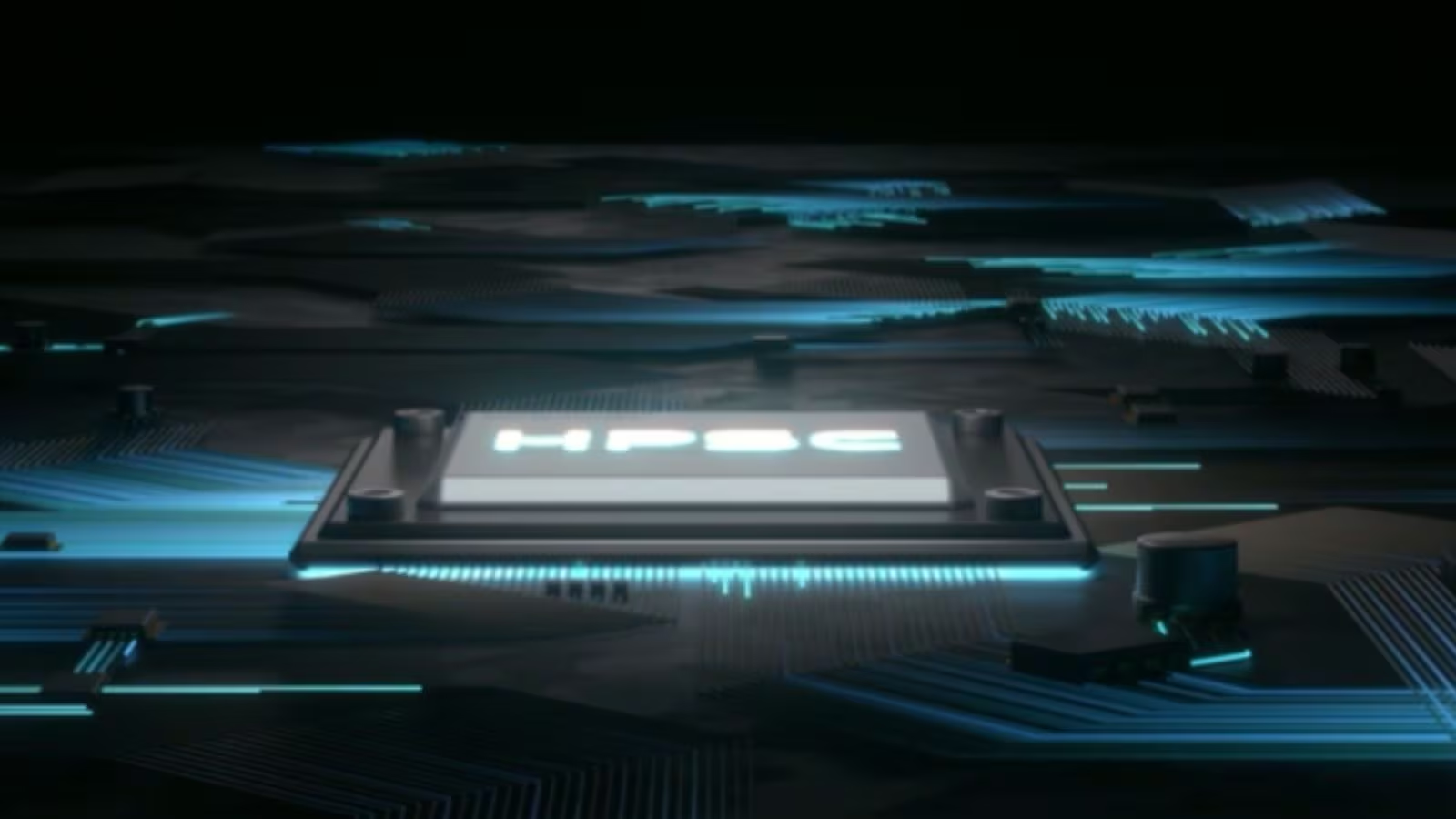

NASA is in the process of building a new computer chip – with a hundred times more computational capacity than current space processors – which can help spacecraft make decisions on their own during future missions that take place far from Earth.
According to information on NASA’s website, the High Performance Spaceflight Computing ( HPSC) project aims to build a next-generation computing system for use in space missions from 2040.
The HPSC is small enough to fit in the palm of a hand, and carries the power of a full system on a single chip.
The next-generation processor is built to withstand the extreme conditions of deep space while delivering a massive boost in computing speed compared to the technology currently used in spacecraft.
The goal, says the NASA website, is to create a system that is more powerful, energy efficient, reliable and well connected – one that can meet the demands of future missions.
“Building on the legacy of previous space processors, this new multicore system is fault-tolerant, flexible and extremely high-performing,” said Eugene Schwanbeck, the program element manager.
What are HPSC’s capabilities?
The HPSC can deliver 100 times the computing capability of other space processors developed earlier, NASA says, and has provided reliable results in tests that mimic harsh space environments.
It can handle vast amounts of data, and the advanced Ethernet networking helps in providing high connectivity.
Engineers at NASA’s Jet Propulsion Laboratory in Southern California have been running extensive tests to replicate extreme space environments and put the processor through its paces.
“We are putting these new chips through the wringer by carrying out radiation, thermal, and shock tests while also evaluating their performance through a rigorous functional test campaign,” said Jim Butler, who is the High Performance Space Computing project manager at JPL.

Comments are closed.