
Mars Reconnaissance Orbiter: 20 years, 1 lakh photos and the truth of Mars – NASA created history, HiRISE became the eye of Mars

NASA’s Mars Reconnaissance Orbiter (MRO), which has been orbiting Mars for almost two decades, has now created history. HiRISE (High Resolution Imaging Science Experiment), the most powerful camera of this mission, has captured the 1 millionth high-resolution picture of the surface of Mars.
Read now on WhatsApp also, click to subscribe
This is not just a picture, but a solid evidence of human determination to understand the Red Planet, scientific patience and future interplanetary plans.
20 years, 1 lakh photos and countless secrets
MRO, which reached Mars’ orbit in 2006, has been continuously capturing the details of the planet since then. The HiRISE camera is so powerful that it can clearly see even objects as small as a table on Mars. So far this camera has taken pictures of thousands of structures like craters, sand dunes, ice layers, landslides and possible landing sites. According to NASA scientists, these pictures of HiRISE are not just for viewing, but on the basis of these, work is done to land a rover on Mars, plan human missions and understand the past of the planet.
What is special in the 1 lakhth picture?
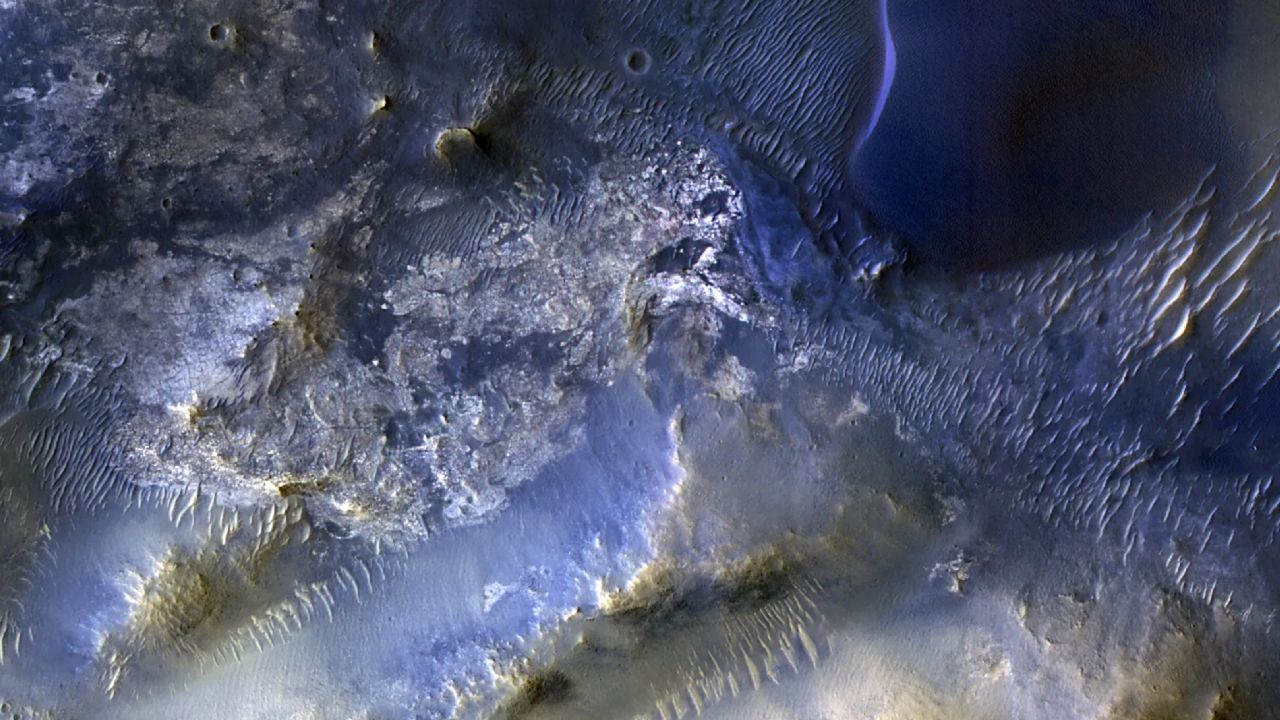
This historical photo was taken on October 7. It has a glimpse of the Syrtis Major region of Mars, where high mesas (flat mountains) and huge sand dunes spread between them are visible. This area is about 80 kilometers south-east of Jezero Crater, where NASA’s Perseverance Rover is currently searching for signs of ancient life. Scientists are trying to understand through this picture where the wind-blown sand comes from, how it gets trapped in these areas and turns into huge sand dunes with time.
Mars: Not a stable, constantly changing planet
“HiRISE not only shows how different the surface of Mars is from Earth, but also proves that Mars is a living planet that changes over time,” says Leslie Tampari, project scientist at NASA’s Jet Propulsion Lab. HiRISE has also recorded wind-driven sand dunes, landslides such as avalanches falling down steep slopes, and weather changes on Mars. That means Mars is not a frozen, dead world, but an active planet.
Historical photo chosen by a student
There is another special thing about this 1 lakhth picture. This was not suggested by any great scientist, but by a high school student. Through NASA’s HiWish website, any person in the world can give suggestions for studying any part of Mars. The team liked this suggestion so much that it became a part of history. The team at the University of Arizona, which operates the HiRISE camera, also creates 3D models and virtual flyover videos from these images, so that ordinary people can feel “flying” over the surface of Mars.
Mars is no longer mysterious, the planet is becoming familiar
Shane Byrne, Principal Investigator of HiRISE, says, “Releasing data rapidly and imaging targets suggested by the public has been the hallmark of HiRISE. 100,000 images have made Mars more familiar and accessible to everyone.” This is the reason why today Mars is not limited only to the laboratories of scientists, but has become the center of curiosity of students, researchers and common people.
Foundation of future human flights
The biggest contribution of MRO and HiRISE is the preparation for future manned missions. Before landing humans on Mars, it is very important to know where it will be safe to land, where there are signs of ice or water and in which areas the danger is high. HiRISE images answer all these questions.
The 1 lakhth photo is not just a figure, but a message that humans are now keeping an eye on every heartbeat of Mars. In the years to come, this same camera, this same mission, will reveal even deeper secrets of Mars – and perhaps lay the foundation for the day when humans first set foot on the red planet’s soil.

Comments are closed.