
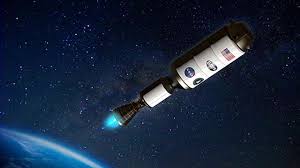
NASA’s magical nuclear battery will not run out for 5 generations, will provide power continuously for 433 years – ..

News India Live, Digital Desk: In the world of space science, NASA has achieved a revolutionary achievement that can change the energy needs of the future forever. NASA has created such ‘Nuclear Battery’ developed, which without stopping or charging the next 433 years Can generate electricity up to. In simple words, this battery will remain active for more than the lifetime of 5 generations of humans. This discovery has sparked a new debate not only about space missions but also about sources of energy on Earth.
What is the power of this nuclear battery?
This new technology of NASA ‘Radioisotope Thermoelectric Generator’ (RTG) Is being seen as an improved version of. This battery converts the heat generated by the natural decay of radioactive elements like plutonium-238 into electricity. This process does not require any kind of external fuel or solar energy, due to which it can work even in those parts of deep space where sunlight does not reach at all. The longevity of 433 years makes it the most sustainable energy source ever.
This technology will prove to be a game-changer for space missions
The biggest challenge in space missions till now was power backup. Be it rovers running on Mars or vehicles like ‘Voyager’ going outside the solar system, their lifespan depends on their batteries. This nuclear battery of NASA will prove to be a milestone for future interstellar missions (travel from one star to another). The power supply that lasts for 433 years means that now humans will be able to send their equipment even to those remote corners of the universe, where it takes centuries to reach.
Will this battery be used on Earth also?
As soon as this news went viral, this question is arising in the minds of people that in the future, will our smartphones or electric vehicles also run on similar batteries? Experts say that although this technology is still very expensive and subject to radioactive safety standards, it could be used in extremely inaccessible areas, such as sensors in the depths of the ocean or power stations in icy regions like Antarctica. At present, NASA’s main focus is on using it in missions to solve the unsolved mysteries of the universe.
What is the safety and radiation risk?
It is natural to be concerned about security on hearing the name nuclear. However, NASA has clarified that these batteries are encased in multiple protective layers, which prevent any kind of radiation leakage. These batteries are capable of withstanding extremely harsh conditions, such as strong blasts or extreme pressure. This progress in science shows that we are moving towards an era where problems like ‘low battery’ will become history.

Comments are closed.