


More than 44 percent of vehicles currently operating on the road lack any form of active insurance coverage. This alarming statistic was officially revealed by the Ministry of Road Transport and Highways during a recent session in the Rajya Sabha.
The figures are drawn directly from the national VAHAN database as of March 6, 2026. This data specifically accounts for active vehicles that hold valid registration and fitness certificates but have failed to renew their insurance policies.
With millions of two wheelers, passenger cars, and commercial vehicles registered across the country, a 44 percent non-compliance rate translates to an astronomical number of vehicles moving without any financial safety net. For motorists who pay their premiums diligently, this means nearly one in every two vehicles sharing the road with them is a financial liability waiting to happen.
Enforcement and compliance hurdles
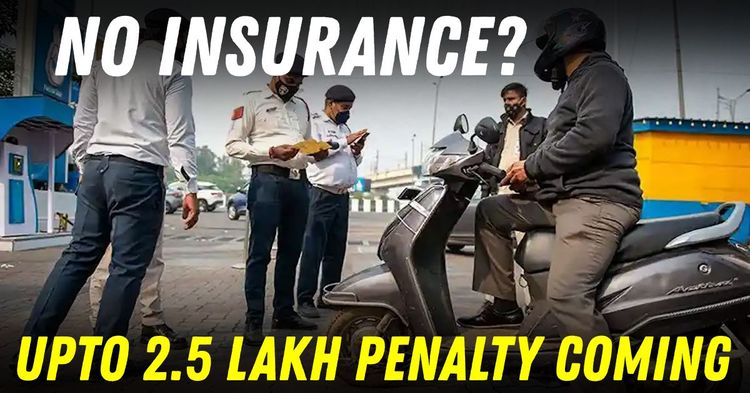
Under Section 146 of the Motor Vehicles Act of 1988, it is strictly mandatory for every motor vehicle operating in a public space to carry at least basic third-party insurance. This baseline coverage is designed to protect pedestrians and other road users in the event of an accident.
Despite clear penalties outlined under Section 196 of the same Act, the compliance rate remains remarkably poor. Many vehicle owners purchase insurance during the initial registration of a brand-new vehicle because it is a mandatory requirement at the dealership level. However, a significant portion of these buyers fail to renew their policies in the subsequent years.
The primary responsibility for enforcing these traffic rules falls on individual state governments and local transport authorities. The lack of routine physical checks and the sheer volume of daily traffic make it practically impossible for traffic police to manually flag every defaulting vehicle. To combat the shortfall, the central transport ministry has issued multiple advisories urging states to adopt stricter enforcement protocols. Authorities are actively encouraging the use of digital verification tools, such as automated camera networks that can cross reference number plates with the national insurance database in real time to issue automatic fines.
Financial risks in everyday commuting
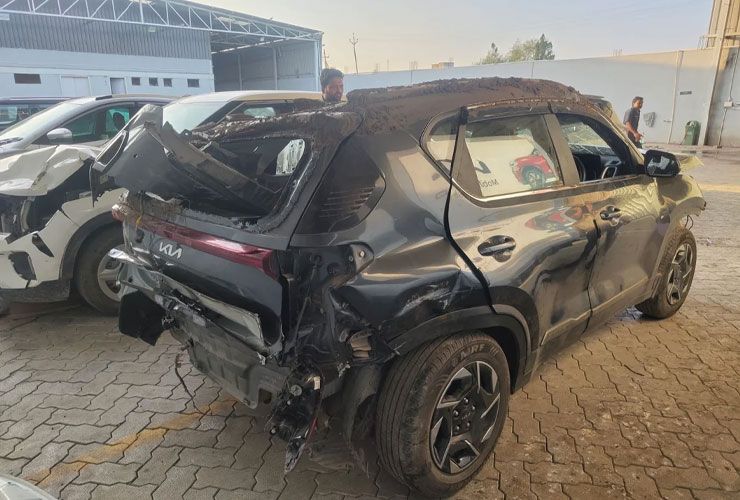
The high volume of uninsured vehicles creates a massive financial risk for the entire transportation ecosystem. When a compliant driver is involved in a collision caused by an uninsured motorist, recovering the cost of vehicle repairs or medical treatments becomes incredibly difficult.
Standard third-party insurance is supposed to cover the liabilities of the at fault driver. Without it, victims are often forced to rely entirely on their own comprehensive insurance policies, leading to a loss of no claim bonuses and higher future premiums.
This dynamic effectively penalizes law abiding citizens while allowing defaulters to escape their financial responsibilities. The situation is particularly critical in the two-wheeler segment, which makes up the vast majority of traffic volume and generally sees the highest rates of policy lapses. For pedestrians or daily wage earners who might not have personal health insurance, an accident involving an uninsured vehicle often translates into severe financial ruin.
Relief mechanisms for accident victims

Recognizing the severe impact of this enforcement gap, the government has established specific legal and financial safety nets for victims. If an individual is injured by an identified but uninsured vehicle, compensation claims can still be filed formally under Sections 164 or 166 of the Motor Vehicles Act. To ensure that victims are not left entirely helpless, the central government recently updated the rules surrounding the Motor Vehicle Accident Fund in January 2026.
This updated fund now features dedicated accounts specifically allocated for incidents involving uninsured vehicles and hit and run cases. These financial reserves are utilized to support immediate medical treatment for accident victims. The fund also acts as the financial backbone for emergency aid initiatives like the PM RAHAT scheme, which operates under Section 162 of the Act to provide swift relief to those injured on the road. While these government backed funds provide a crucial lifeline, the ultimate solution requires closing the massive 44 percent gap at the enforcement level.

Comments are closed.