
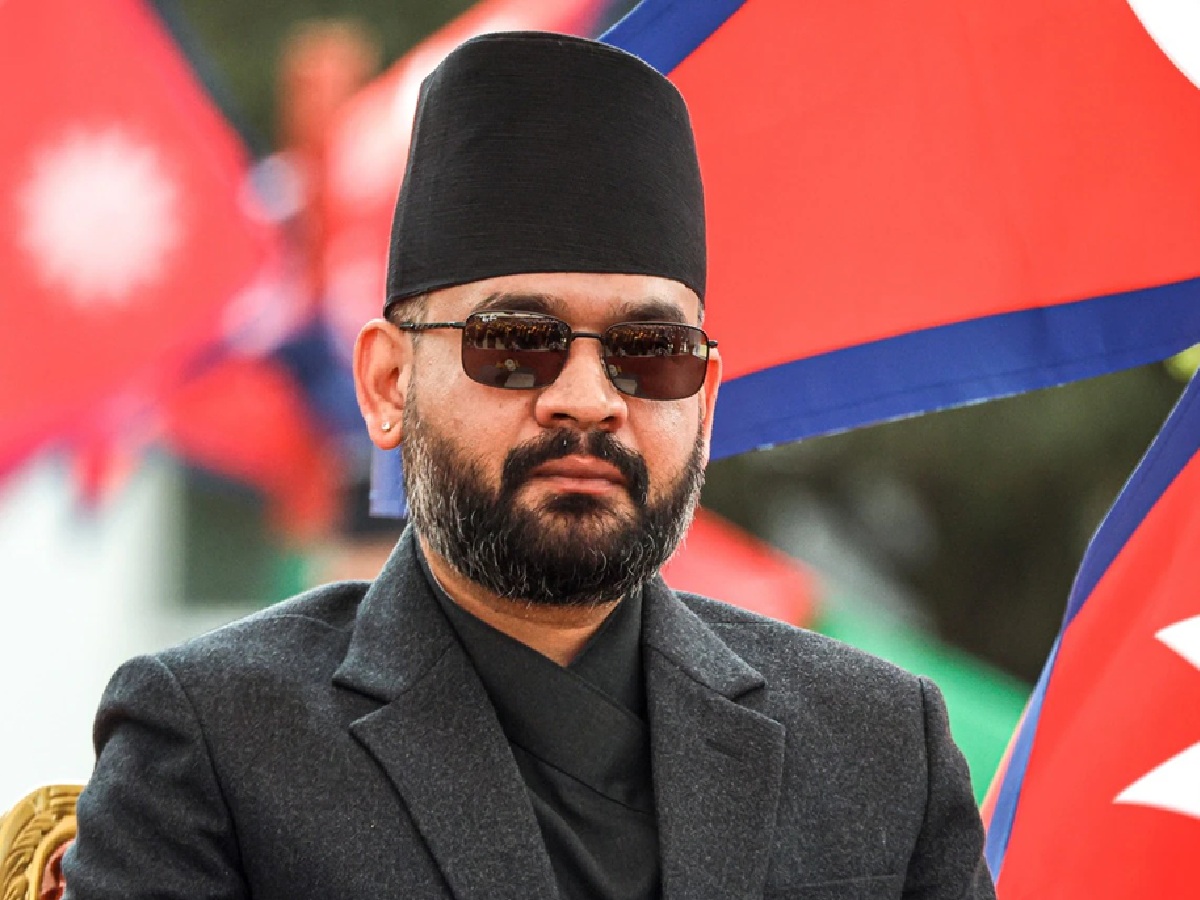
Nepal Political Crisis: The journey from Gen-G icon to ‘Nepali Hitler’? Mahant Thakur lashed out at Nepal PM Balen Shah in Parliament

A new and very aggressive ideological turn is currently being seen in the political circles of Nepal. The governance style of Nepal’s Prime Minister Balen Shah, who established himself at the center of power by defeating traditional political parties on the basis of social media and unprecedented support of the young generation (Gen-Z), is now surrounded by serious controversies. On Wednesday, July 15, 2026, opposition parties opened a front against the Prime Minister in the National Assembly, the upper house of the Parliament of Nepal. Janata Samajwadi Party (JSP) senior leader and senior MP Mahant Thakur has made a serious allegation of imposing a dictatorial regime in the country by directly comparing Prime Minister Balen Shah with the world’s most cruel dictator Adolf Hitler in the House. Nepalese Hitler has become PM: Mahant Thakur fired sharp political arrows in the Parliament. During the strategy meeting of the Parliament, Mahant Thakur adopted a very aggressive stance and termed the entire administrative system led by Balen Shah as incompetent, directionless and a complete failure. He said emphatically in front of the speaker, "By what name should we call the head of the country today? Should he be called Nepali dictator or Nepali Hitler? He has actually become the Hitler of Nepal. Every word that comes out of his mouth is accepted as the ultimate truth and every arbitrary order of his becomes the law of the country. Due to this autocratic attitude, today the whole of Nepal is standing at the brink of destruction and administrative anarchy." Thakur alleged that this government has become completely inactive and has no political commitment left to implement the populist assurances given to the public, due to which frustration is increasing among the youth of the country. Attack on administrative machinery and institutions: Allegation of vandalism in the offices of political parties. Opposition leaders have made a big and organized allegation on the government of deliberately destroying the democratic structure. According to the submissions made in Parliament, Balen Shah’s administration has started arbitrarily removing officials from their constitutional posts without any solid legal basis in order to intimidate the established staff machinery, which has led to massive protests at the administrative level in many parts including Kathmandu. Not only this, Mahant Thakur made sensational allegations that at the behest of the present government, there is forcible interference in the provincial offices of the established political parties, the furniture there is being openly burnt and efforts are being made to ban democratic organizations completely because this government does not have the courage to face the ideological strength of organized trade unions and student organizations. Outcry in education and health sector: Huge dissatisfaction in private sector due to harsh policies Making special mention of Nepal’s basic social infrastructure, the senior MP warned that the government’s overly aggressive and harsh approach towards boarding schools (private educational institutions) and nursing homes will completely halt the development cycle of the country. He logically explained that a developing country like Nepal cannot provide world-class education and health services to its entire population on the basis of government aid and limited budget alone; For this, private investment and active cooperation of the corporate sector is essential. The future of millions of promising students, professional teachers and health workers seems to be completely shrouded in darkness due to the repressive policies of the government, which will ultimately further weaken the economic backbone of the country. Demand to protect democratic values: The Himalayan nation is going in the wrong direction. In the concluding session of his parliamentary address, Mahant Thakur drew the attention of the global community and the country’s judiciary and warned that this autocratic governance style of Balen Shah is taking Nepal on a very dangerous and suicidal path. He condemned in the strongest terms the government policies of sidelining democratic processes and continuously weakening the country’s old public institutions. After this big parliamentary confrontation, now the ideological war between the youth supporting Balen Shah and the workers of traditional parties on the streets of Kathmandu is likely to intensify, which is being closely monitored by the diplomats of entire South Asia including India.

Comments are closed.