
Netherlands reverses English-degree curbs with $1.7B push to attract international students

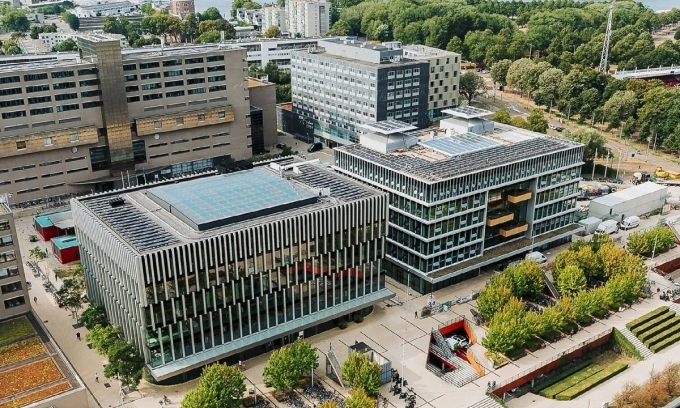
Erasmus University Rotterdam, one of the leading universities in the Netherlands. Photo courtesy of Erasmus University Rotterdam
The Netherlands is reversing plans to curb English-taught university programs and launching a €1.5 billion (US$1.7 billion) funding push as Europe competes for international students and skilled workers.
A new governing coalition formed in late January by Democrats 66 (D66), the People’s Party for Freedom and Democracy (VVD) and the Christian Democratic Appeal (CDA) has agreed to scrap plans that would have further restricted non-Dutch-language degree programs, according to The PIE News. The move signals a shift away from policies introduced in recent years to curb the rapid growth of international enrollment.
The previous government had pushed universities to rein in recruitment amid housing shortages, overcrowded lecture halls and growing pressure on academic staff. Proposals included tighter controls on English-taught programs and measures designed to slow international intake.
But while concerns about housing and capacity remain, new data show a more complex picture. The total number of international degree students in the Netherlands reached about 131,000 in the 2024-2025 academic year, according to national mobility data. However, growth has slowed sharply, particularly at the bachelor’s level, where new international enrollment has weakened in recent years.
Universities welcomed the policy shift. Caspar van den Berg, president of Universities of the Netherlands (UNL), said the sector had endured years of funding uncertainty and described the coalition agreement as a positive signal that education remains a national priority, NL Times reported.
Student organizations also expect improvements in financial support. The Interstedelijk Studenten Overleg (ISO), the national student union, has advocated for stronger internship protections and better student grants as part of the broader reform package.
The Netherlands remains one of Europe’s largest providers of English-taught degree programs and continues to market itself as a relatively affordable study destination. Annual bachelor’s tuition for non-EU students typically ranges from several thousand to the mid-teens in euros, often lower than headline fees in the U.K. or the U.S.
Nearly half of international graduates stay in the Netherlands at least one year after finishing their degrees, contributing to the country’s skilled workforce, a key issue as European economies grapple with labor shortages in high-demand sectors.
The government’s funding package, which replaces previously proposed cuts, is intended to stabilize universities while keeping the Netherlands competitive in the global race for students and talent.

Comments are closed.