
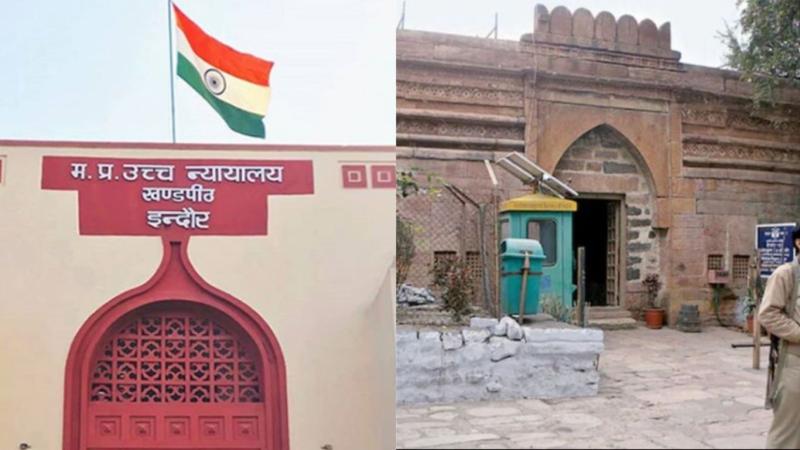
Bhojshala Case: ‘Mosque built using temple parts…’, big claim in ASI report, next hearing in High Court on March 16

Dhar Bhojshala Case: Hearing in Dhar Bhojshala case was held today in Indore High Court. During the hearing in the High Court, the ASI survey report was presented in the Indore bench and the court handed it over to the parties.
The High Court said that all the parties have received the report. At the same time, the High Court has given time to both the parties to give objections as well as suggestions on the medicines in two weeks on the survey report. The High Court has taken the report on record.
Main points related to the case on ASI survey report
main structure of the temple
- The ASI report clearly states that the present structure has been built on the remains of an already existing temple. The temple present here is said to be of 11th-12th century.
Statues of Hindu Gods and Goddesses
- It has been told in the survey of ASI that during the survey, 97 such major artefacts and sculptures, which are related to Hindu religion, have been found from the premises. The idols found in the survey include fragmented idols of Lord Ganesha, Brahma, Shiva, Hanuman and Shri Krishna.
Sanskrit inscriptions found
- During the survey, a large number of inscriptions written in Sanskrit and Prakrit languages were found on the walls and pillars. These include poetic compositions and grammar formulas of the time of Raja Bhoj.
Relics of Maratha period
- It has been mentioned in the survey report that the influence of Maratha period has also been seen on some structures and sculptures, which shows its continuous use.
construction of islamic structures
- The ASI survey report has found that temple pillars and temple stones were used in the construction of the mosque. In this, an attempt has been made to erase Hindu symbols on many pillars.
Special reference to Saraswati statue
- It has been told in the report that the place of Saraswati statue has also been identified, where originally the statue of Vagdevi (Goddess Saraswati) would have been installed. However, at present that statue is kept in the Museum of London.
Scientific Technology (GPR)
- ‘Ground Penetrating Radar’ ASI’s survey has revealed that many walls and rooms are buried under the ground, which are mainly part of the base of the temple.
Architecture and architectural style
- The carved bells, lotus flowers, and Kirtimukha sculptures on the pillars (a major symbol of Hindu architecture) clearly confirm the temple construction style and the Parmar period.
tampering with carvings
- It has been recorded in the survey report that plaster was used to cover old carvings at many parts. When it was removed during the survey, Hindu artefacts were seen below.
time offset
- On the basis of archaeological analysis and carbon dating, the survey has concluded that this site was a grand and great center of learning and temple during the period of Raj Bhaj (1000-1055 AD).
After seeing the survey report, the High Court has scheduled the next hearing on the case on March 16. After the report is opened in the court, now people from both Hindu and Muslim sides will present their arguments in the court based on scientific facts.

Comments are closed.