
No anticipatory bail to absconding accused on the basis of acquittal of co-accused: Supreme Court

New Delhi.
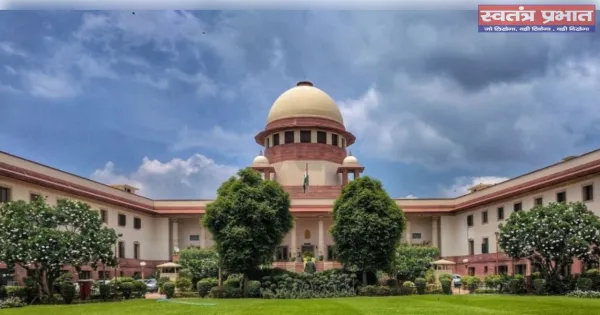
Supreme Court of India In an important judgment, the Supreme Court has clarified that an absconding accused cannot be entitled to anticipatory bail merely on the ground that his co-accused has been acquitted in the trial. The court said that giving such relief to a person who deliberately evades the law and stays away from trial would send a wrong message to the justice system.
this decision Justice JB Pardiwala And Justice Vijay Bishnoi The bench pronounced this during the hearing of a case related to Madhya Pradesh. The case pertained to an order in which the High Court had granted anticipatory bail to an absconding accused only on the basis of the acquittal of his co-accused.
The complainant had challenged this decision of the High Court in the Supreme Court. He said that the accused has been absconding for a long time and has tried to avoid the judicial process. Such a person cannot be given the benefit of parity on the basis of acquittal of co-accused. The complainant also argued that the release of the co-accused was in the absence of specific evidence produced against them, which had no direct connection with the absconding accused.
During the hearing, the state government also supported the complainant’s side. The Supreme Court raised questions as to why the state did not appeal against the High Court order. The court said that the role of the state is also very important in such cases.
In its decision, the Supreme Court said that granting anticipatory bail to an absconding accused sets a wrong precedent. This sends the message that the accused who respect the law by attending the trial are making a mistake, while those who remain absconding are getting the benefit. This situation may encourage people to avoid the law.
The court also said that the High Court granted bail only on the basis that the prosecution could not present solid evidence and the co-accused had been acquitted. While the fact that the accused was absconding for almost six years was ignored and it made a mockery of the judicial process.
The Supreme Court clarified that generally a fugitive accused is not entitled to anticipatory bail. However, in special circumstances, when it is prima facie clear from the record that no case is made out against the accused, the court may exercise its discretion. But the present case does not fall in such category.
The court also held that the accused not only evaded investigation but also threatened an injured witness. This raises serious questions on his intentions and conduct.
The Supreme Court, while setting aside the order of the High Court, directed the accused to surrender before the concerned court within four weeks from 13 February 2026.
this decision Balmukund Singh Gautam vs. State of Madhya Pradesh and Others The case has been heard, which is being seen as an important precedent in the judicial process.

Comments are closed.