

The government has told carmakers clearly that the CAFE 3 clock will not be pushed back. Fleet average fuel efficiency norms for Stage 3 will kick in from 1 April 2027 and run till 31 March 2032, and manufacturers are expected to be ready. The message was conveyed in a recent industry interaction where officials from the Ministry of Power and the Bureau of Energy Efficiency reiterated that timelines are fixed even though the latest draft has softened some of the numbers.
That mix of softer targets and a hard start date is the real story for buyers and the industry. The April 2026 draft cuts the overall stringency of CAFE 3 by around 21 percent compared to the September 2025 proposal, mainly by changing the constants in the formula that defines how much CO₂ per kilometre a fleet is allowed to emit on average. The slope of the weight-based curve has been flattened, and the baseline constant raised, which together mean the effective targets are easier to hit than they looked six months ago. But the window in which to hit them has not moved even by a day.
CAFE norms measure the average CO₂ emissions per kilometre for every manufacturer’s M1 category fleet, which covers all passenger vehicles up to 3,500 kg and nine seats. Stage 3 will be assessed over five years from FY28 to FY32. For practical product planning, that means the models going on sale in 2026 and 2027 have to be engineered today with CAFE 3 compliance in mind. There is no room to delay electrification plans or to push more efficient engines into “later” facelifts.

The government has already conceded ground once on the steepness of the curve and on the level of the constant “c” in the target formula. It has also dropped the explicit 3 g/km CO₂ relief that was earlier carved out only for small cars, replacing it with a curve that naturally gives light vehicles more breathing room. With those concessions made, the officials’ view is that industry has enough flexibility through credit trading, super credits for EVs and some hybrids, and the softened targets themselves. A deadline shift now would undercut the purpose of the policy.
The pain is not spread evenly. Makers with a portfolio heavy on small hatchbacks and compact SUVs under 1,200 kg stand to gain most from the flatter curve. Their fleet averages were already lower because lighter cars tend to consume less fuel.
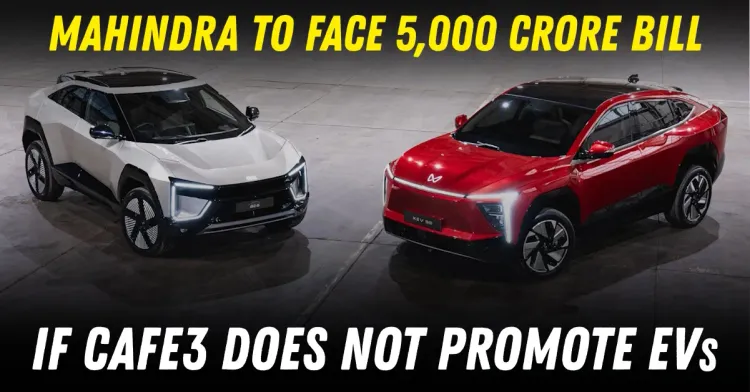
Companies whose product lines lean on heavier SUVs and MPVs, especially those with older petrol and diesel engines, have more work to do. They will need to lean harder on electric and strong hybrid models, premium but efficient engines, and possibly on buying credits from others.
The government’s refusal to move the start date forces a more aggressive product pipeline from 2027 onwards. Several passenger vehicle makers had sought either a phased introduction with a slower ramp up or a one-to-two-year extension of the CAFE 3 window, citing the time required for localisation of batteries, motors and new powertrains. Those arguments did not change the ministry’s stance.
For someone walking into a showroom in 2027 and beyond, CAFE 3 will not appear on any spec sheet, but it will be baked into what is on offer. You will see more EVs and strong hybrids in almost every brand’s portfolio, because each battery electric vehicle counts as multiple cars in the CAFE calculation and pulls down the average. Some traditional petrol and diesel engines that are currently on sale will quietly disappear because reengineering them to meet the tighter fleet average does not make commercial sense.
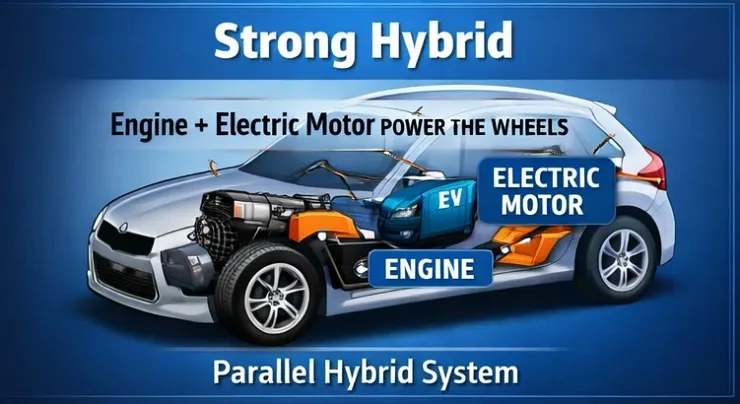
You are also likely to see more strong hybrid systems, cylinder deactivation on larger engines, wider use of dual injection and higher compression ratios, and in some segments downsizing of engines with stronger turbocharging. All those tricks help squeeze a few extra grams of CO₂ out of the fleet average. The cost of that engineering will partly show up in ex showroom prices.
On the flip side, the softened targets mean the jump in technology cost will not be as abrupt as it looked under the original draft. The government has chosen to keep the date and relax the distance rather than move the finish line. For carmakers, that means less wriggle room on timelines. For buyers, it means a steady but unavoidable increase in the share of EVs and hybrids on sale from 2027, and the gradual fading of older, thirstier engines that cannot pull their weight in a CAFE 3 world.
Comments are closed.