
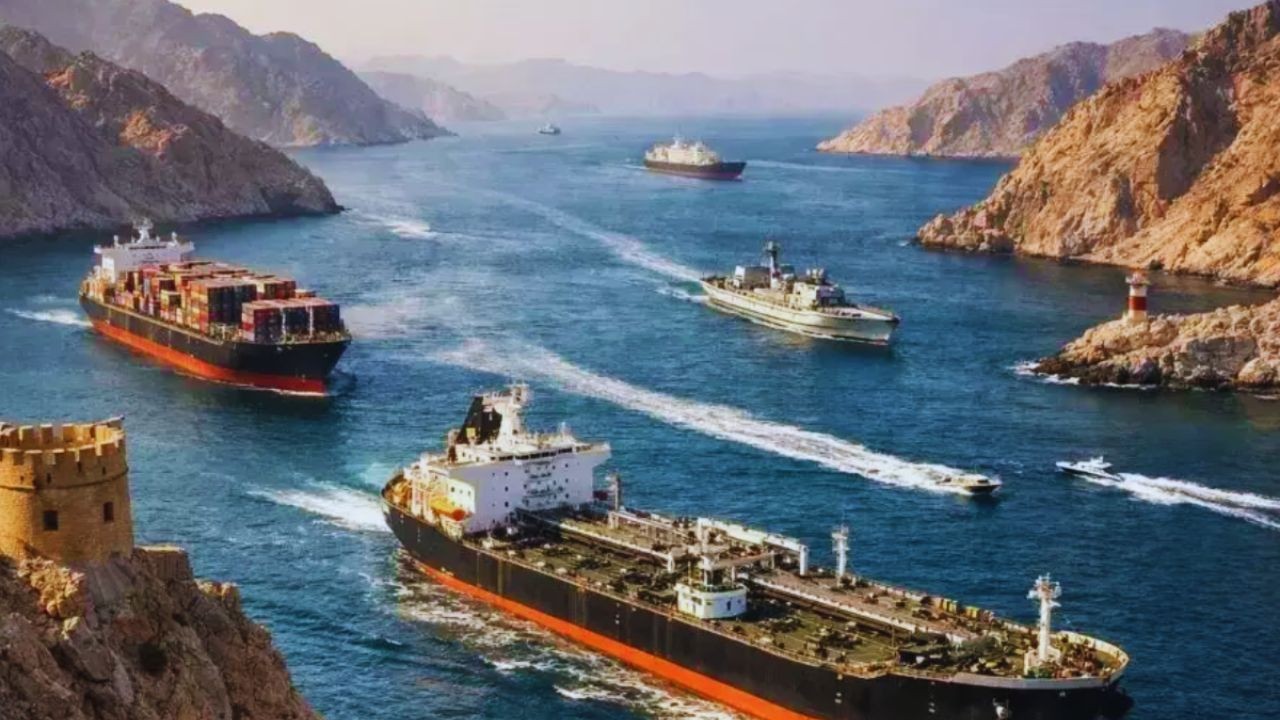
No one’s permission is required to pass through Hormuz, Government of India clearly declares, claims of fees also rejected

The Indian government has given a clear answer to the speculations regarding the Strait of Hormuz. In a major statement issued on Tuesday, the government said that no country’s permission is required to pass through the Strait of Hormuz. Rejecting the ongoing discussions regarding Indian ships stranded in the Persian Gulf amid Iran-America-Israel tension, the Central Government clarified that there is freedom of movement in this strait under international navigation rules. Rajesh Kumar Singh, Special Secretary, Ministry of Ports, Shipping and Waterways gave detailed information in this regard.
Government’s big statement on Strait of Hormuz
A senior official said on Tuesday that no permission of any country is required to pass through the Strait of Hormuz, the only sea route connecting the oil-rich Persian Gulf to the open sea. Due to the American and Israeli attacks on Iran and its retaliation, the movement of ships in the strait had almost stopped.
What did the Special Secretary say?
Special Secretary Rajesh Kumar Singh said, no permission is required to pass through the Strait of Hormuz. He said that according to international navigation rules there is freedom of movement in the strait. Since the strait is narrow, only entry and exit routes are marked, which all vessels must follow. He also said that no fees or security money is being paid for the safe movement of ships.
Situation of stranded ships
The official said that the ships stranded in the western part of the strait include five LPG ships, which have about 2.3 lakh tonnes of cooking gas and apart from this, filling of LPG has started in an empty ship. One LNG tanker, four crude oil tankers, one tanker carrying chemical products, three container ships, two bulk carriers and three other ships were in dry dock for routine maintenance.
Options available to India
About 85-95 percent of India’s LPG and 30 percent of its gas needs come through this strait. Although the disruption in crude oil supply has been partially compensated by alternative sources like Russia, West Africa, the US and Latin America, there has been a cut in the supply of gas and LPG to industrial and commercial users.
LPG tankers coming to India
Earlier, LPG tankers Pine Gas and Jag Vasant left the Persian Gulf on Monday morning before crossing the Strait. Both are walking close to each other. The gas loaded on these ships is almost equal to one day’s cooking gas consumption in the country. The Pine Gas ship is carrying 45,000 tonnes of LPG and is scheduled to reach New Mangalore Port on March 27. The ship Jag Vasant has 47,612 tonnes of LPG and it will reach Kandla in Gujarat on March 26. There are 33 and 27 Indian sailors on board these two ships respectively. Both these ships were among the 22 Indian-flagged ships that got stuck in the Persian Gulf after the war in West Asia.

Comments are closed.