
‘No PUC, No Fuel’ implemented from today, ‘No Entry’ for outside vehicles, know 10 big rules of fight against pollution: – ..

As part of a comprehensive crackdown on air pollution, the ‘No Pollution Under Control (PUC), No Fuel’ rule has started being implemented in the capital from Thursday, and the entry of BS-VI vehicles registered outside the capital has also been banned.
Under the new measures, vehicles without a valid PUC certificate will not be fueled at petrol pumps across the city. Also, entry of trucks carrying construction material into Delhi will remain restricted and the ban on construction work under GRAP norms will continue, with strict action promised against violators.
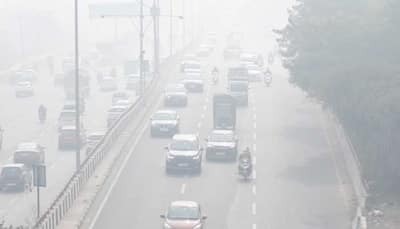
Heavy smog has engulfed the capital, forcing the Delhi government to implement a mix of emergency measures and long-term reforms targeting vehicular emissions, road dust, waste management and traffic congestion.
Announcing the measures on Wednesday, Environment Minister Manjinder Singh Sirsa said the government was taking action on “multiple fronts” as residents continue to face hazardous air quality.
Speaking at the press conference, Sirsa said that Wednesday was the last day for motorists to obtain a valid PUC certificate. “Fuel will not be given to polluting vehicles from tomorrow,” he said, adding that enforcement would be ensured through ANPR cameras, voice alerts at petrol pumps and police deployment.
To enforce the fuel ban, 126 checkpoints, including border posts, have been set up across Delhi, where 580 policemen and 37 Prakhar vans are deployed. Transport department teams will also be deployed at petrol pumps and entry points.
Appealing for cooperation from the public, Sirsa said, “Delhi residents are requested not to argue with the officials deployed at petrol pumps or at the borders and checkpoints. This step is for your health and the future of your children.”
As part of efforts to reduce the load on vehicles, the government has ordered 50 per cent work-from-home in both government offices and private establishments.
The minister also announced comprehensive reforms in the system of issuing pollution control certificates, citing shortcomings of the existing centres. “The Delhi government is considering reforming the system of issuing pollution control (PUC) certificates, as the existing centers are old and have many loopholes. A third-party monitoring system will be implemented,” he said.
The government is considering the possibility of partnering with Google Maps and MapMyIndia to deal with traffic jams and pollution caused by idling of vehicles. Sirsa said he chaired a high-level meeting with Google Maps executives to examine the development of an integrated traffic management system capable of adjusting traffic signals based on real-time congestion data.
“This collaboration will enable us to identify emerging hotspots using live traffic data, decongest roads faster and reduce emissions caused by vehicle idling,” he said.
The government plans to identify at least 100 vehicle pollution and traffic hotspots for targeted action. Sirsa said that the number of pollution hotspots in Delhi has increased from 13 during the tenure of the previous Aam Aadmi government to 62 at present.
Referring to the main causes of pollution, he said, “There are four sources of pollution in Delhi: vehicular pollution, industrial pollution, dust pollution and solid waste pollution.”
To tackle dust pollution, the Public Works Department has been directed to deploy 70 mechanized road cleaning machines and water sprinklers across the city, along with around 1,000 ragpickers and 300 water sprinklers. The Delhi government will provide Rs 2,700 crore over 10 years to the Municipal Corporation of Delhi for the purchase of mechanized cleaning machines and garbage collection equipment.
PWD has also introduced a permanent pothole monitoring system through a third-party survey agency under the annual rate contract model. The agency will conduct surveys throughout the year, take photographs of damaged roads and provide real-time data to ensure repairs within 72 hours, as potholes are a major source of dust.
Additionally, Sirsa announced an MoU with IIT Madras for the identification and development of “haze reducing” surfaces. These titanium oxide-based photocatalytic coatings, which are already being used in many global cities, can reduce nitrogen dioxide and harmful hydrocarbons. Pilot projects will be started in selected areas of Delhi.

Comments are closed.