
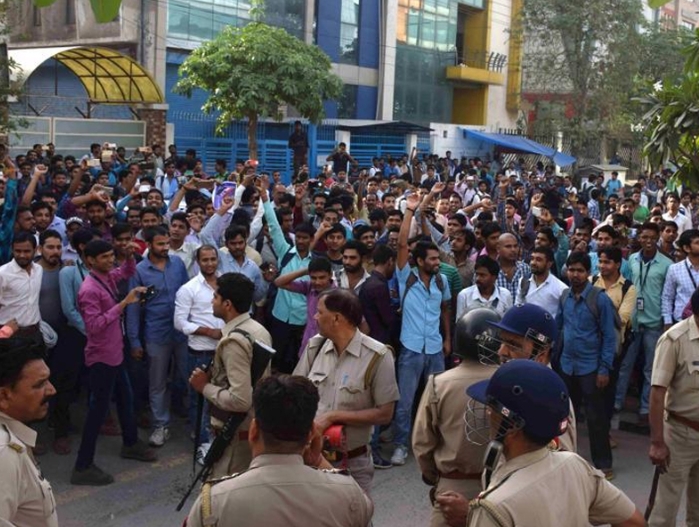

Thousands of garment and hosiery factory workers at Phase 2 Hosiery Complex in Noida took to the streets on Monday, April 13, 2026, demanding higher wages. The protest escalated into violent clashes, including stone pelting, vandalism and burning of vehicles. When this agitation, which had been simmering for several days, spread to Sector 60, 62 and nearby roads, causing huge traffic jams, the police released tear gas and used force to restore order.
The immediate reason for this was the recent 35% minimum wage hike in Haryana (which came into effect from April 1). This led to a substantial increase in the wages of unskilled and semi-skilled laborers — their wages rose from about ₹11,000–14,000 to ₹15,220 or even higher in some categories. Noida workers, many of whom earn less than ₹15,000 a month for a 10–12-hour shift, highlighted the huge wage gap with neighboring Faridabad and Manesar. There is now better pay for similar work.
The main demands include a minimum monthly wage of ₹18,000–20,000, a strictly 8-hour work day, fair overtime pay at double the rate, weekly holidays, regular bonuses and better safety measures inside factories. Workers argue that prevailing wages and long working hours leave them with little money for household expenses in this era of rising inflation.
The protests turned even more chaotic as reports of property damage and arson began to emerge. Authorities immediately intervened to bring the situation under control.
Uttar Pradesh Chief Minister Yogi Adityanath supported fair wages and safe working conditions for workers, but he strongly opposed the vandalism and disorder. He directed the state labor department to form a committee to immediately initiate talks with workers, factory owners and officials. Chief Minister Adityanath also cautioned against “conspiratorial elements” who are trying to disrupt industrial peace and development of the state by taking advantage of workers’ grievances.
The Labor Department has started talks, while the police is busy identifying those involved in the violence. This incident highlights the persistent challenges related to pay equity and worker welfare in the NCR industrial sector.

Comments are closed.