
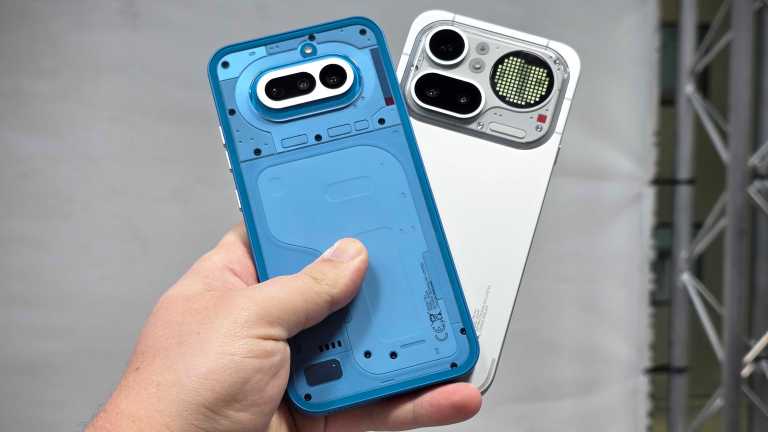

In an industry obsessed with the “Ultra” and the “Pro Max,” Nothing is taking a different path in 2026. Eschewing a traditional flagship release this year, Carl Pei’s London-based outfit has instead poured its resources into the mid-range. On Thursday, March 5, the company officially unveiled the Nothing Phone (4a) and Nothing Phone (4a) Pro, two devices that represent a massive shift in both design philosophy and market strategy.
By doubling down on the sub-$500 segment, Nothing isn’t just surviving; it’s attempting to dominate the territory recently vacated by brands moving up-market. With a starting price of £349 (€349 / ₹31,999), the Phone (4a) is a shot across the bow of the Google Pixel “a” series and Samsung’s Galaxy A-line.
The most striking change this year is visual. For the standard Phone (4a), Nothing has evolved its signature transparency with a more playful, “pop” aesthetic. The device now comes in Pink, Blue, White, and Black, with the tinted glass on the colorful models providing a depth we haven’t seen in previous generations.
The lighting system has also been overhauled. Ditching the sprawling patterns of the past, the base model introduces the “Glyph Bar“, a concentrated array of 63 mini-LEDs across seven zones. This bar is 40% brighter than previous iterations and serves as a highly functional status indicator for charging, timers, and Android 16’s “Live Updates.”
However, the Phone (4a) Pro is where the real controversy lies. In a move that has split the fanbase, the Pro model features a metal unibody build. While it retains a transparent camera plateau, the bulk of the rear is matte metal, prioritizing durability and a premium hand-feel over the “X-ray” look. To compensate, the Pro brings back the Glyph Matrix, a dense 137-LED display on the back that supports “Glyph Toys” and complex animations.
Snapdragon 7-Series: Performance for the Pragmatist
Nothing CEO Carl Pei has been vocal about the “diminishing returns” of flagship chips, and the Phone (4a) lineup puts that theory to the test.
Phone (4a): Powered by the Snapdragon 7s Gen 4, it offers a modest 7% CPU bump but significant efficiency gains.
Phone (4a) Pro: Steps up to the Snapdragon 7 Gen 4, delivering a 30% jump in graphics performance and a massive boost to on-device AI capabilities.
Both devices come with 8GB of RAM and 128GB of storage as the baseline, with an optional 12GB/256GB tier. Crucially, Nothing has moved to UFS 3.1 storage across the board, ensuring that the “snappiness” Nothing OS is known for remains intact even as files and apps grow larger.
The Camera Revolution: 3.5x Zoom for the Masses
Perhaps the biggest hardware surprise is the inclusion of a periscope telephoto lens in a mid-range phone. Both the (4a) and (4a) Pro feature a 50MP 3.5x optical zoom camera.
On the Pro model, this system is even more robust, utilizing a Sony LYT700c main sensor and supporting 140x hybrid zoom. Nothing claims the Pro model can capture 4K Ultra XDR video with Dolby Vision specs that were exclusive to $1,000 flagships just two years ago. The base (4a) rounds out its kit with a 50MP main sensor and an 8MP ultrawide, while the Pro goes “All-50MP” across its triple-lens array.
Display and Longevity
The screens have received a “Pro” treatment as well. The base model features a 6.78-inch 120Hz AMOLED panel protected by Gorilla Glass 7i, while the Pro pushes the refresh rate to 144Hz and increases peak brightness for better outdoor legibility.
In terms of juice, both phones house a 5,080 mAh battery with 50W wired charging. In a move to keep costs down and designs thin, wireless charging is notably absent from both models this year, a trade-off Nothing believes users will accept in exchange for the improved camera hardware.
The US Market and Software Support
In a strategic pivot, Nothing is bringing the Phone (4a) Pro to the United States exclusively through Amazon for $499. The base (4a), however, will remain a global-only release, skipping the US market for now.
On the software front, both devices ship with Nothing OS 4.1 (Android 16). Nothing has committed to 3 years of Android OS updates and 6 years of security patches, ensuring these mid-rangers remain viable well into the late 2020s.
Pricing and Availability
With the Phone (4a) series, Nothing is proving that “mid-range” doesn’t have to mean “boring.” By focusing on periscope cameras and unique lighting interfaces, they’ve created a compelling alternative to the industry giants.

Comments are closed.