
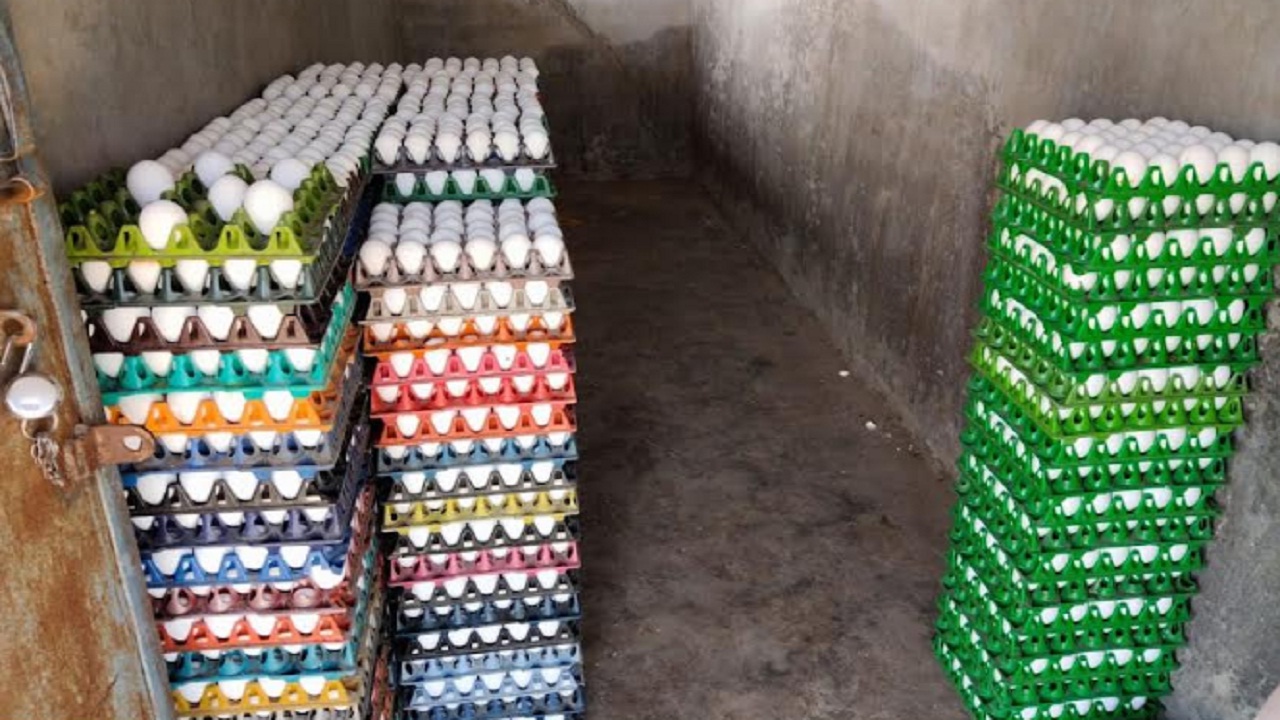

New Delhi : Many of us egg will be eating However, it is difficult to tell when these eggs belong. Because, these eggs can be several days old. That is why the Uttar Pradesh government has now imposed strict controls on the egg trade, making it impossible for those selling old eggs to claim they are fresh. From April 1, the Uttar Pradesh government has made it mandatory to print the expiry date on every egg.
The Uttar Pradesh government has taken a revolutionary step for consumer health, now making it mandatory to print ‘Manufacturing’ and ‘Expiry Date’ on every egg. This allows consumers to check for themselves how old the egg is and whether it is safe to eat. Often we don’t know how old the eggs are. According to experts, normal temperature eggs are good for only 2 weeks. Eggs can be used for up to 5 weeks if stored in a cool temperature (2 to 8C) refrigerator. So now you will be able to understand the expiry date of eggs. Accordingly, regulations have been framed.
If a shopkeeper violates the rules, their eggs will be confiscated. These eggs will either be destroyed or stamped as ‘unsafe for human consumption’. The department has signaled a strict inspection drive.
Rules have to be followed
Uttar Pradesh currently has its main cold storage facilities at Agra and Jhansi. According to food safety regulations, eggs and vegetables cannot be kept in the same place. Therefore, although the facilities are limited, the government has now warned in strict terms that the excuse of ‘no facilities’ will not work, the rules have to be followed.
Also Read: Big impact of Gulf tension on India? From petrol to exports, the economy may suffer
Impact of Iran-Israel war on many countries
On the other hand, considering India’s close economic and trade relations with the Gulf countries, the possibility of war-related tensions arising in that region will have an impact on the Indian economy. Experts are of the opinion that the situation may directly or indirectly affect trade, oil/gas supply, employment and the daily life of ordinary citizens.

Comments are closed.