
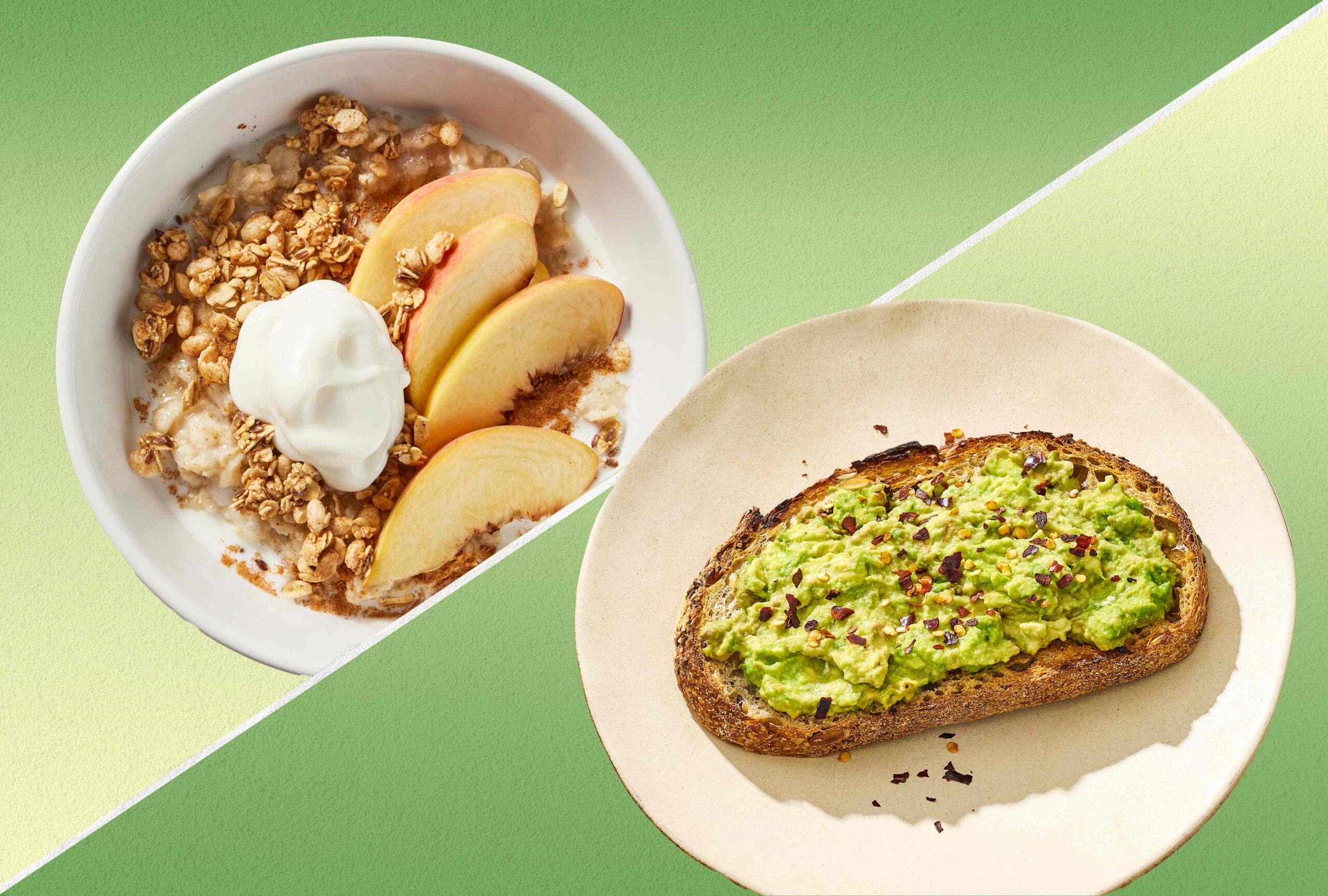

Both are breakfast staples, but can one give your cholesterol-lowering goals an edge?
Reviewed by Dietitian Casey Wing, RD, CD
Key Points
- Oatmeal contains beta-glucan fiber, which helps reduce LDL cholesterol absorption.
- Avocado toast offers heart-healthy fats and plant sterols, aiding cholesterol management.
- A varied, nutrient-rich breakfast routine supports overall heart health.
Managing your cholesterol is key for overall health, especially if high cholesterol runs in your family or you’ve been told your levels are elevated. The good news? Everyday habits, including what you eat and how you move, can make a meaningful difference over time.
Breakfast is a natural place to start. “It’s an opportunity to set the tone for the day with heart-healthy nutrients like fiber, unsaturated fats and protein,” says Patricia Bannan, MS, RDN. A balanced breakfast does more than just fuel your morning. “It can help stabilize blood sugar, manage satiety and increase daily fiber intake, all factors linked to better cholesterol management,” Bannan explains. That’s where two popular options come in: oatmeal and avocado toast. Both are considered heart-healthy, but is one better for lowering cholesterol? Here’s what the science says, and expert advice on a cholesterol-friendly breakfast.
How Oatmeal Affects Cholesterol
Oatmeal has long been considered a go-to breakfast for supporting healthy cholesterol levels. Why? Its claim to fame, beta-glucan. Lauren Harris-Pincus, M.S., RDN, explains, “Oatmeal is a source of the soluble fiber beta-glucan, which forms a gel in the digestive tract and helps bind cholesterol, reducing its absorption [in the intestines].”
Because of this, oatmeal has earned its reputation as a heart-healthy staple. Research shows that consuming about 3 grams of beta-glucan daily, as part of a cholesterol-lowering diet, can help reduce the risk of cardiovascular disease. Decades of evidence support this, including a recent systematic review of 17 studies, which found that oat consumption can lower LDL (“bad”) cholesterol and total cholesterol, while also improving triglyceride and HDL (“good”) cholesterol levels.
How Avocado Toast Affects Cholesterol
Avocados and whole-grain bread also contribute dietary fiber, but their nutritional value goes beyond that when considering their full profile, namely the heart-healthy monounsaturated fats and naturally occurring plant sterols found in avocado. These compounds are associated with supporting healthy cholesterol levels as part of an overall balanced diet.
“When consumed as part of a heart-healthy diet, these nutrients can help support healthy cholesterol levels,” Bannan confirms. “In fact, using avocado in place of foods higher in saturated fat, like butter or certain spreads, can also be a smart swap for heart health.”
Research supports this role in diet quality. In a controlled trial, participants who added one avocado per day to their usual diet experienced improvements in overall diet quality and blood lipid profiles, along with beneficial changes in sleep health, compared with a control group that made no dietary changes. While no significant differences were observed in overall cardiovascular risk scores in adults with abdominal obesity, the findings highlight the meaningful role avocados can play in supporting cardiometabolic health within a broader dietary pattern.
Oatmeal vs. Avocado Toast: Which Is Better for Cholesterol?
“Both can fit into a heart-healthy breakfast pattern, and they offer different benefits,” Bannan says. Oatmeal has long been recognized for its cholesterol-lowering properties, largely due to its beta-glucan fiber content. Avocado, on the other hand, has earned its reputation for heart health thanks to its rich supply of monounsaturated fats.
“Each provides a cholesterol-lowering benefit via different mechanisms, and each is a vessel to add more nutrient-dense foods to our diets,” adds Harris-Pincus. For example, upgrade your oats and increase the protein by making it with a fortified milk of choice, like cow’s milk or soy milk, and layer in added nutrients, like frozen fruit for extra fiber and nuts or seeds for more protein and healthy fats. Prefer avocado today? Smash it on whole-grain toast and top with canned chickpeas for a quick plant-protein and fiber boost, and sprinkle on some hemp seeds for a little healthy fat.
Other Tips for Better Cholesterol
Better cholesterol is possible with just a few small tweaks in your everyday routine. Consider these tips to help improve your cholesterol numbers.
- Eat more fiber. Adding 5 more grams of soluble fiber to your daily routine helps lower total cholesterol and LDL cholesterol. Consider foods like apples, pears, oats, Brussel sprouts, potatoes, whole grains, legumes and edamame.
- Swap your fat sources. “Replacing butter, full-fat cheese or processed spreads with foods like avocado, olive oil, nuts or seeds can support heart health,” says Bannan. Swap your mayo on sammies for smashed avocado, or replace the butter in your baked goods with avocado. Don’t knock it until you try it … yum!
- Focus on overall nutrient intakes. Not one single food holds superpowers; instead, it’s about the totality of your diet. Incorporating a variety of foods and nutrients into your everyday routine is key. The Mediterranean diet and DASH diet are excellent starting points for cholesterol management.
Our Expert Take
An important step in managing cholesterol is paying attention to the foods you eat, starting with your first meal of the day. Breakfast staples like oatmeal and avocado toast both provide key nutrients that can support healthier cholesterol levels in different ways.
The key is variety and balance. Rather than relying on a single go-to option, rotating between meals like oatmeal, avocado toast and other nutrient-rich breakfasts can help you get a broader range of heart-supportive nutrients. Over time, this approach supports not only cholesterol management but overall cardiometabolic health.

Comments are closed.