
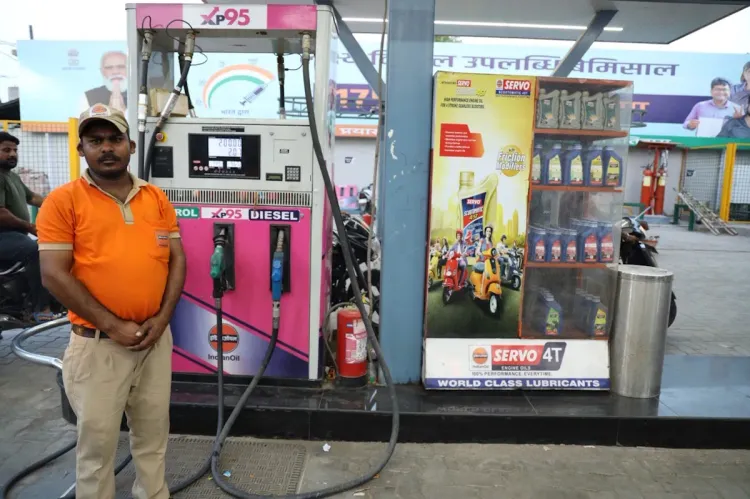

State run oil marketing companies have officially announced a noticeable price hike for premium grade petrol across the country. Effective from March 20, 2026, the retail prices for high octane fuel variants have been increased by Rs 2.09 to Rs 2.35 per litre, depending on the specific brand and local taxation structures. While buyers of premium fuel will feel the immediate pinch at the fuel station, the government has provided major relief to the masses by keeping the retail prices of standard petrol and regular diesel completely unchanged.
The price revision directly affects branded, high-performance fuels sold by the three major public sector oil retailers. This includes the ‘Power’ petrol retailed by Hindustan Petroleum Corporation Limited, the ‘Speed’ variant sold by Bharat Petroleum Corporation Limited, and the ‘XP95’ high octane fuel distributed by Indian Oil Corporation Limited.
Impact on premium fuel users
For consumers, the immediate impact is a slightly more expensive trip to the fuel pump. For instance, the price of HPCL Power petrol has seen a direct increase of roughly Rs 2.09 per litre, pushing the revised rate from Rs 111.68 to Rs 113.77 per litre in several major cities. Similar price jumps have been applied to the BPCL Speed and IOCL XP95 variants.
These premium fuels are specifically formulated with a higher-octane rating compared to standard 91 octane petrol. They are primarily purchased by driving enthusiasts and owners of high-performance luxury cars or premium motorcycles.
The higher-octane number helps prevent engine knocking in high compression engines and generally offers slightly better engine refinement and throttle response. Since the vast majority of commuter vehicles on the road run perfectly fine on standard unleaded petrol, this specific price hike will not affect the daily budget of the average motorist.
Global crude volatility and supply assurances
The upward revision in premium fuel prices arrives amidst significant volatility in the global energy markets. Ongoing geopolitical tensions and escalating conflicts in the Middle East have heavily influenced international crude oil dynamics. The recent friction involving Iran has created widespread speculation regarding potential supply chain disruptions, which typically drives up the raw input costs for oil marketing companies.
Despite these global pressures, the state-run fuel retailers are actively working to calm market anxieties. Following the price hike, Hindustan Petroleum Corporation Limited issued a public statement confirming that there is absolutely no disruption in the supply of crude oil to the country.
The company assured consumers that additional crude cargoes are already in transit, which will further solidify the domestic supply position in the coming weeks. The oil retailer actively urged the public to rely only on official updates and avoid reacting to market rumours regarding fuel shortages.
Shielding the common commuter
The decision to isolate the price hike strictly to premium fuel variants reflects a calculated move to protect the broader economy from inflation. Regular petrol and diesel are the lifeblood of the domestic transportation and logistics sectors. Any increase in standard diesel prices directly inflates the cost of transporting essential goods and groceries, leading to widespread inflation.
By keeping standard fuel prices stable, the oil marketing companies are absorbing a portion of the global price fluctuations while passing on a fraction of the increased costs to buyers who voluntarily choose premium performance fuels. This selective pricing strategy ensures that daily commuters, fleet operators, and public transport networks remain entirely unaffected by the current volatility in the international crude oil market.

Comments are closed.