
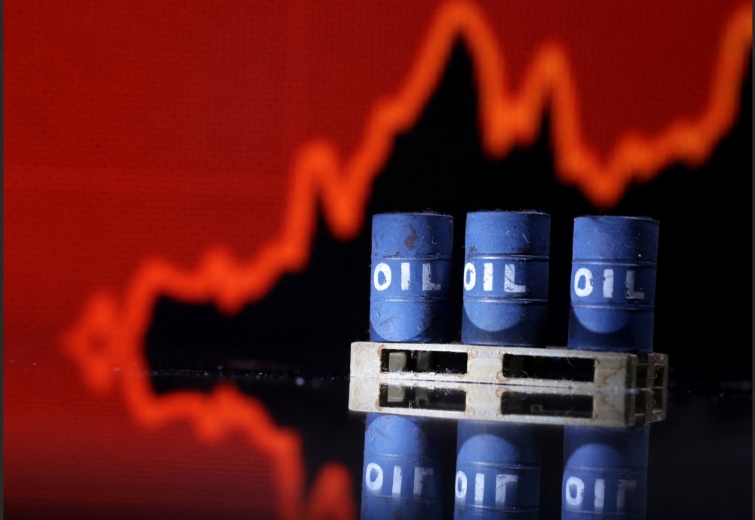
Oil becomes expensive, exports decrease: How will India handle the effects of US-Iran war?

The ongoing US-Israel military campaign against Iran, which began on **February 28, 2026**, has entered its second week. Defense Secretary **Pete Hegseth** described March 10 as perhaps the “most intense day” of US attacks. Iran’s Islamic Revolutionary Guard Corps (**IRGC**) has rejected claims it has scrapped the missile programme, and vowed to deploy heavier warheads and projectiles. President **Donald Trump** warned on social media that any Iranian blockade of the **Strait of Hormuz** would lead to attacks “TWENTY TIMES HARDER” than current levels, putting Iran at risk of “death, fire and rage” and irreparable damage as a country – while describing it as a “gift” to heavy users like China.
The conflict has effectively halted tanker traffic through the Strait of Hormuz – a chokepoint for ~20% of the world’s oil and gas – due to Iranian threats, attacks on ships, and military action. Ship traffic dropped sharply from normal levels (e.g., from ~100+ per day to almost zero in early March), leading to supply disruptions even without any formal legal restrictions.
For India, the consequences are dire: ~40–50% of crude oil imports (and as much as 85–90% for LPG) pass through the strait, mostly from Gulf suppliers such as Saudi Arabia, UAE, Iraq and Kuwait. There is a delay in the export of agricultural products to Gulf countries. Global oil prices have soared (Brent above $90–92/barrel), leading to higher import costs, widening of the current account deficit, and pressure on inflation and the rupee.
India’s strategic petroleum reserves provide coverage of about 74 days (according to Oil Minister **Hardeep Singh Puri**’s statements in the Rajya Sabha, this includes caverns, refineries, floating storage and products—less than the IEA’s 90-day benchmark but providing a buffer). The government has increased Russian imports (maintained/resumed despite previous pressures), sought alternative sources (US, others), and invoked the **Essential Commodities Act** to prioritize domestic LPG production, restrict commercial use, and extend refill booking times—which averted immediate shortages for households but impacted restaurants/hotels with commercial cylinder delays and price increases.
While crude buffers remain strong for months (diversification reduces risk), LPG (which does not have significant strategic reserves) comes under pressure quickly, lasting for weeks before completely stabilising. Prolonged, persistent disruptions could significantly increase costs, but pre-emptive measures and non-Gulf sourcing should allow India to weather the ups and downs well in the short to medium term.

Comments are closed.