
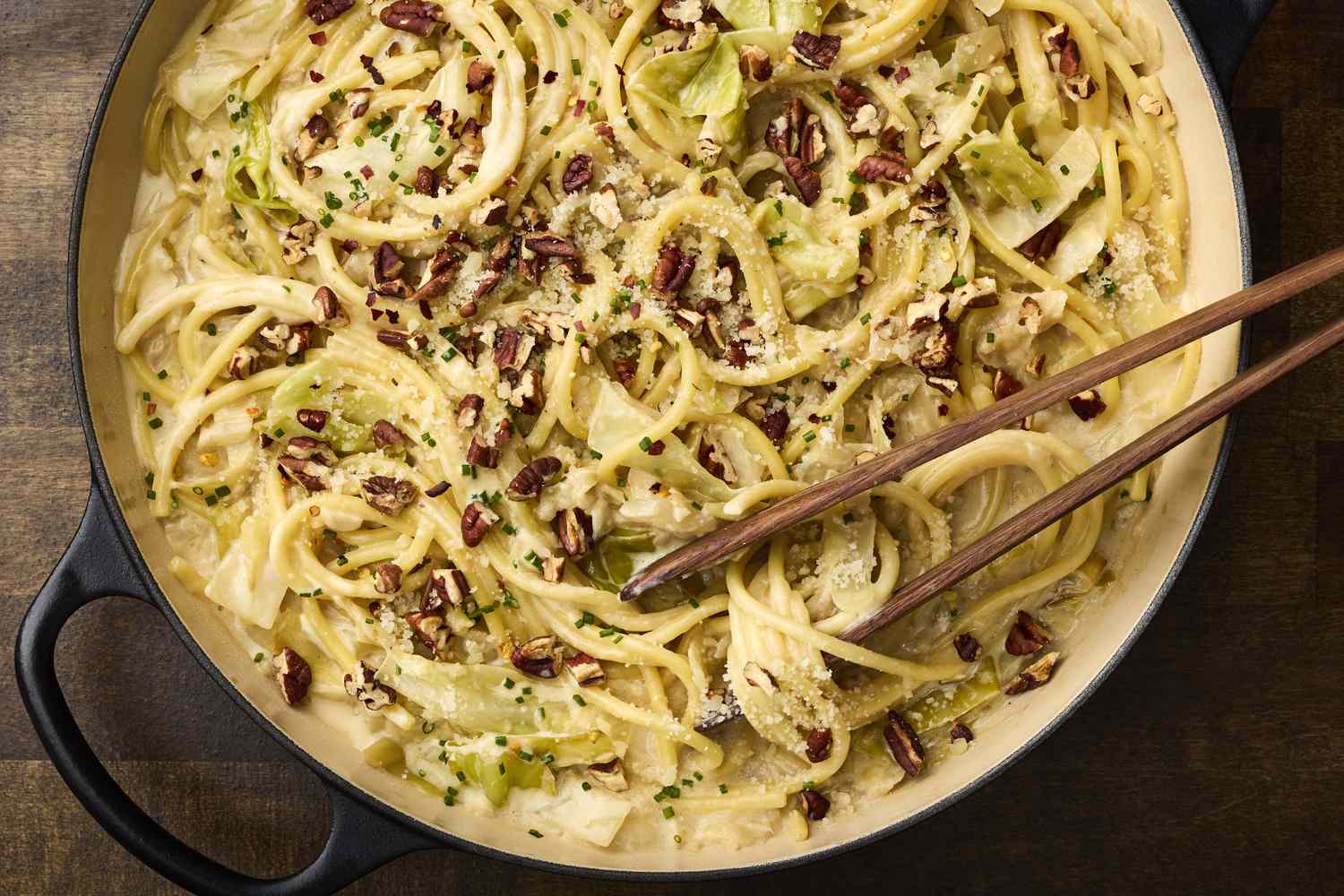

- Cooking the pasta directly in the sauce allows it to absorb the garlicky white wine flavors.
- A splash of sherry vinegar adds brightness to balance the richness of the dish.
- Sneak vegetables (cabbage) into your meal by covering them in cream sauce and tossing with pasta.
Ribbons of sweet, caramelized green cabbage are the star of this cozy one-pot pasta from Food & Wine Recipe Developer Marianne Williams. The cabbage is combined with pasta, butter, wine, and Parmesan cheese to form a satisfying weeknight dinner. Rather than boiling the bucatini in a separate pot, it’s simmered directly in a buttery wine mixture, simultaneously soaking up the flavorful liquid and thickening it into a rich and creamy sauce. The dish is tied together with a sprinkling of toasted pecans, crushed red pepper flakes, and additional grated Parmesan.
Because this dish comes together in a single pan, it relies heavily on layering flavors. Buttery sautéed cabbage and onion form the base before a generous amount of finely chopped garlic is added. While six cloves of garlic may seem like a lot, it mellows as it cooks and blends seamlessly into the creamy sauce. Next, a combination of chicken stock, dry wine, and water are added to the skillet and brought to a simmer. Using a mix of stock and wine gives the dish a savory richness with a touch of acidity to keep it bright and cut through the heavy cream. Simmer the bucatini directly in the skillet, uncovered and turning often to ensure even cooking, until it turns al dente and the sauce thickens. Finished with a splash of cream, additional butter, and freshly grated Parmesan cheese, this one-pot creamy cabbage pasta maximizes flavor while simultaneously minimizing kitchen cleanup.
A note on sautéing the cabbage
Eight cups of sliced cabbage seems like a ton, but it wilts down tremendously when cooking. It’s important to use a wide skillet or saucepan to give the cabbage plenty of space so the moisture it releases can evaporate as it cooks.
If the cabbage starts to burn or stick to the pan, add a splash of water. The steam will not only prevent it from burning, but will also help to soften the thicker pieces of cabbage.
What can you use instead of wine?
White wine adds a bit of acidity to the dish, but if you don’t have any on hand or prefer to skip the alcohol, it’s easy to substitute. While you won’t get the same level of acidity, replacing the wine with additional chicken stock or even vegetable broth or water will work fine.
It’s important to keep the amount of liquid consistent so that the pasta will cook evenly, meaning if you skip the wine, be sure to replace the difference in volume with another liquid.
Notes from the Food & Wine Test Kitchen
- Any long pasta, such as spaghetti or linguine, will work instead of bucatini.
- It’s important to use a wide high-sided skillet or saucepan so that the dried pasta will fit and cook evenly.
- Add a few splashes of water to the cabbage toward the end of sautéeing to help prevent it from burning.
Suggested pairing
Pair the rich garlicky flavors of this pasta with an earthy Italian white, such as Montenidoli Tradizionale Vernaccia di San Gimignano.

Comments are closed.