
OpenAI CEO Sam Altman Hails India As ‘Full-Stack AI Leader’, Promises New Government Partnerships Ahead Of 2026 AI Summit

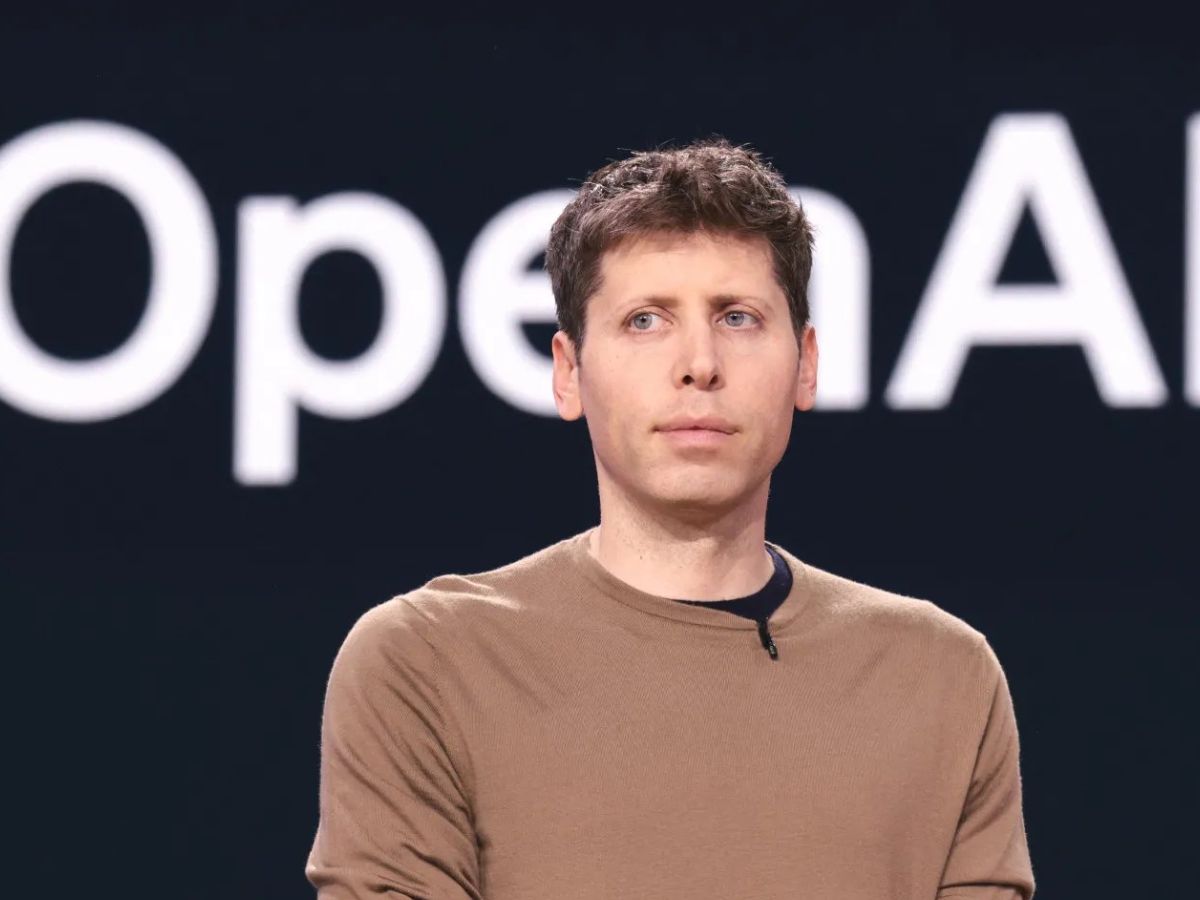
OpenAI CEO Sam Altman has praised India as a potential “full-stack AI leader,” signaling the company’s intent to strengthen its presence and collaborations with the Indian government.
Highlighting the country’s growing influence in the global tech landscape, Altman’s remarks underscore India’s strategic importance in OpenAI’s expansion plans and its role in shaping the future of artificial intelligence.
Ahead of the Global AI Impact Summit 2026 in New Delhi’s Bharat Mandapam, Altman noted that India has rapidly emerged as OpenAI’s second-largest user base worldwide, just behind the United States.
This growth reflects India’s accelerating adoption of AI technologies and its expanding capacity to contribute to innovation and global AI development.
“OpenAI is committed to doing its part to help build AI in India, with India, and for India. We’ve made our tools available for free so they’re accessible to Indians regardless of their income, education, or familiarity with technology. We’re also focused on practical, near-term steps that can be taken now to help Indians unlock AI’s transformative power, “Altman said in his opinion piece in the leading Indian daily.
“We recently brought more than 200 nonprofit leaders together across four cities in India to learn how to use ChatGPT to extend their teams’ capacity and deepen their impact. We opened our first office in Delhi last August and plan to expand our footprint this year,” he said.
The OpenAI CEO further said that he will be in India next week and they “will soon be announcing new ways of partnering with the Indian government to put access to AI and its benefits within reach for more people across the country.”
Altman outlined a trifold strategy to ensure AI benefits reach the grassroots in the country and emphasized that for AI to drive human progress, three elements must align. He listed ‘Access’ -ensuring tools are available regardless of income or education; “Adoption”- Integrating AI into schools, clinics, and small businesses and lastly ‘Agency’- Empowering users with the “confidence and literacy” to use AI for high-level decision-making.
“When these three align, more people can participate not just as users of AI, but as builders and beneficiaries of the growth it enables,” Altman stated.
Altman noted that India now boasts 100 million weekly active users. Notably, India has the largest number of students using ChatGPT worldwide and ranks fourth globally in the adoption of Prism, OpenAI’s new free tool for scientific research and LaTeX-based collaboration.
“India has all the ingredients: homegrown tech talent, a national strategy, and an infectious optimism about what AI can do for the country,” Altman said.
“India gets that we need to use AI to just build things to drive human progress. To that end, the govt’s IndiaAI Mission is designed to expand the country’s compute capacity, support startups, and accelerate multilingual applications that improve public service delivery, including in healthcare and agriculture. It is an effort to make sure AI is not confined to a small slice of early adopters but becomes an essential tool for hundreds of millions of people across India,” he said.
The OpenAI chief warned of a “capability overhang,” where access to AI exists but the skill to use it effectively remains concentrated. To counter this, he called for “AI literacy at scale,” moving beyond abstract familiarity to practical fluency in coding and knowledge work.
He further identified infrastructure as destiny, noting that countries building robust computing and energy foundations would be best positioned to shape the technology’s future.
“AI will help define India’s future, and India will help define AI’s future. And it will do so in a way only a democracy can,” Altman said.
The India-AI Impact Summit 2026 will be held from February 16 to 20 at Bharat Mandapam in New Delhi.As the first global AI summit to be hosted in the Global South, it will bring together global leaders, policymakers, technology companies, innovators and experts to showcase and deliberate on the transformative potential of AI for inclusive growth, governance and sustainable development.
Democratisation of AI refers to making artificial intelligence accessible, affordable and usable for a wide and diverse set of users. It goes beyond access to finished applications. It includes access to the core building blocks of AI such as computing power, datasets and model ecosystems. As these resources become available at scale, individuals and institutions are expanding what they can achieve with AI.
Across key sectors, AI applications are already making a difference. In agriculture, AI supports farmers by predicting weather, identifying pest risks, and guiding irrigation and sowing decisions. Platforms such as Kisan e Mitra simplify access to government schemes, while the National Pest Surveillance System and Crop Health Monitoring use satellite and weather data to protect crops and improve income security. In healthcare, AI enables early disease detection, assists in analysing medical images, and strengthens telemedicine services, connecting rural patients with specialists and improving the quality and reach of care.
Democratising AI requires ensuring that the foundational infrastructure powering artificial intelligence is open, affordable and widely accessible. India’s approach is guided by its full AI stack, which spans applications, models, compute, infrastructure and energy, and treats these layers as interconnected national capabilities.
Approved in March 2024 with a financial outlay of ₹10,371.92 crore over five years, the IndiaAI Mission is laying the groundwork for this approach by expanding access, strengthening data availability and enabling responsible use of AI for public good.
The India-AI Impact Summit 2026 provides a platform for collective engagement, bringing together 15 to 20 Heads of Government, over 50 international ministers, and more than 100 global and Indian CXOs, including Sam Altman the OpenAI CEO. Its deliberations are organised through Chakras, or Working Groups, structured around seven interconnected thematic areas.
(With ANI Inputs)
ALSO READ: Maruti Suzuki Announces February Big Bonanza, Save Up To Rs 45,000 On Swift, Brezza – Here’s How You Can Claim It Before Deadline
Sofia Babu Chacko is a journalist with over five years of experience covering Indian politics, crime, human rights, gender issues, and stories about marginalized communities. She believes that every voice matters, and journalism has a vital role to play in amplifying those voices. Sofia is committed to creating impact and shedding light on stories that truly matter. Beyond her work in the newsroom, she is also a music enthusiast who enjoys singing.
The post OpenAI CEO Sam Altman Hails India As ‘Full-Stack AI Leader’, Promises New Government Partnerships Ahead Of 2026 AI Summit appeared first on NewsX.

Comments are closed.