
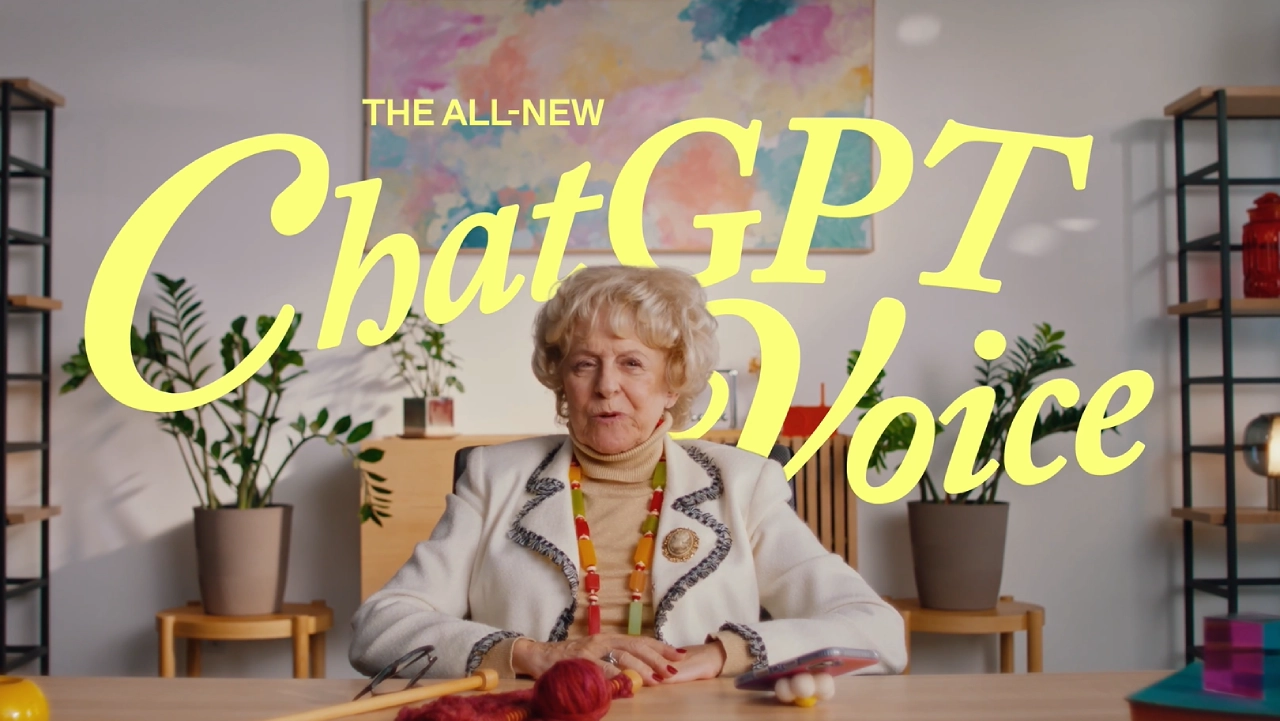

Talking to any AI has always involved an invisible pause. Cutting it off mid-sentence usually means an awkward pause, while the app figured out if you had stopped talking and then either barreled ahead with whatever it was already saying, or restarted the whole exchange. This week, OpenAI has rebuilt ChatGPT’s voice modefrom the ground up. The headline feature is almost mundane in description, but genuinely different to use. The thing can finally listen and talk at the same time; can you imagine!
At heart, GPT-Live is a full-duplex architecture. Unlike conventional voice assistants, which alternate between listening and speaking, even the most advanced version that used to run ChatGPT’s original voice mode ran on what’s called a ‘cascaded pipeline’. Your voice would get transcribed into text, and the text would get sent to a language model for processing and response, and then that response would get converted back into speech and then handed off in sequence to you, EVERY SINGLE TIME you spoke!
Now, GPT live processes incoming audio WHILE generating speech, and this happens simultaneously. This fundamental shift to assistance is almost too welcome, as the voice mode that jumped in early because it mistook a thinking-pause for an ending just won’t cut it anymore.
OpenAI says that the experience is intended to resemble speaking with another person, rather than issuing commands to software. Those robotic conversational cues used in previous models will be missed.
How GPT-Live Delegates Complex Tasks
GPT Live throws out the handoff model entirely. Both new versions, the GPT-Live 1 and the smaller GPT-Live 1 mini, run on this full-duplex architecture. Practically, this means that the model, just like any human, is now capable of making fresh decisions several times a second, which include: to keep talking or stop to listen, or to sit in silence, or to jump in, or quietly reach for a tool, without breaking conversation flow.
It can even drop quick acknowledgments like a “mhmm” or a “got it” here and there, while we are still talking to it, just like a nodding person would, in real life. As per OpenAI’s own announcement, if you tell it to just listen it will listen. The system is also noticeably better at filtering out background chatter and traffic noise instead of mistaking it for your voice and won’t keep taking in audio as if you were still speaking.
How GPT-Live Works
The clever part about this is that GPT-Live isn’t trying to be the smart model that OpenAI has; instead, it is just focusing on being the fastest and the most natural one, and the heavy lifting of borrowing a brain happens elsewhere.
For anything required in that heavy lifting such as some kind of deep reasoning, or web search, or multistep reasoning, or genuinely complex work; GPT-Live simply delegates those tasks to OpenAI’s Frontier text model, the GPT 5.5, which keeps the conversation alive and the work silent. What this means is that the conversation will flow naturally, and the information you require will be returned to you with the computed answer by that GPT 5.5 model, while you are engaged with GPT-Live.
What I personally love about this model is that we can also specify how much thinking we want. There is an ‘instant’ setting for when we need quick answers; there are ‘medium’ or ‘high’ options when a question is worth a beat of extra reasoning. Another thing I have to mention, and love profusely, is the visual cards it can throw up mid-conversation. I used it for pulling live weather or sports scores while being in conversation with GPT-Live about something else entirely. Cascaded pipelines can only dream of doing this, and that too, this gracefully.
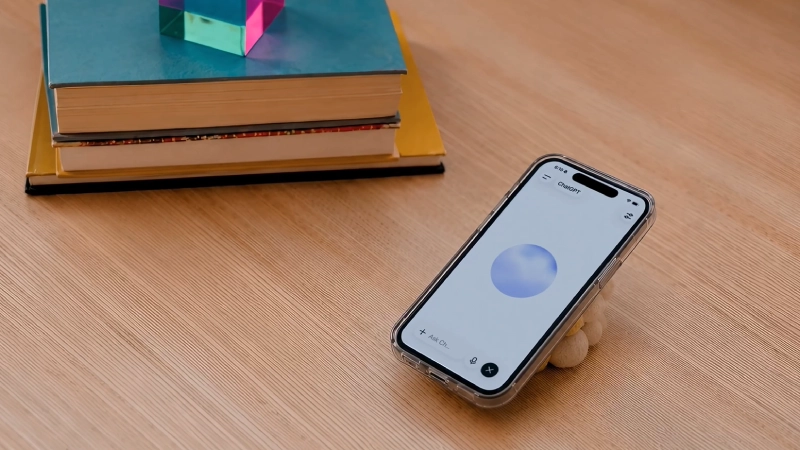
Availability and Rollout
The rollout is already live. This is not a staged announcement for later. GPT-Live 1 becomes the default voice assistant for Go, Plus, and Pro subscribers, while free users receive the GPT-Live 1 mini, which delivers the same conversational experience but with lower computational requirements. All this is available immediately across ChatGPT on the web, Android and iOS. Developers will have to wait for their API availability, though, which is planned for a later date.
According to the company, 150 million people already use ChatGPT’s voice features every week, which makes voice one of the fastest-growing ways people interact with their AI systems. Not a niche feature by any metric. This is how AI companies plan for users to interact with AI at a primary level: communication using natural language. And now this got even more natural with this latest ChatGPT-Live update. Even though AI voice has improved over this past decade, it has until now not really escaped the limitations of waiting or misunderstanding conversational timings.
Atty Eleti, the product lead for ChatGPT Voice, told the reporters during OpenAI’s briefing that he has personally had 30- to 40-minute conversations with the new mode while out on walks and framed voice as a genuine candidate to become a primary way people interact with AI. The claim, if right, is rather big, making voice not about any small talk with a chatbot to feel nice talking to someone (or something, in this case). It can easily become an interface for actual work, the same way people now use Claude Code or Codex, to handle multi-step tasks, in text.

Comments are closed.