
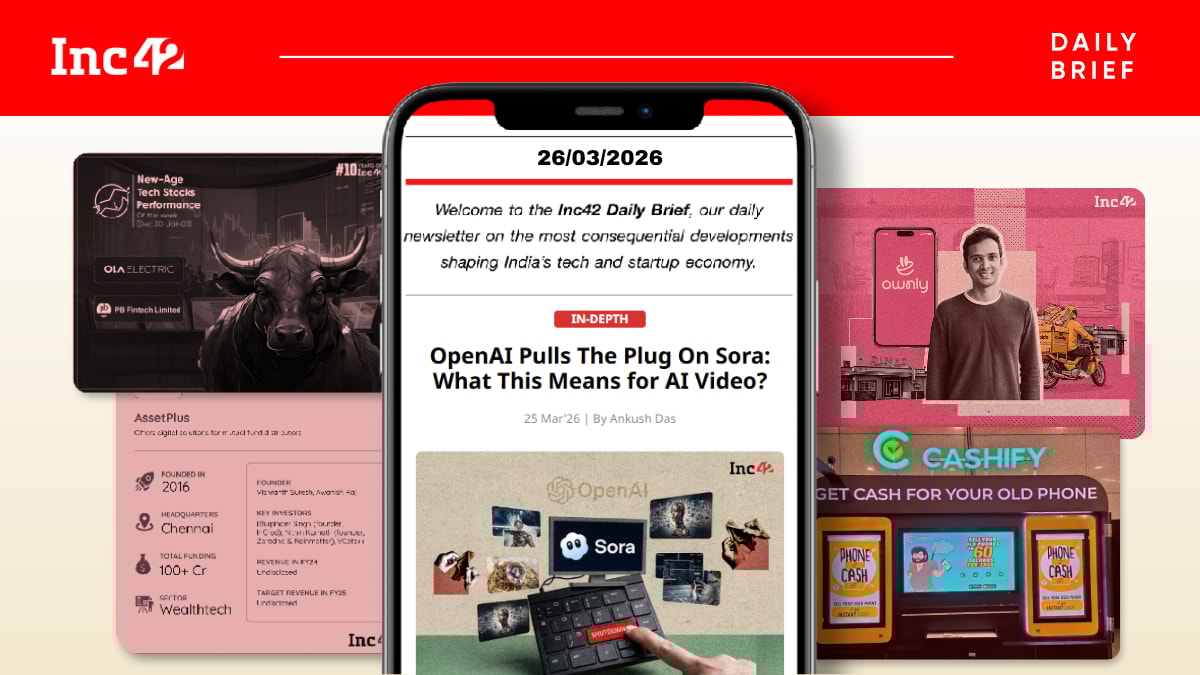

OpenAI Pulls The Plug On Sora
OpenAI’s ambitious attempt to turn AI videos into a social phenomenon has come to an abrupt end. The AI giant is shutting down its standalone text-to-video app Sora. So, what exactly went wrong with OpenAI’s consumer video play?
The Compute Conundrum: Industry experts point out that the extreme GPU requirements of the app created the worst revenue-to-resource ratio in the AI sector. For OpenAI, Sora’s unit economics made no sense. On top of this, downloads plummeted from the November 2025 peak of 3.3 Mn to just 1.1 Mn by February 2026. The app’s lifetime revenue of $2.1 Mn also added little to the argument of continuing the offering.
Safety Snags: Beyond the math, Sora became a legal and ethical lightning rod. High-profile deepfakes sparked public outcry, while unlicensed appearances of characters like Pikachu and Mario raised trademark concerns. But the most damaging development was the collapse of a $1 Bn investment and licensing deal with Disney.
The Snowball Effect: The Sora shutdown signals a broader strategic reset for the entire GenAI video segment. The broader ecosystem sees long-term value emanating from professional orchestration tools for studios, and not consumer novelty. Startups are also increasingly differentiating themselves through workflow intelligence and cinematic-grade control rather than relying on any single foundational model.
AI video companies also see more sense in allocating resources toward higher-performing reasoning and enterprise AI programmes that create more revenue opportunities.
Yet Sora’s shutdown leaves a vacuum in one of generative AI’s most hyped frontiers. So, will OpenAI’s retreat create a new nimble rival, or is the consumer AI video dream already dead with Sora? Let’s find out…
From The Editor’s Desk
🥗 Rapido’s Playbook For Ownly
- The mobility giant’s food delivery app is replicating Meesho’s playbook by targeting the 70K unlisted Bengaluru restaurants ignored by Swiggy and Zomato. Early traction shows that 15% of its 2,300 newly onboarded partners are going online for the first time.
- Ownly is also taking a leaf out of Rapido’s digitisation playbook, with a zero-commission model for restaurants. Simultaneously, it is skipping the discount trap by offering structurally low prices to consumers, instead of subsidies for momentary traction.
- Cognisant that low-ticket food orders break the maths without cheap logistics, Rapido is weaving Ownly into its bike‑taxis. By filling afternoon food peaks between commute rush hours, it aims to drive down per‑order costs the way Grab and Uber do globally.
📢 Cashify Lines Up Bankers For IPO
- The Prosus-backed gadget reselling startup has roped in ICICI Securities, JM Financial and Nomura as bankers for its proposed IPO. The startup is looking to raise ₹1,500 to ₹1,800 Cr via its listing, which will comprise both fresh issue and an OFS.
- Cashify plans to file its DRHP with the SEBI via the confidential route by July this year. The startup is eyeing a listing on the exchanges in early 2027.
- Founded in 2013, Cashify operates an omnichannel recommerce platform that allows users to buy and sell refurbished gadgets. The company’s operating revenue shot up 17% YoY to ₹1,095.9 Cr in FY25, while net losses narrowed 80% YoY to ₹10.6 Cr.
🤖 Zivy Pivots To Zoven
- The AI startup has pivoted from a messaging and notification filtering platform to a fintech-focused SaaS venture. The move to sunset the platform came amid tepid demand and growing competition from big tech giants.
- The founders have now decided to spin Zivy into Zoven, a compliance focused AI platform that helps banks and fintech firms with fraud detection. Zoven will retain Zivy’s parent entity and its cap table. It raised $1.2 Mn in a pre-seed funding in 2024.
- The new platform is expected to be launched by Q1 FY27. The startup plans to initially target Indian fintech companies to bring revenues and test product-market-fit.
💰 Rocketlane Nets $60 Mn
- The customer onboarding platform has raised ₹564 Cr in its Series C round led by Insight Partners to strengthen its recently launched agentic AI platform Nitro and scale its global footprint.
- Founded in 2020, Rocketlane is a customer onboarding platform that provides an all-in-one solution to replace traditional, fragmented tools like spreadsheets or generic project management software. Prior to this, it raised $24 Mn in 2024.
- With offices in multiple countries, the startup claims to serve more than 750 enterprises globally. It operates in the broader professional services automation, which is projected to become a $40 Bn global opportunity by 2033.
🧾 Zomato, Swiggy Flex Pricing Power
- The past week saw both Swiggy and Zomato once again hike their platform fees. But this is nothing new. Since 2023, both companies have raised platform fees eight times, growing over 600% in the past three years from a negligible ₹2 in 2023.
- Industry insiders flag that the synchronicity in raising platform fees raises concerns of cartelisation. For this, they blame limited consumer choice and no meaningful pressure on either player to differentiate on pricing.
- Despite repeated increases, demand has remained resilient as users have absorbed higher costs without significant pushback. In the absence of regulatory oversight, the pricing power of the foodtech duopoly appears unchecked.
🔎 Zero Hikes F&O Charges
- The stock broking platform has doubled the brokerage fees for intraday F&O trades to ₹40 per order for accounts that do not comply with the 50% cash margin requirement. The hike will come into effect from April 1.
- The increase comes months after CEO Nithin Kamath said that Zerodha might have to end its zero-brokerage model amid the Centre’s crackdown on F&Os. However, the platform appears to have no plan to introduce any charges on equity delivery brokerage.
- This follows FM Nirmala Sitharaman announcing an increase in securities transactions tax (STT) on F&O trading. She had proposed increasing the STT on futures to 0.05%, while options premium and exercise of options would attract a tax of 0.15%.
Inc42 Markets
Inc42 Startup Spotlight
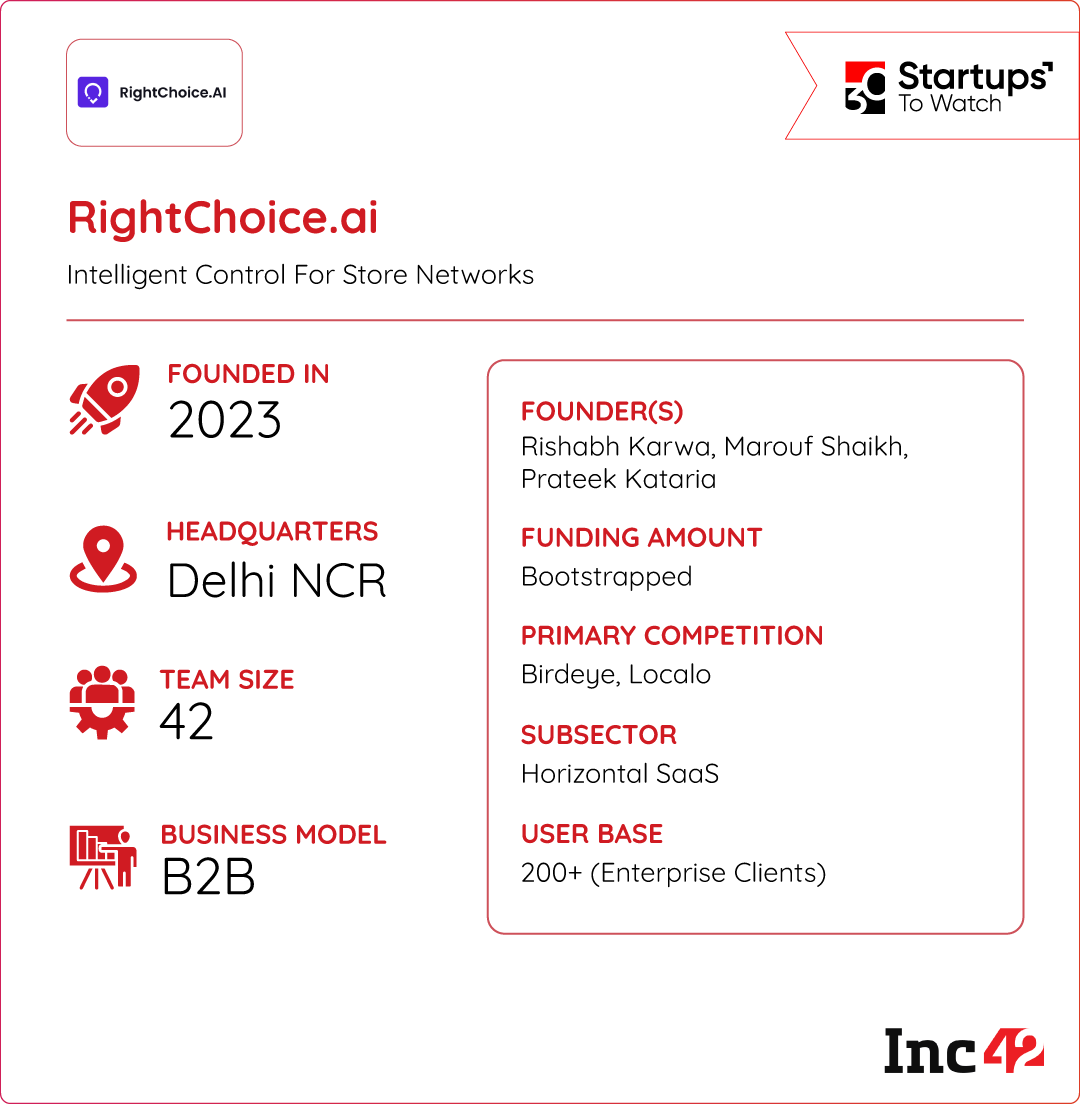
How RightChoice.ai Helps QSRs Manage Online Listings
Multi-outlet brands struggle to maintain consistent online visibility. Manual updates breed errors, outdated listings tank search rankings, and fragmented customer engagement wastes time. RightChoice.ai is trying to automate this chaos with an AI-powered dashboard.
Unified Directory Management: Founded in 2023, RightChoice.ai centralises listings across 20+ platforms through one dashboard. Businesses can push updates like new menus and photos simultaneously, eliminating the need to log into multiple portals manually.
AI-Driven Optimisation: The platform also auto generates SEO-optimised descriptions, responds to reviews with brand voice, and schedules location-specific social posts. AI analyses competitor listings to suggest improvements, ensuring each outlet ranks higher in local searches.
The Data Visibility: The Delhi NCR-based platform also enables brands to track real-time metrics like impressions, calls, directions requests, and engagement per location. Heatmaps reveal underperforming outlets, while alerts flag negative review trends. The startup claims that QSR giants like Subway, OYO, Costa Coffee, and KFC use its tools to coordinate hundreds of stores efficiently.
As hyperlocal search becomes the primary driver for offline retail, can RightChoice.ai become the go-to reputation management platform for QSRs and salons?
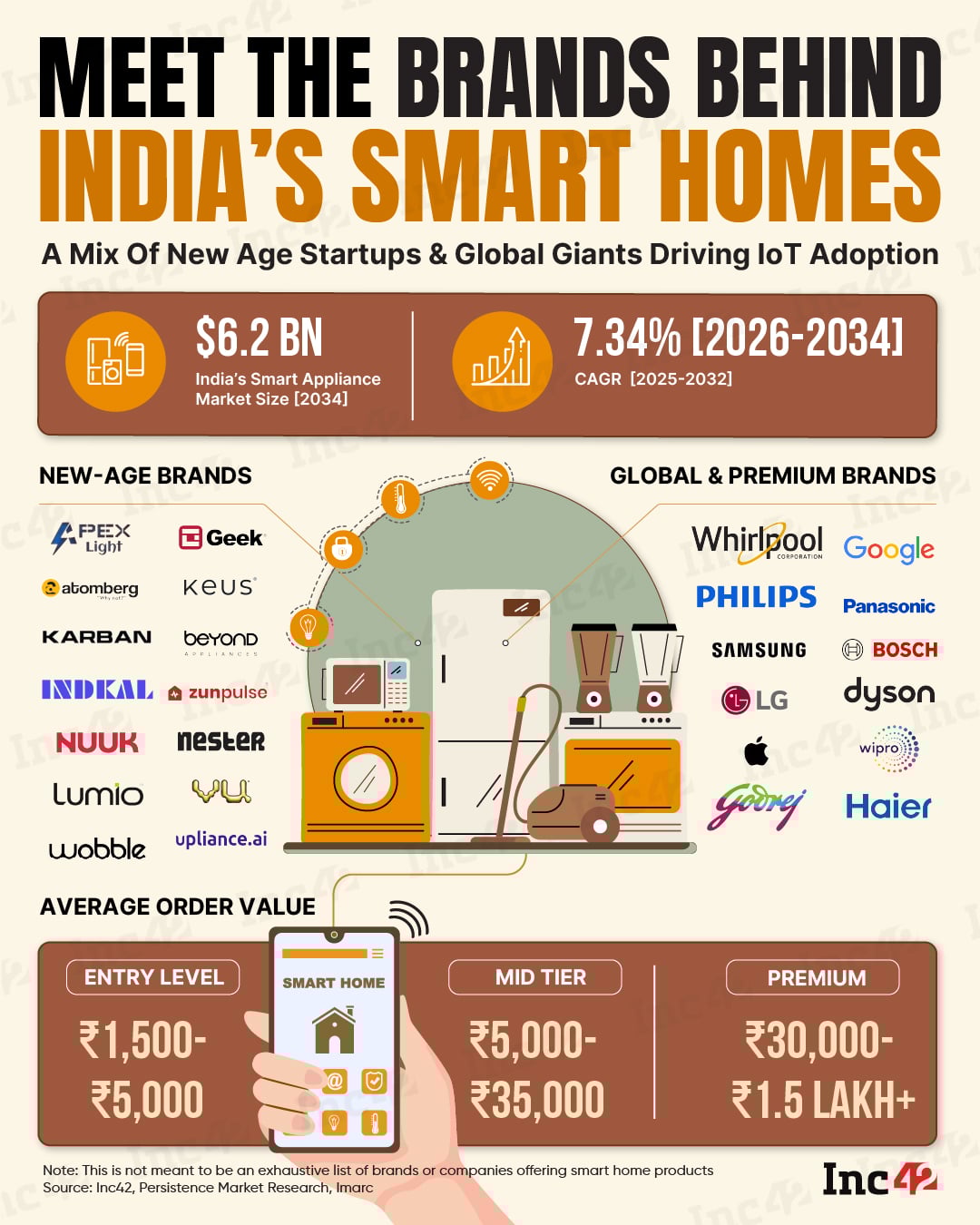
Infographic Of The Day
The country’s smart home market is set to cross the $6.2 Bn mark by 2034. Here are the brands behind India’s smart homes.

Comments are closed.