


Okay, so somewhere in a Weibo comment section, there was this tipster, Digital Chat Station, that dropped a spec sheet… and it’s been very quietly flipping the battery nerd happiness switch inside me, and I bet many others like me. The OPPO A7 Pro Maxyeah, tipped to be OPPO’s first phone with a 10,000mAh battery, and this is the bit people actually care about: it’s supposedly just 8.47mm thick and 226g. Like, for context, that’s thinner than plenty of flagship phones from like five years ago that were rocking around half the battery capacity, weird right?
Before we even get to the numbers though, let’s talk about why this is a legitimate engineering headache, because the “how” feels way more interesting than the “what,” I mean, that’s how it is.
The Physics Problem With A 10,000mAh Battery
We must understand that a phone battery isn’t just a bigger container for the same thing but a volume + chemistry balancing act. Lithium-ion, and these days increasingly lithium-silicon or even Silicon-carbon, cells basically store energy at some kind of fixed density per cubic centimeter.
So historically, bigger battery meant either a thicker phone, or a genuinely annoying trade-off, like a smaller display, or just more weight. Those 10,000mAh-class phones we’ve seen so far, like rugged outdoor types, usually went the obvious route, that being, go thick and/or go heavy, because most buyers there don’t care that much about pocketability.
So what makes the A7 Pro Max leak stand out is that OPPO is reportedly avoiding the usual “thick and heavy” trade-off using a single-cell battery design instead of the dual-cell setup that shows up on most modern flagships. Dual-cell packs split the battery in two and wire them in series. That can mean more voltage-conversion stuff and also more physical space, which is often framed as a safety and fast-charging-friendly approach. It’s also, truthfully, volumetrically wasteful.
A well-optimized single-cell pack removes that extra overhead, and if OPPO is pairing it with newer silicon-carbon anode chemistry (more capacity in less material than graphite), then it’s at least plausible for OPPO to produce these kinds of thickness along with capacity numbers WITHOUT the phone turning into a brick disguised as a feature phone.
According to the leak, the cell is listed at 9,700mAh minimum and 10,000mAh typical. That small gap between “rated” and “typical” is pretty normal for how manufacturers report cell tolerances, so it’s not automatically a red flag if you thought so.
OPPO A7 Pro Max Specs
If you strip away the battery part, the rest of the OPPO A7 Pro Max looks like a fairly normal mid-range sheet, which is kind of the point:
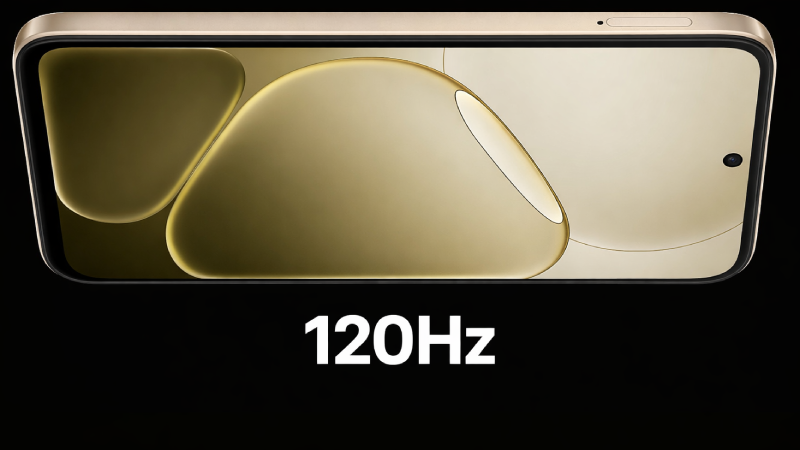
Display: 6.78-inch flat OLED, 1.5K resolution, 120Hz, in-screen fingerprint sensor
Chipset: Qualcomm Snapdragon 4 Gen 5, yes, Qualcomm only unveiled it a couple months back, so this would likely be among the first phones to actually ship with it
Charging: 80W wired fast charging, and with a 10,000mAh-ish cell it should still feel meaningfully quick even with the larger capacity. I mean… we can’t complain, come on.
Cameras: 50MP main + 2MP secondary on the back, 50MP selfie up front
Build: a polymer/plastic-leaning shell instead of premium aluminum or glass, so cost-saving, also helping weight stay down!
None of this is “wow” revolutionary. It feels like OPPO is not splurging on premium materials and keeping camera hardware simpler, and putting the engineering focus into the battery-and-thinness angle. That’s a smart marketing move if the messaging is “you don’t have to charge every day”.
Wait, Is This Even Official Yet?
Here’s where people should slow down a bit, because coverage has gotten ahead of itself. The specs are traced back to Digital Chat Station’s Weibo leak. Then outlets like GSMArena and Gizmochina are describing it as a leak, not a confirmed launch. OPPO hasn’t published an official spec sheet or any announcement date, at least not based on what’s being cited here.
And NPowerUser’s write-up uses wording like the phone “debuted,” which is more certain than the underlying source supports. So, it is safe to assume that the exact numbers are likely, but not locked in, until OPPO says so directly. Early reporting also points to a first price around 2,000 Chinese Yuan (about $295), with China first access before a wider regional release, according to AllBlogThings.
Everyone’s Getting a Bigger Battery
This huge battery case isn’t isolated (thankfully). Just this week, leaks popped up around the Redmi Note 17 too, supposedly coming to India with an 8,000mAh battery. Then you stack that with recent mid-range pushes from Honor, Xiaomi, and Samsung, and then, in 2026, “how long it lasts on a charge” is slowly beating out “how good is the camera” as the main selling point, especially in price-sensitive markets where people keep phones longer and don’t want battery health to quietly ruin daily runtime.

There’s also a materials-science reason this keeps happening. Silicon-carbon anode batteries, which are the same category rumored for the A7 Pro Max, have been moving from flagship-only into mid-range over the last couple of years.
Part of it is that the manufacturing cost premium keeps shrinking as we get more brands adopting the tech at scale. When something that used to be a top-tier brag starts getting cheap enough for a roughly $295 phone, that usually means the whole category is about to shift under everyone’s feet.
Should You Care?
If the leaked specs are real, the OPPO A7 Pro Max is a pretty interesting data point, tbh. 10,000mAh is big by itself, but because of the effort required to fit it into an 8.47mm-thin, 226g chassis without going full rugged-phone brick mode, it should be noteworthy. The two questions that still matter are whether OPPO can keep that ~$295 vibe outside China, and whether the battery holds up across real charge cycles over a couple of years, once it moves from leak talk to an actual official launch.
An Important Thing to Note
The specs mentioned here are based on leaks attributed to Digital Chat Station, as reported by GSMArena, Gizmochina, AllBlogThings, and NPowerUser, plus early social chatter circulating on X. None of these details are officially confirmed by OPPO as of the time of writing, i.e., July of 2026.

Comments are closed.