
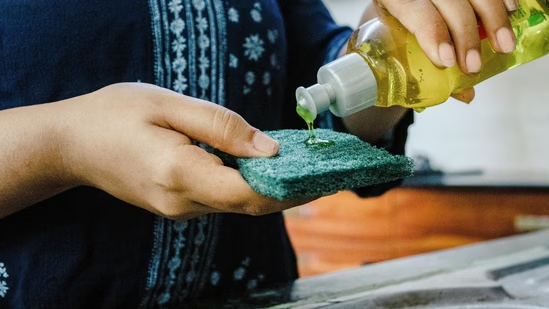
Orthopaedic surgeon warns dishwash liquid may be the most toxic product in your kitchen: ‘Dirty truth’ you need to know

Dishwashing liquid is one of the most common – and seemingly indispensable – items in every kitchen. It’s what we rely on to clean the very plates, bowls, and utensils we use to eat our food. But what if this everyday essential carries hidden risks? Beneath its soapy surface may lie chemicals that often go unnoticed, leaving behind residues we may unknowingly ingest.
Dr Manan Vora, a Mumbai-based orthopaedic surgeon, health educator, and co-founder of NutriByte Wellness, is drawing attention to the hidden risks of everyday dishwashing liquids. In an Instagram video titled ‘dirty truth about dishwash liquids’ shared on March 25, he warns that one of the most toxic items in your kitchen could be your dishwash liquid – and explains the reasons behind it.
Health concerns of dishwash liquids
According to Dr Vora, dishwashing liquid may be one of the most toxic items in your kitchen. He explains that many popular brands contain chemicals known as isothiazolinones – powerful synthetic biocides and preservatives used to prevent microbial growth. While these compounds are commonly found in personal care products, research has flagged them as potent skin irritants and allergens.
The surgeon notes, “Dishwash liquid may be the most toxic product in your kitchen. Many popular dishwashing liquids contain chemicals called isothiazolinones. Scientific studies classify them as strong skin sensitisers, meaning they can trigger allergic reactions and contact dermatitis in some people.”
Moreover, he points out that some regulatory studies have raised concerns about the potential for endocrine disruption linked to certain dishwashing liquids. Dr Vora also notes that there have been documented cases of children suffering internal mucosal injuries after accidentally ingesting these products.
He explains, “Some regulatory health agencies have even raised concerns about their potential endocrine disrupting effects. There are actual documented cases where children have accidentally consumed this concentrated dish liquid and suffered from internal mucosal injuries.”
Switch to safer alternatives
Dr Vora points out that the most concerning part is that, despite these health risks, isothiazolinones remain widely used and are commonly found in everyday products. He also highlights that dishwashing liquids are not always rinsed off completely, often leaving behind trace residues on utensils. This makes it all the more important to consider switching to safer, plant-based alternatives.
The surgeon emphasises, “The surprising part is that these chemicals are extremely common and are likely sitting next to your sink right now. Furthermore, dishwash residue does not rinse off completely, and small traces can remain on plates and utensils. This has led me to a search for cleaner alternatives.”
Dr Vora recommends opting for products that use plant-based surfactants and natural bio-enzymes to break down grease, rather than relying on harsh chemicals. This approach ensures your dishes are cleaned effectively while remaining safer for use around children and pets.
He explains, “While the risk varies, reducing unnecessary chemical exposure is a smart step. Switching to simpler, plant-based formulations can be a safer alternative. These alternatives ensure dishes are clean as well as safe around babies and pets. There are several natural brands on the market trying to make dishwashing formulas gentler and simpler. If you are trying to reduce chemical exposure at home, even small switches like these can matter.”

Comments are closed.