
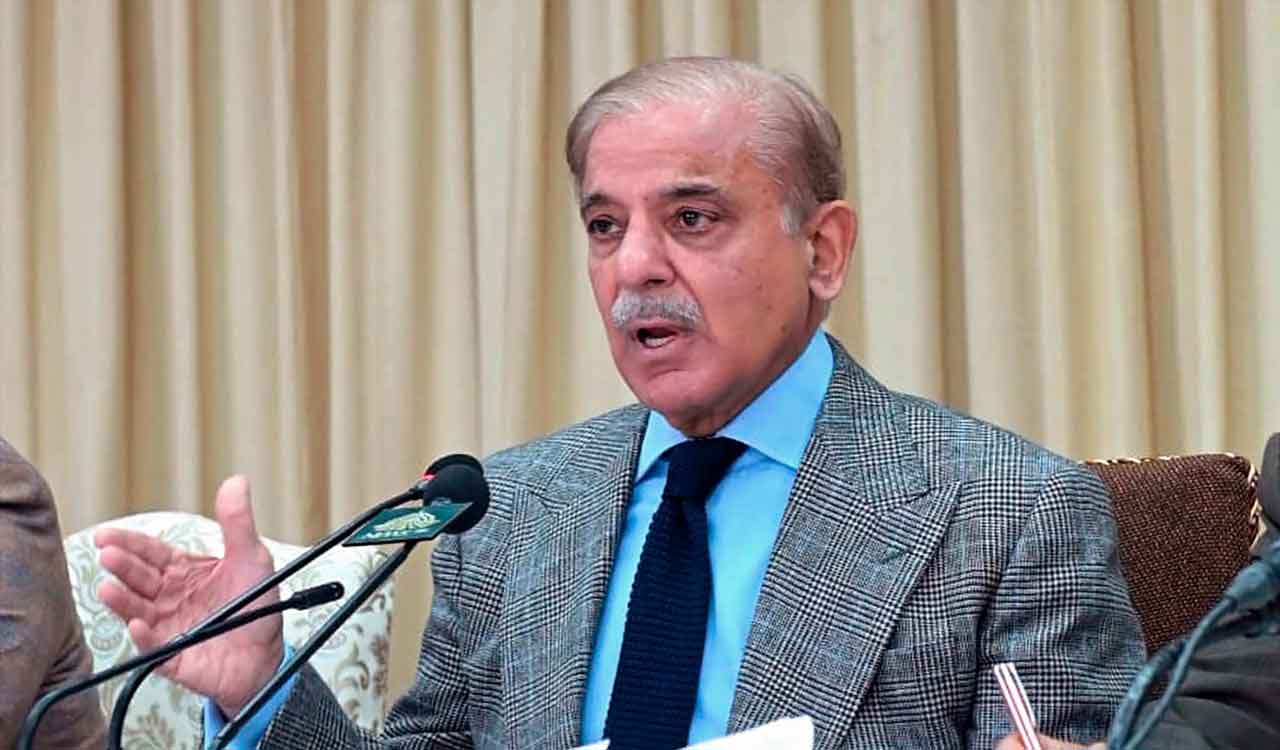

Pakistan PM Shehbaz Sharif launched a 142-point economic-governance reform plan to tackle corruption and improve institutional credibility, in line with IMF recommendations. The three-year plan includes anti-corruption measures, rule-based appointments, AMLA reforms, and annual reporting on high-risk agencies
Published Date – 1 January 2026, 12:58 PM
Islamabad: Prime Minister Shehbaz Sharif has launched economic-governance reforms to address the vulnerabilities identified in the International Monetary Fund’s (IMF) Governance and Corruption report.
The 186-page Governance and Corruption Diagnostic report launched late last year highlighted massive economic leakages due to bad governance and corruption.
Under the IMF conditions linked to its ongoing USD 7 billion bailout package, Pakistan was required to publish “governance action plan based on the recommendations of the Governance Diagnostic Assessment” to address critical governance vulnerabilities by December 31.
The Express Tribune reported that the 142-point reform plan launched on Wednesday envisaged undertaking national risk assessment on corruption, making rule-based appointments in key institutions, including the National Accountability Bureau (NAB) and improving its credibility in the eyes of the public.
Shehbaz said that the recommendations of the international institutions have been incorporated in his reforms’ plan but it is fundamentally the government’s home grown agenda to “shift from crisis management to institutional building”.
Shehbaz said that under his governance plan, there are 59 priority actions and 83 complementary actions. This brings the total tally of these required actions to 142 that have to be implemented over a period of next three years.
The prime minister said that the government’s focus would now shift from crisis management to institutional building. He said that people of Pakistan have paid a very heavy price during the past two years and “we cannot return to business as usual”.
While speaking at the occasion, Finance Minister Muhammad Aurangzeb said that the governance plan is based on three core streams: growth oriented fiscal and public investment governance, enhancing market confidence and simplification of regulations and building trust in legal processes.
The Finance Ministry will act as the secretariat to implement the action plan, while the UK’s Foreign and Commonwealth Development Office (FCDO) will provide technical support.
After the ceremony, the Finance Ministry released the 240-page Economic Governance Reforms report, detailing every aspect that could help improve poor governance and address critical corruption related vulnerabilities.
Among the major steps, Pakistan has committed with the IMF to publish SIFC (Special Investment Facilitation Council) annual report by June 2027.
The draft annual report will be submitted in December 2026 and the final report to be submitted in March 2027.
SIFC is a military led body aiming to revive the economy by focusing on investment.
By June 2026, the government will also conduct National Risk Assessment on corruption and within three months it will form the national anti-corruption task force. The government will also identify top 10 agencies with high corruption risks by June 2027. And by June 2028, it will publish annual reports of the identified 10 highest risk agencies and will report on demonstrated reduction of risks.
According to the new action plan, by June 2026, the government will conduct legislative review of the Anti-money Laundering Act (AMLA) to remove ambiguities. It will also finalise and submit amended Anti-Money Laundering Bill for review by parliament. By June 2027, these amendments will be notified.
Within one and half years, Pakistan will also build the capacity of judges through implementing training plans regarding the AMLA.
The IMF has also given a one and half year’s timeline to strengthen accountability and integrity of the civil servants. It will deploy a computerised system to generate risk based cases for verification.
By June 2027, the government will notify Security and Exchange Commission of Pakistan (SECP) rules that should codify the entire process of appointment of chairman, commissioners and policy board members of the SECP.
It will also review the appointment process for the NAB chairman by June 2027 and would increase the public credibility of NAB as an anti-corruption agency, according to the published plan, according to The Express Tribune.

Comments are closed.