
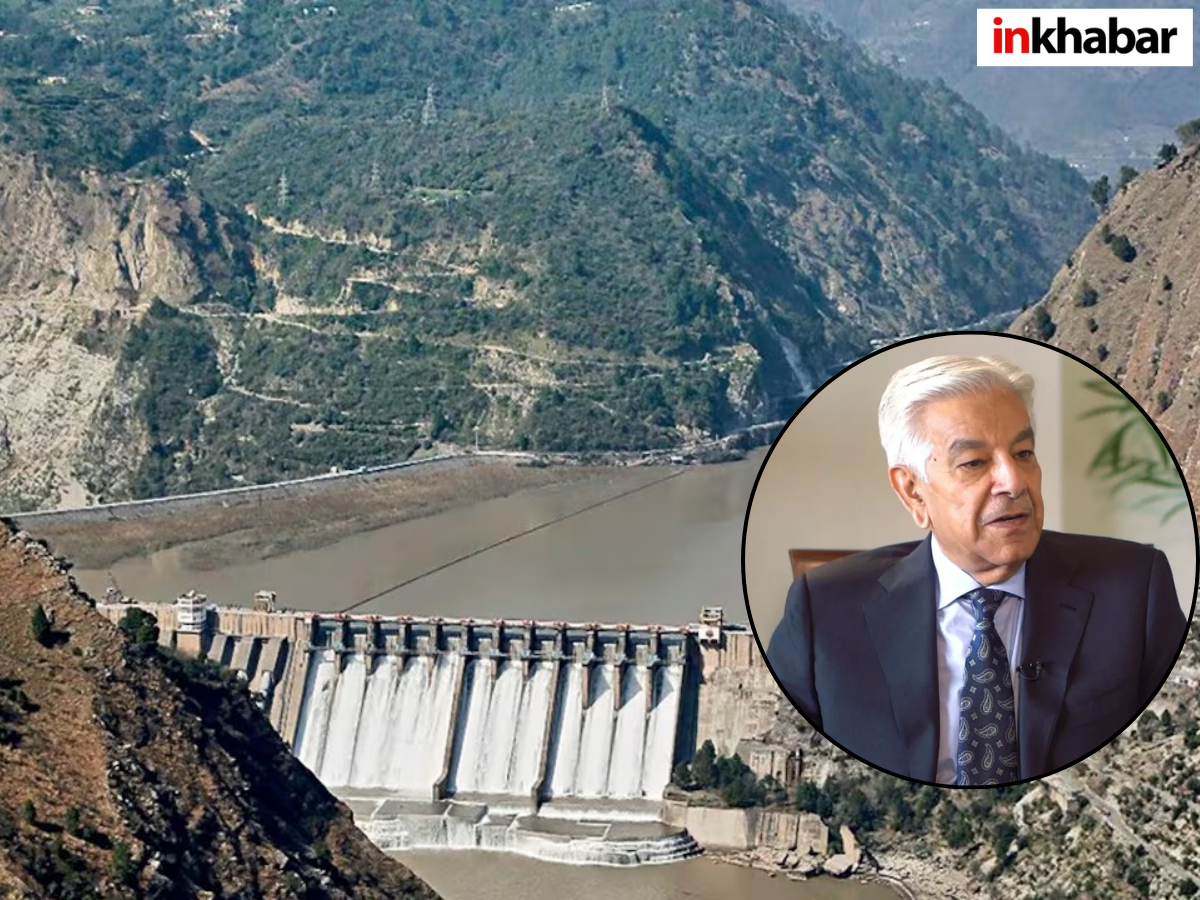
Pakistan angry over postponement of ‘Indus Water Treaty’, threatens to wage war with India, know the whole matter

War rhetoric continues from Pakistan’s side. Once again, Pakistan’s Defense Minister Khawaja Asif has issued a warning of military action against India over water security concerns.
The warning came after New Delhi reiterated that its decision to keep the Indus Water Treaty on hold remains unchanged. These threatening statements come at a time when domestic instability is increasing in Pakistan and an internal water crisis is deepening, which experts are linking to long-standing resource mismanagement.
what is the whole matter
Speaking to ARY News on Saturday, Pakistan Defense Minister Asif directly linked access to water to Pakistan’s national security and warned of possible military action. He said, “The moment we feel that our national security, and water is an integral part of our national security, is in danger, we will definitely wage war against India.” The Pakistani minister further said that if Islamabad finds that India is moving at “alarming pace” to interfere with Pakistan’s water supply, it may consider military action.
Indus water treaty suspended
Following the Pakistan-sponsored terror attack in Pahalgam in April 2025 that killed 26 people, India has maintained its stance of keeping the 1960 Indus Water Treaty suspended. New Delhi has said that this treaty will remain suspended until Pakistan takes credible and concrete action against the infrastructure of cross-border terrorist activities. Under this treaty brokered by the World Bank, Pakistan has historically been allowed to use about 80 percent of the water of the Indus River Basin for agricultural needs. However, concerns are currently emerging about Pakistan’s ability to effectively manage its available water resources.
About Indus Water Treaty
The Indus Water Treaty protected the Indus River system and its five tributaries; Has established a framework for water sharing and information exchange between India and Pakistan in respect of Sutlej, Beas, Ravi, Jhelum and Chenab. Under the treaty arrangement, the waters of the western rivers Chenab, Jhelum and Indus were allotted to Pakistan, while India received unlimited rights over the eastern rivers Ravi, Beas and Sutlej. Under the treaty, India also retained a limited right to use the waters of the western rivers for certain specified purposes, including non-consumptive uses, agriculture, domestic needs and hydropower generation.
use of water as a weapon
During his address, Asif accused India of “misusing water” and manipulating water flow in the Chenab river and hiding hydrological data. However, while making these allegations, the minister admitted that he did not have updated information related to the developments of the last one year. Yet he cited prior inspections conducted by Pakistani teams, claiming that they had conducted “about 115 inspections.” Let us tell you that Pakistan’s internal water management challenges have become even more serious, due to which almost one third of the population, especially in Sindh and Balochistan, is affected by severe water crisis.
‘India is ensuring that Indus river water does not reach Pakistan’
Asif’s comments came after Indian Union Jal Shakti Minister CR Patil’s statement in which he suggested that India aims to completely stop the flow of Indus River water to Pakistan by June 2028. Patil said that India will continue to work in accordance with the Centre’s decision to keep the treaty on hold.
Discussing the Indus Water Treaty, Patil told news agency ANI, “The treaty is still in force; rather, it has been suspended for the time being. Since Prime Minister Modi took this decision, every possible effort is being made to ensure that not even a single drop of water flows there. Under the Prime Minister’s instructions, Home Minister Amit Shah is also personally monitoring the matter, and we are actively working on it.”
The post Pakistan enraged over postponement of ‘Indus Water Treaty’, threatened to wage war with India, know the whole matter appeared first on Latest.

Comments are closed.