
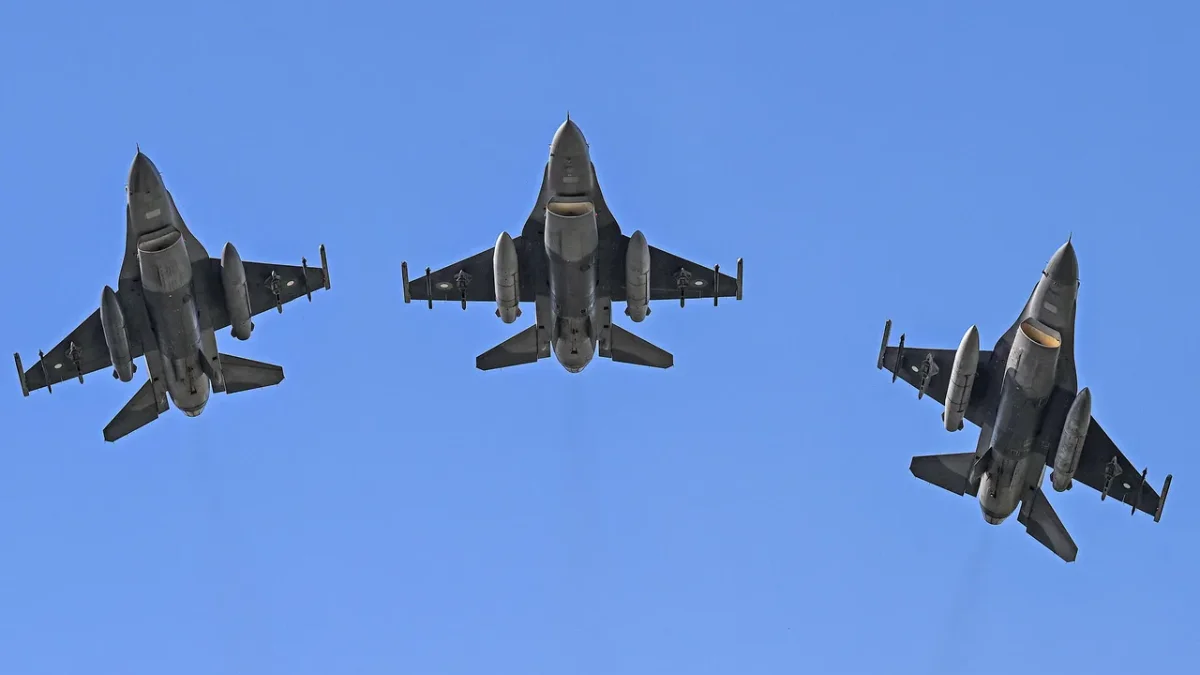

Pakistan’s fighter jets are being positioned in or around Saudi Arabia as part of a broader military and diplomatic response to the escalating Middle East crisis. Still, the claim should be handled carefully because available reports point to coordination, patrol activity and joint defence posture rather than a simple static deployment “along the eastern border”. Recent reporting says Pakistan has moved fighter jets and support aircraft into the region under its defence ties with Riyadh, alongside air defence systems and personnel.
What the deployment means
The practical purpose appears to be deterrence and reassurance. Pakistan’s air presence signals support for Saudi security at a time of regional tension, especially amid Iranian missile and drone threats and wider instability linked to the war involving Iran. Reports also suggest Pakistani aircraft have been seen operating in Gulf airspace, including near Saudi Arabia and the UAE, which indicates a wider coordination effort rather than a purely symbolic move.
Why Saudi Arabia matters
Saudi Arabia is important to Pakistan not only as a strategic partner but also as a defence customer and long-standing security ally. Since the 2025 mutual defence agreement, both states have deepened military cooperation, and Pakistani aircraft have already taken part in exercises in the kingdom. In a crisis environment, that partnership allows Pakistan to project air power and contribute to layered regional defence without needing to act alone.
Strategic implications
If Pakistani fighter jets are indeed being positioned for operational support, the message is that Riyadh wants visible military backing and Islamabad is willing to provide it. The move also complicates any regional escalation, because the presence of Pakistani assets raises the political cost of attacks near Saudi territory. At the same time, it shows how the Pakistan-Saudi security relationship has moved beyond training and exercises into active wartime coordination. The key takeaway is that this is not just an air force movement. It is part of a wider strategic alignment that mixes deterrence, alliance politics and crisis management in one of the world’s most sensitive theatres.

Comments are closed.