
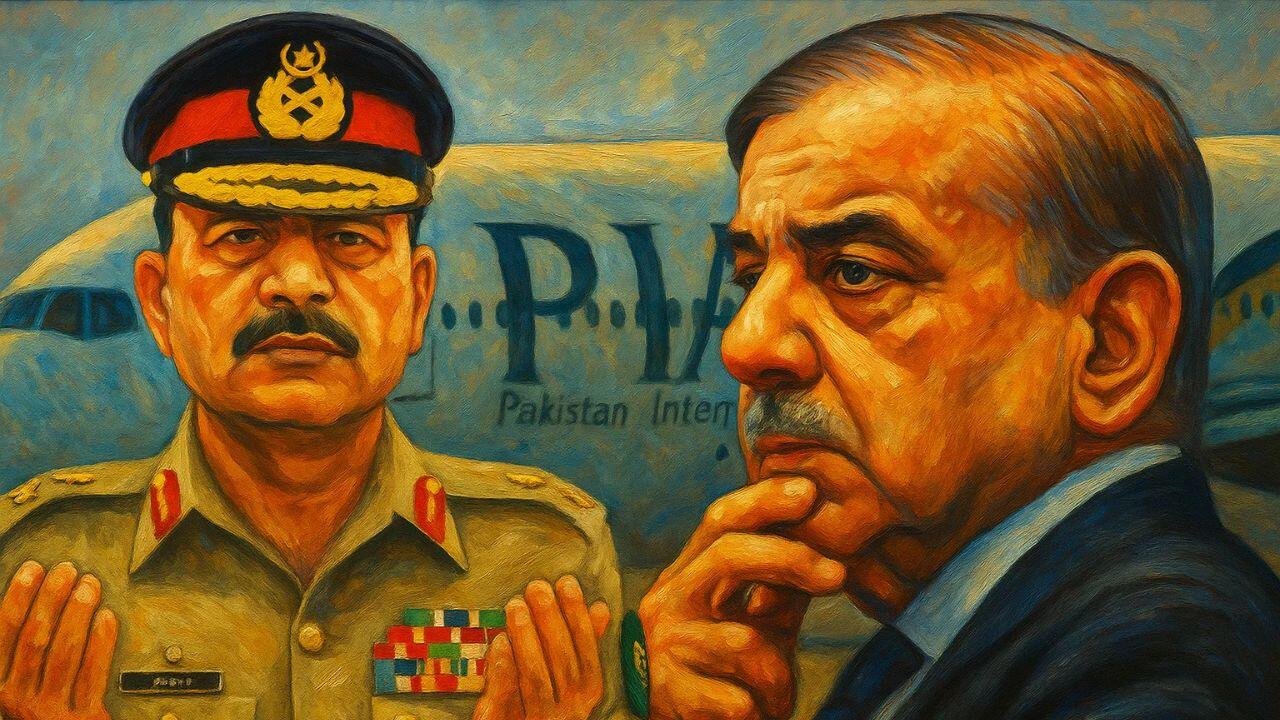

Pakistan, which is deeply in debt, is becoming worse. His condition is worsening so much that now he has to sell his government airline Pakistan International Airlines (PIA). The International Monetary Fund (IMF) had made it clear that if a loan is required, PIA will have to be privatized. Now this company will be sold, for which bidding will be done on December 23.
Interestingly, among the bidding companies is also Fauji Foundation, which is controlled by the Pakistani Army. to pakistan army
Pakistan Prime Minister Shahbaz Sharif said that bidding for the PIA auction will be held on December 23, which will also be telecast live.
PIA is being sold because its financial condition is also very bad. He has been in debt for years. According to the report of Pakistani channel Geo TV, the conditions set by IMF for the loan also include a major condition of privatization of PIA.
Read this also– Putin coming to India after 4 years, what will happen during his 28 hour visit? know everything
What is the plan of Shahbaz government?
Shahbaz government is planning to sell PIA. It is being told that the government is preparing to sell 51% to 100% stake in PIA. This means that PIA will not only sell 51% stake but if the right buyer is found then it can also sell the entire 100% stake.
Why are you selling now? Because in September 2024, a deal was made with the IMF for a loan of $ 7 billion. Of this, $1 billion has been received and the remaining loan is to be received in installments in 3 years. However, IMF has set conditions for this, which also includes the condition of privatization of PIA.
Muhammad Ali, a minister in the Shahbaz government, had told news agency Reuters that the target is to earn 86 billion Pakistani rupees through privatization.
Read this also–What is Pakistan’s new scourge, CDF, which has increased India’s worries?
Will the army take control?
Pakistani newspaper Dawn reports that selling PIA is the biggest privatization in two decades. This report states that 4 companies have qualified to bid for PIA.
These companies include Lucky Cement Consortium, Arif Habib Corporation Consortium, Air Blue Limited and Fauji Fertilizer Company Limited.
Fauji Fertilizer is part of the Fauji Foundation of the Pakistani Army, which is controlled by the Army. Fauji Foundation is one of the largest corporate houses of Pakistan. The involvement of Military Fertilizer in the PIA auction shows how much influence the Pakistani Army has in every small and big decision there.
Pakistan Army Chief Field Marshal Asim Munir does not hold any position on the board of directors of Fauji Foundation. However, he appoints the Quarter Master General (QMG), who is part of the board of directors.
It is believed that Asim Munir also has indirect influence on Fauji Foundation. He also makes appointments on special posts in it. This is the reason why it is believed that if Military Fertilizer buys PIA, then the Army will have direct control over it.
Read this also–Why did Israeli Prime Minister Benjamin Netanyahu apologize to the President?
But why did the need to sell arise?
PIA has been in losses for many years. Tremendous corruption has come to light in the last few years. Its condition has also worsened due to political appointments.
Its condition worsened in 2020 when it was revealed that more than 30% of PIA pilots are either fake or have fake licenses. Due to this, 262 pilots of PIA were stopped from flying.
This scandal of PIA spread rapidly. The European Aviation Safety Agency (EASA) banned PIA flights in June 2020. America also banned it due to security reasons. Due to these restrictions, PIA’s operations were affected and it suffered a loss of billions of dollars.
Not only this, a lot of political appointments were made in PIA. Leaders placed their relatives on high positions. Due to this, the workforce in PIA increased and the expenditure on salaries and allowances kept increasing. Due to all these reasons PIA suffered a loss of approximately 200 billion Pakistani rupees.

Comments are closed.