
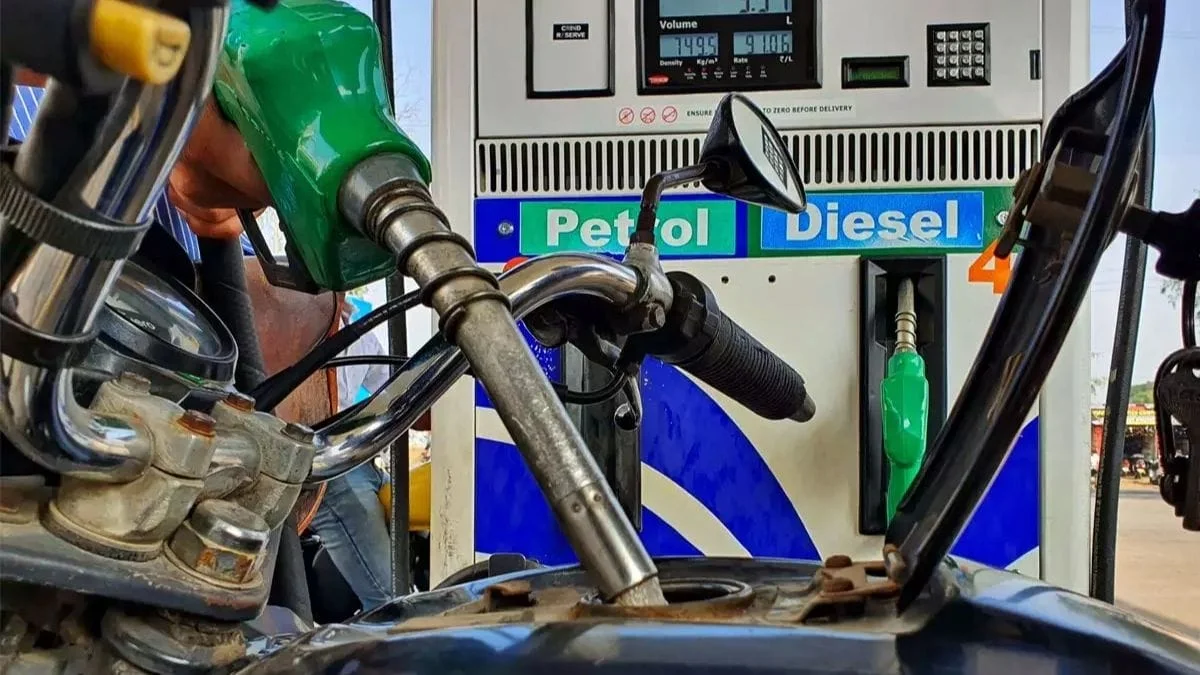

The Indian government has said it is not considering an increase in petrol and diesel prices, effectively ruling out a retail fuel price hike in the near term even as oil marketing companies continue to absorb mounting losses from the disconnect between elevated global crude prices and frozen domestic retail rates.
GOVT SAYS NOT CONSIDERING INCREASING PETROL, DIESEL PRICES#BREAKING
— RedboxGlobal India (@REDBOXINDIA) April 23, 2026
The government’s statement comes directly against earlier warnings from Kotak Institutional Equities that petrol and diesel prices could see a sharp increase of ₹25-28 per litre after the ongoing state elections, as crude oil prices — driven by the Iran war and Strait of Hormuz disruptions — keep the country’s fuel pricing system under severe strain.
What the Government Said
The government’s position is unambiguous — it is not considering increasing petrol and diesel prices at this time. No timeline, no conditions and no caveats were attached to the statement. For consumers, this means the prices at the pump remain where they are for the foreseeable future regardless of what crude oil does in global markets.
The political context is not incidental. West Bengal is voting in two phases on April 23 and April 29. Kerala, Tamil Nadu and Assam are also in the middle of their election cycles. Announcing a ₹25-28 per litre fuel price hike in the middle of a multi-state election season would be politically catastrophic — and the government’s categorical denial makes clear that electoral considerations remain the dominant factor in the fuel pricing decision.
What Kotak Had Warned
The gap between the government’s statement and the market reality that Kotak Institutional Equities described is significant and deserves to be understood clearly. Kotak’s note warned that the current freeze in retail fuel prices is becoming increasingly unsustainable, with OMCs absorbing significant losses as crude prices remain elevated. The brokerage pegged the required correction at ₹25-28 per litre — a price hike that, if implemented, would be the largest single fuel price increase in India’s recent history and would add meaningfully to household inflation.
The key driver behind Kotak’s warning is global crude oil prices, which have remained elevated due to the Iran war, the Strait of Hormuz disruptions and the tightening of physical oil supply conditions that the conflict has produced. With crude hovering around elevated levels — Brent having surged back above $100 and touching $102 before the ceasefire extension partially eased it to $99.80 — India’s OMCs are caught between global prices they cannot control and domestic retail prices the government will not allow them to change.
Kotak specifically highlighted a growing disconnect between crude futures and physical oil markets, indicating persistent supply stress and limited near-term relief. Even with a ceasefire extension now in place, the Strait of Hormuz remains under IRGC strict control, the US naval blockade of Iranian ports continues, and a comprehensive deal that would genuinely resolve the supply disruption is still not in place.
The OMC Loss Picture
India’s three state-owned oil marketing companies — Indian Oil Corporation, Bharat Petroleum and Hindustan Petroleum — are the shock absorbers between global crude prices and Indian consumers whenever the government freezes retail fuel prices. Each rupee of under-recovery per litre across the OMCs’ combined sales volume of approximately 200 million metric tonnes annually translates into enormous financial losses that flow through to their balance sheets, capex plans and dividend capacity.
At ₹25-28 per litre of required correction across petrol and diesel, the daily financial loss the OMCs are currently absorbing runs into thousands of crores. The longer the freeze continues at elevated crude levels, the deeper those losses accumulate — and the larger the eventual correction will need to be when the government finally allows prices to move.
The last significant fuel price revision in India happened in May 2022, when petrol was hiked by ₹8 per litre and diesel by ₹7 per litre after a months-long freeze during the UP election cycle. The pattern — freeze during elections, revise after — is well established, and Kotak’s note was essentially a reminder that the post-election window is where the correction has historically arrived.
What the Government’s Denial Changes
The government’s statement does not change the underlying economics — it changes the timeline. If crude stays elevated and the Iran war remains unresolved, the losses OMCs are absorbing today will be larger losses next month. The ₹25-28 per litre correction Kotak flagged does not disappear because the government says it is not considering a hike. It deferred.
The sequence to watch is West Bengal counting on May 4, followed by the completion of other state election cycles. The post-election window — historically the period when the government has moved on fuel prices — opens in May. Whether the administration chooses to use that window, and at what magnitude, will depend on where crude is trading and how large the OMC loss accumulation has become by that point.
For consumers, the government’s statement is genuine near-term relief. For OMC investors and the broader energy sector, it is a deferral of a correction that the economics of the current crude price environment have made necessary.
Disclaimer: This article is for informational purposes only and does not constitute investment advice. Fuel prices and crude oil markets are subject to rapid change. Readers are advised to monitor official government communications for authoritative information on retail fuel pricing.

Comments are closed.