
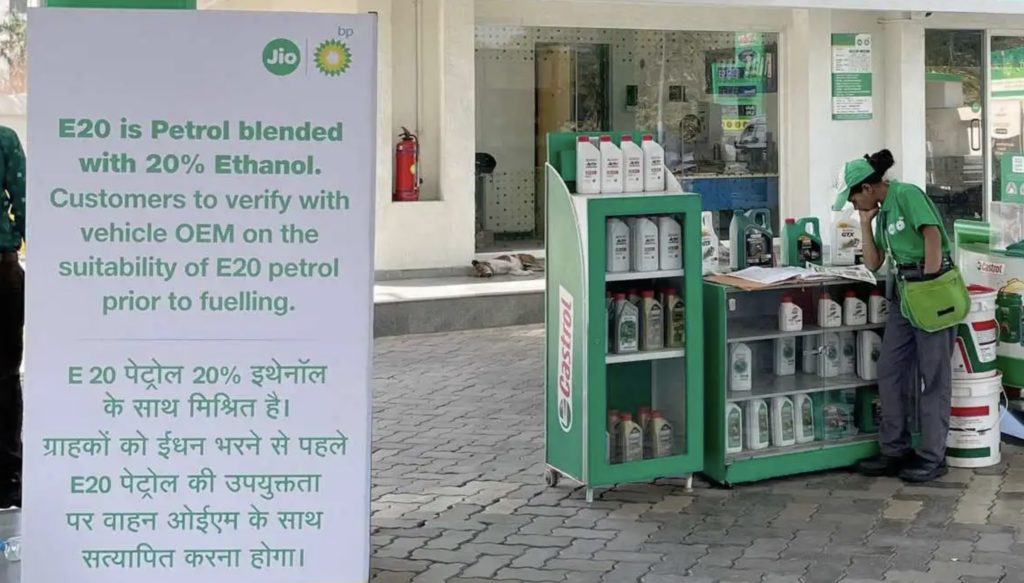

The sale of petrol with up to 20 per cent ethanol and a minimum Research Octane Number (RON) of 95 is mandated by the government across all states and Union Territories effective from April 1, 2026.
How Did This Happen?
“The central government hereby directs that oil companies shall sell ethanol-blended motor spirit (petrol) with percentage of ethanol up to 20 per cent as per the Bureau of Indian Standards specifications and having minimum Research Octane Number (RON) of 95, in states and the Union Territories,” said the oil ministry in a February 17 notification.
But, central government can allow exceptions for the special situations belonging to specific regions and for a limited time.
When it comes to ethanol, it is made from sugarcane, maize, or grain and is renewable, domestically produced and has cleaner burning than pure petrol.
Coming to this decision of mandating ethanol blending in petrol, the government is expecting to cut oil imports and reduce emissions with this decision.
This mandate will also support farmers as it would boosts demand for sugarcane, maize and agricultural surplus.
How About The Adaptability?
When it comes to the adaptability for the vehicles, most of the vehicles are manufactured in India from 2023-2025 onward are designed to run on E20 and no major issues are expected, according to the industry officials.
This change would impact the older vehicles as they may see a slight drop in mileage (3-7 per cent). Also rubber/plastic components may wear.
Besides this, there is an insistence on minimum RON(Research Octane Number) 95, which helps in preventing engine damage.
Basically, RON, is a measure of a fuel’s resistance to engine knocking (pre-ignition), which happens when fuel burns unevenly inside the engine, causing pinging sound, loss of power and possible engine damage over time.
That is why, higher the RON, more resistant the fuel is to knocking. In simple words, octane is like a fuel’s ‘self-control under pressure’ , so higher RON means fuel stays stable under high compression.
Normally, ethanol naturally has a high octane value (around 108 RON), so blending 20 per cent ethanol in petrol, increases knock resistance.
This decision of the government advancing towards 20 per cent blending to 2025-26 from 2030 is encouraged the country’s earlier achievement of 10 per cent ethanol doping in petrol in June 2022 – five months ahead of the target date.
It is already in implementation as most pumps in the country now sell E20 or petrol blended with 20 per cent ethanol.
Since 2014-15, India has saved more than Rs 1.40 lakh crore in foreign exchange through petrol substitution said the oil ministry.

Comments are closed.