
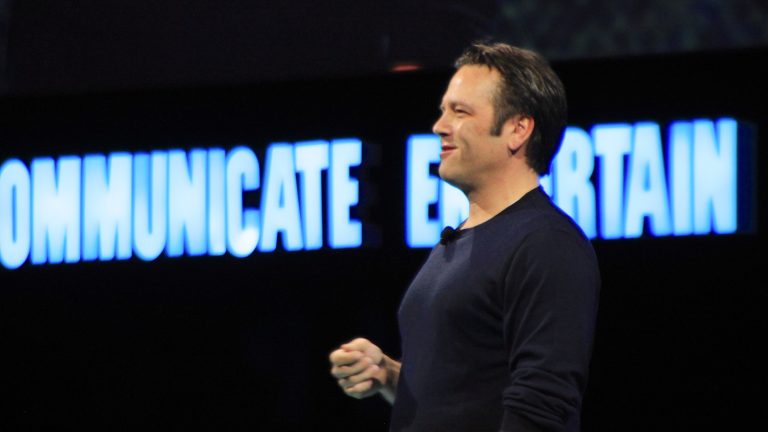

In a move that has sent shockwaves through the global gaming industry, Phil Spencer, the CEO of Microsoft Gaming and the charismatic face of Xbox for over a decade, has announced his retirement. The news, breaking on February 20, 2026, marks the conclusion of a career that spanned nearly four decades, a journey that began with a summer internship in 1988 and ended with Spencer at the helm of a $75 billion entertainment empire. As the industry prepares for a post-Spencer world, the departure of the man who “saved Xbox” signals a seismic shift in Microsoft’s vision for the future of play.
Phil Spencer’s story is the stuff of corporate legend. Joining Microsoft in 1988 as a technical intern, he spent his early years working on software that would eventually become the bedrock of the modern PC era. However, it was his transition into the gaming division in 2001, the year the original Xbox launched that defined his legacy.
Unlike the traditional, suit-clad executives that dominated the 90s, Spencer was famously one of “us”, an avid gamer who could often be found playing Destiny or Halo with the community. This authenticity became his greatest asset in 2014 when he was tasked with a nearly impossible mission: rescuing the Xbox brand from the disastrous launch of the Xbox One. Under his leadership, the division moved away from the “all-in-one media box” strategy and returned its focus to the players, a pivot that would eventually triple the size of Microsoft’s gaming business.
The Architect of the Acquisition Era
Spencer’s tenure will be most remembered for his aggressive, landscape-altering acquisitions. Realizing that content was the ultimate currency in a digital-first world, Spencer led the charge to bring legendary studios into the Microsoft fold.
Starting with the $2.5 billion purchase of Mojang (Minecraft), he laid the groundwork for a portfolio that would eventually include ZeniMax/Bethesda ($7.5 billion) and the record-shattering Activision Blizzard deal ($69 billion). By the time of his retirement, Spencer had grown Microsoft Gaming to span nearly 40 studios, securing iconic franchises like Call of Duty, The Elder Scrollsand World of Warcraft. Beyond just buying studios, he pioneered Xbox Game Pass, a subscription-based “Netflix for Games” model that fundamentally changed how millions of people discover and play titles across PC, console, and cloud.
The Shock Succession: Sarah Bond’s Exit and the AI Pivot
While Spencer’s retirement was partially expected by those close to the company, the accompanying leadership shake-up was a genuine “bombshell.” Sarah Bond, the President of Xbox and the widely assumed “heir apparent” to Spencer, has unexpectedly resigned. Bond, who was the architect of the Game Pass platform strategy and a beloved figure among developers, is leaving to “begin a new chapter,” a move that has left many industry analysts questioning the internal stability of the transition.
In her place, Microsoft has appointed Asha Sharma as the new Executive Vice President and CEO of Microsoft Gaming. Sharma, a former Meta VP and Instacart COO, has spent the last two years leading Microsoft’s CoreAI product. Her appointment is a clear signal from Microsoft CEO Satya Nadella: the next era of Xbox will be defined by Artificial Intelligence and cross-platform scale rather than traditional console hardware.
The “No AI Slop” Promise: Asha Sharma’s Vision
Anticipating the skepticism of the core gaming community, Asha Sharma addressed the “AI elephant” in the room immediately. In her first message to the staff and fans, she made a bold commitment: “As monetization and AI evolve and influence this future, we will not chase short-term efficiency or flood our ecosystem with soulless AI slop.”
Sharma’s vision for Xbox focuses on the “Future of Play,” which she defines as a world where gaming lives across all devices without the limits of a single piece of hardware. “We will return to the renegade spirit that built Xbox,” she stated, promising to prioritize “great games that make us feel” over purely algorithmic content. However, with Matt Booty being promoted to Chief Content Officer to oversee the creative side, it is clear that Microsoft is attempting to balance Sharma’s platform-scaling expertise with Booty’s deep roots in traditional game development.
Legacy of a Gamer CEO
As Phil Spencer transitions into an advisory role through the summer of 2026, he leaves behind a brand that is unrecognizable from the one he inherited in 2014. He turned Xbox from a hardware-dependent underdog into a services-driven powerhouse with over 500 million monthly active users.
For many, Spencer’s departure feels like the end of the “Console Wars” era. He was the executive who championed cross-play, backward compatibility, and the idea that “when everyone plays, we all win.” Whether the new leadership can maintain that community-first heart while navigating a world increasingly obsessed with AI efficiency remains the biggest question of 2026. As Spencer himself put it in his final sign-off: “I’ll see you online.”

Comments are closed.