
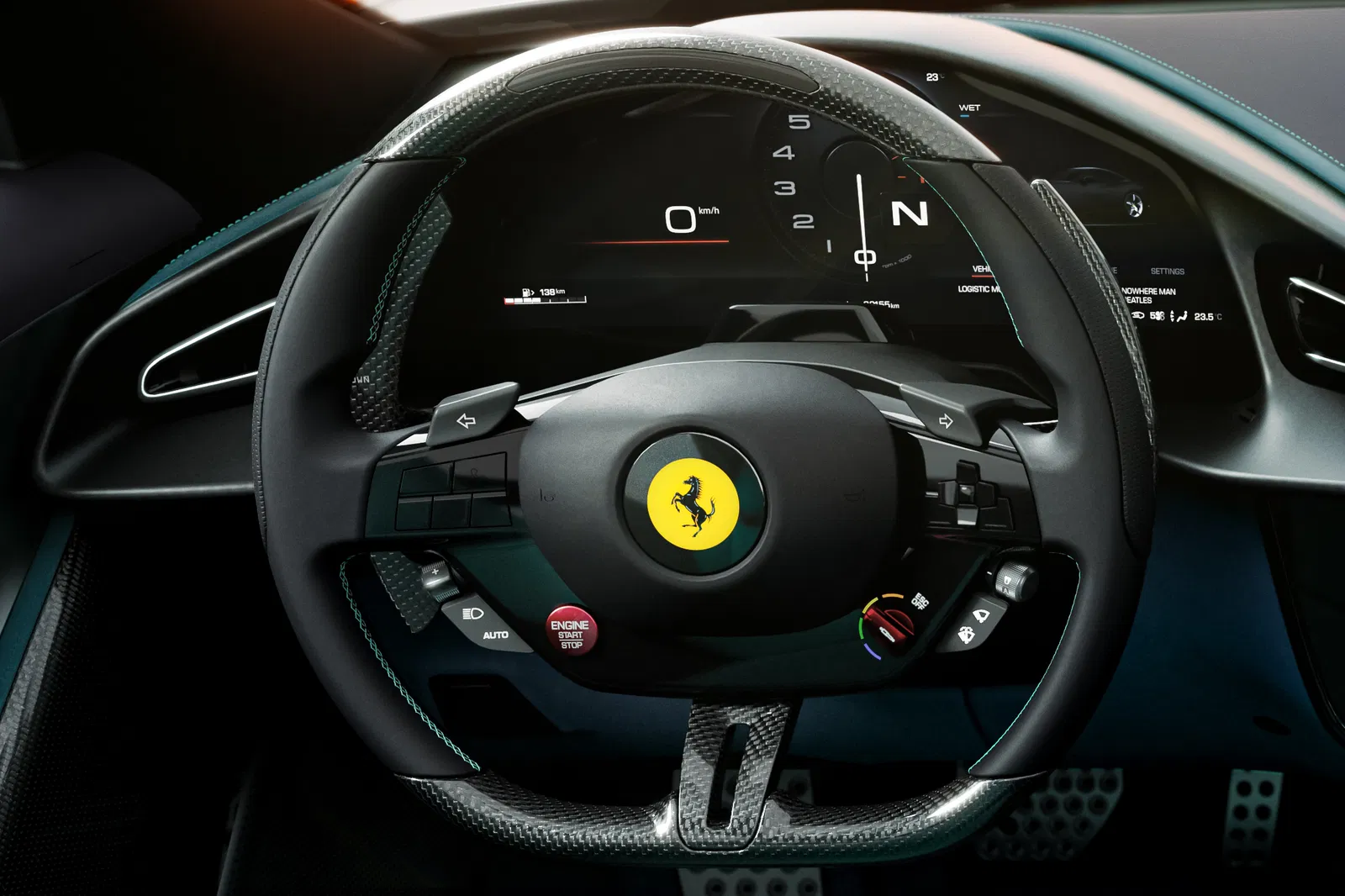

For years, carmakers have sold us the idea that touch-sensitive controls were the future. Sleek, minimal, and futuristic, they looked great in brochures. In reality, they’ve been a headache. Now, Ferrari has done something rare in the auto industry: it has openly admitted that this shift was a mistake.
CEO Benedetto Vigna didn’t dance around it. Touch controls, he said, were never really about improving the driving experience. They were cheaper. In fact, capacitive buttons can cost up to 50 percent less to produce than traditional physical ones. That’s a huge saving when you’re building cars at scale.
But here’s the thing, cheaper doesn’t always mean better.
From Frustration to Fix
Ferrari isn’t just talking. It’s acting.
Owners of the Purosangue and 12Cilindri will soon be able to swap out their steering wheel’s touch controls for proper, tactile buttons. That’s a bold move, especially in a segment where brands rarely look back once a design direction is set.
The company has also quietly shifted course in its newer models. Cars like the upcoming Luce are being designed with a clear intent, bring back the feel of real interaction. Not everything needs to live behind a screen.
And honestly, this feels less like a step back and more like common sense making a comeback.
Why Touch Controls Failed Drivers
Let’s break it down. On paper, touch buttons sound great. In practice, they’re distracting.
You can’t operate them by feel. You have to look down, confirm your input, and often try again when it doesn’t register properly. Add glossy surfaces that attract fingerprints and glare, and suddenly even simple tasks become annoying.
Changing the temperature shouldn’t require navigating a digital maze. Turning on heated seats shouldn’t feel like using a smartphone while driving at 80 km/h.
Ferrari’s stance is clear, driving should feel intuitive, not like managing an app.
A Wider Industry Shift
Ferrari might be the loudest voice right now, but it’s not alone.
Volkswagen has already announced it’s bringing back physical controls after heavy customer backlash. Hyundai, Kia, and Toyota are also dialing down their reliance on touch interfaces. They’ve realised something important, drivers don’t want everything to be digital. They want control, literally.
Meanwhile, brands like BMW and Mercedes continue to lean into minimalism. For some buyers, it works. For many, it doesn’t.
This divide is starting to shape how brands are perceived. It’s no longer just about design, it’s about usability.
The Future: Digital Meets Tactile
Ferrari’s upcoming EV, the Luce, might set the tone for what’s next. It blends digital screens with thoughtfully designed physical controls. HVAC functions, for example, get dedicated buttons instead of being buried in menus.
Yes, this approach is more expensive. Yes, those costs will likely land on customers. But Ferrari is betting that people at the top end of the market value experience over cost-cutting.
And they’re probably right.
What this really means is simple. The future of car interiors isn’t all screens or all buttons. It’s balance. The kind where technology supports the driver, not distracts them.
After years of chasing minimalism, the industry seems to be rediscovering something obvious, sometimes, a good old button just works.

Comments are closed.