
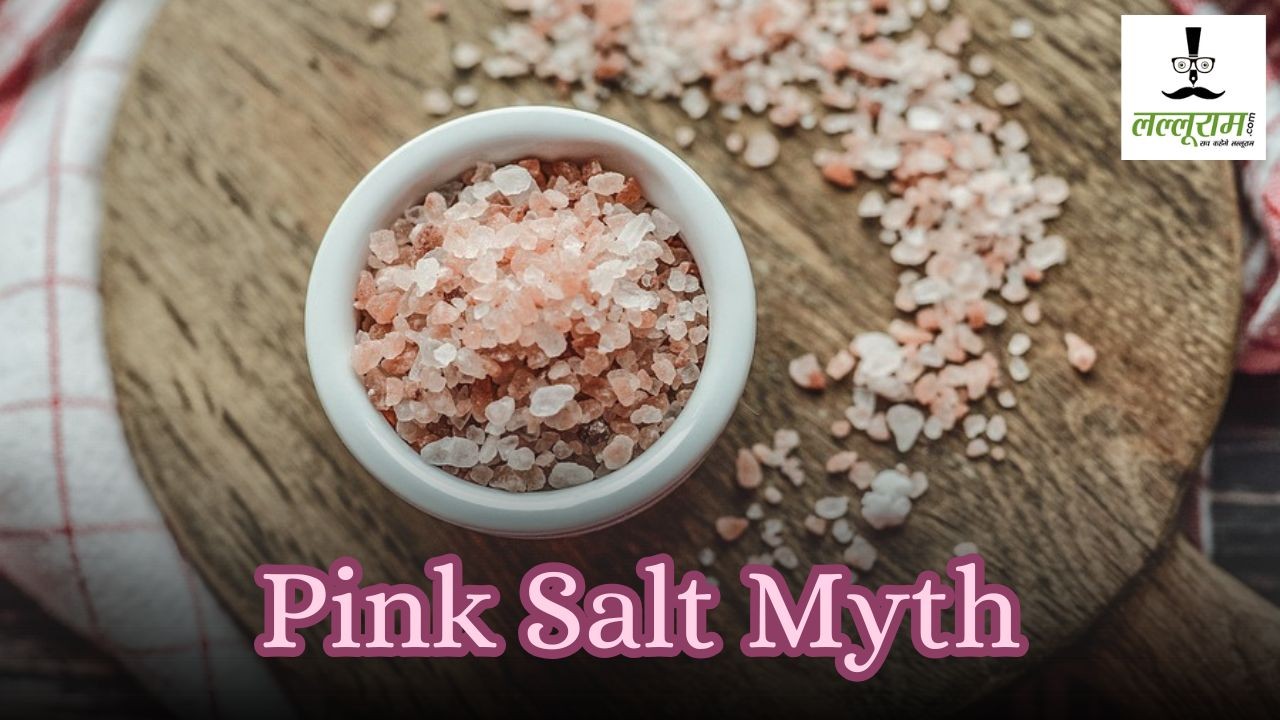
Pink Salt Myth: Are you also using pink salt considering it healthy? You will be shocked to know the truth

Pink Salt Myth : As the trend of healthy lifestyle is increasing, the popularity of “natural” and “organic” foods has also increased rapidly. One of these is pink salt i.e. rock salt extracted from the Himalayas. Many people believe that it contains 80+ minerals, hence it is healthier than ordinary iodized salt. But is it really so? Let us understand in detail.
Does pink salt have more minerals?
Yes, pink salt contains micro minerals like iron, magnesium, potassium. But the thing to note is that these minerals are present in very small amounts – so little that daily consumption does not provide any significant nutritional benefit to the body. Therefore, the claim of “80+ minerals” may sound attractive, but in practice its benefit is limited.
Why is iodine important?
Iodine is an extremely essential element for the body, because it helps in producing thyroid hormones and regulates metabolism. It is necessary for brain development in children. Especially important for pregnant women. Earlier, iodine deficiency was a big problem in India, due to which diseases like goiter and lack of mental development were common. Therefore the government promoted iodized salt.
Iodine deficiency in pink salt
Pink salt does not naturally contain iodine (or contains only negligible amounts). If a person regularly uses only rock salt instead of iodized salt, he may suffer from iodine deficiency. Possible problems include thyroid disorders, fatigue and weight gain, decreased learning ability in children, complications in pregnancy.
What should be done?
1- Use iodized salt in your daily food.
2-Rock salt can be used occasionally for fasting or for taste.
3-If you are using pink salt, make sure that your diet contains adequate amounts of other sources of iodine (such as dairy, eggs, seafood).


Comments are closed.