
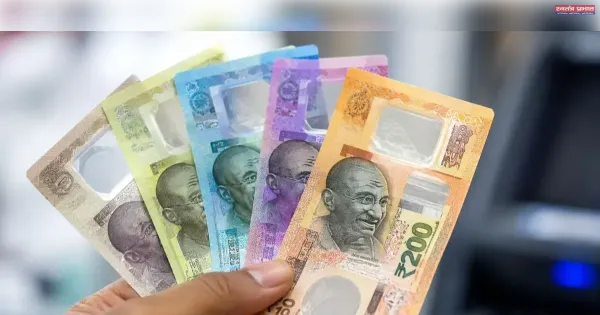

New Delhi, Reserve Bank of India (RBI) may soon take a big step towards issuing plastic (polymer) notes. Keeping in mind the increasing demand for paper notes, sharp rise in printing costs and perishable currency, the RBI is reviving the decade-old scheme. According to sources, a pilot project for small denomination notes like Rs 10 and Rs 20 can be started soon.
RBI Scheme and Background
This proposal has been discussed in detail in the last two board meetings of RBI (Patna and Mumbai). According to major media reports, RBI is about to announce a pilot project, in which polymer notes will be issued for testing among the general public. The scheme was launched in 2012, when Rs 10 polymer notes were piloted in five cities. But at that time ATM machines could not handle these thick notes, due to which the scheme was stopped. Now with technological advancement this problem has been solved.
Why is RBI introducing plastic notes?
-Increasing currency demand: Despite digital payments, the demand for physical currency is continuously increasing. Currently the currency in circulation has reached close to Rs 42.86 trillion, which is 11.5% more than last year.
-Burden of printing cost: Rs 6,373 crore was spent on printing notes in the financial year 2024-25. Paper notes quickly become dirty and torn, leading to billions of notes being withdrawn every year.
Durability: Polymer notes are 3-4 times more durable than paper notes. These are more safe from water, dirt and bursting.
Counterfeiting Prevention: Better security features can be installed in polymer notes, which will make it more difficult to make fake notes.
What are polymer notes?
Polymer note plastics are made from bio-based polypropylene or similar materials. More than 60 countries around the world (Australia, Canada, UK etc.) are already using them. These notes have a longer shelf life, leading to cost savings for the government and the RBI in the long run.
phased strategy
RBI is not planning to convert all the notes into plastic immediately. In the first phase, there will be a pilot launch of notes of smaller denominations (₹10 and ₹20). Bigger notes will be considered only after the success of the pilot. ATM and printing process will also be updated.
expert opinion
Experts believe that this step can prove beneficial for both the environment and the economy. However, in the initial phase there will be challenges in getting the public used to the new notes and changes in the supply chain. This initiative, led by RBI Governor Sanjay Malhotra, is being considered an important step towards strengthening currency management. It remains to be seen when the pilot project starts and what is the reaction of the common people. If all goes well, then in the coming time you may also see plastic notes in your wallet.
Comments are closed.