
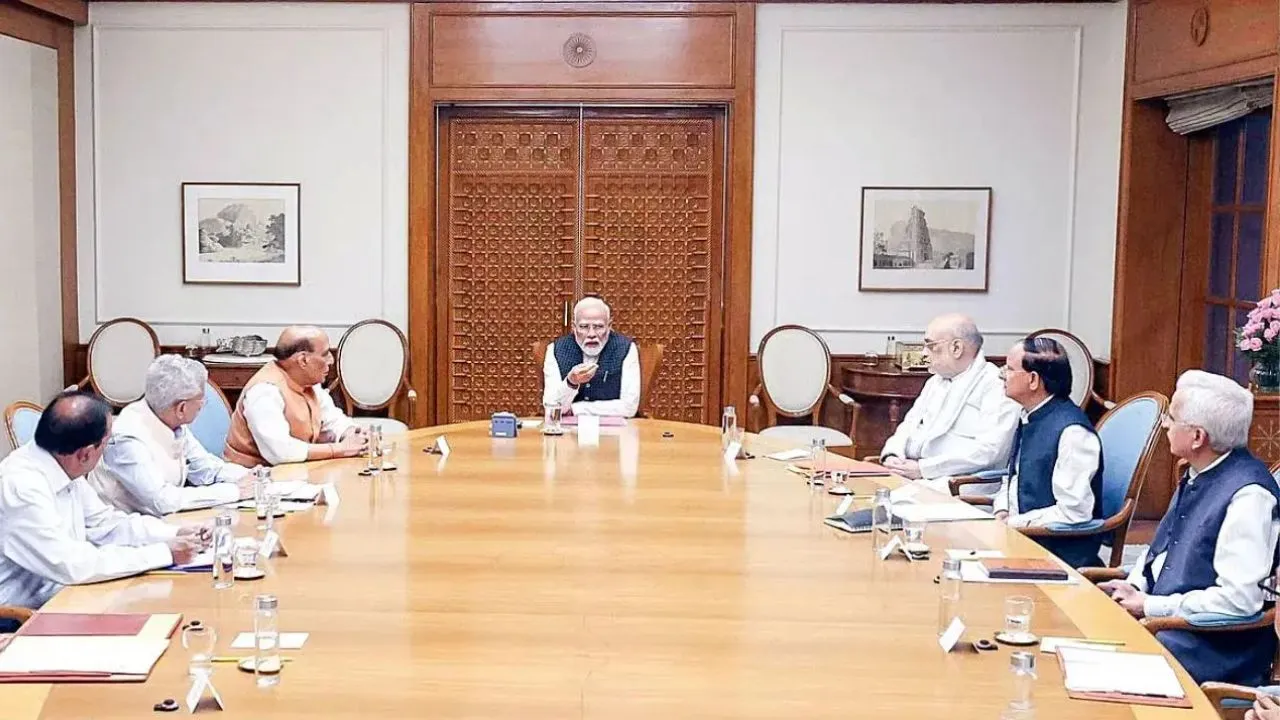

Impact Of West Asia War On India: Amidst increasing tension in West Asia, Prime Minister Narendra Modi chaired high-level meetings in Delhi today. Back-to-back meetings of the Cabinet Committee on Security (CCS) and the Cabinet Committee on Economic Affairs (CCEA) were held at the Prime Minister’s residence. To deeply analyze the impact of the West Asia war on India, the Central Government has intensified preparations on the security and economic fronts. In these meetings, the security threats posed by the war and its impact on the country’s economy were closely reviewed.
security review
The CCS meeting mainly discussed the deteriorating situation in West Asia and its possible security implications for India. Veteran leaders like Home Minister Amit Shah, Defense Minister Rajnath Singh and Foreign Minister S Jaishankar attended this important meeting. The Prime Minister has given strict instructions to the officials to keep a close watch on every changing situation and maintain coordination with the states.
West Asia at war security of indians
Lakhs of Indian citizens are currently working in West Asia, ensuring whose safety has been said to be the top priority of the government. During the meeting, airspace and alternative routes for safe evacuation of Indians in case of emergency were seriously considered. According to sources, the Navy and Air Force have been asked to be prepared for any emergency so that quick action can be taken if needed.
strategy on the economic front
Right after the security affairs meeting, another important meeting of the Cabinet Committee on Economic Affairs i.e. CCEA was held. Big leaders like Union Agriculture Minister Shivraj Singh Chauhan and Health Minister JP Nadda reached the Prime Minister’s residence to attend this meeting. The main objective of CCEA was to analyze the rising prices of crude oil in the international market due to the war and its impact on the supply chain.
ensure supply
The main focus of the government is that despite the instability in West Asia, there should be no shortage of essential commodities in India. In the meeting, a concrete strategy was prepared to maintain adequate supply of fuel and fertilizer within the country. The Prime Minister directed officials to be prepared in advance to face any disruption in the international supply chain.
Global concerns and India
The region of West Asia and Middle East is considered very important and strategic for India from the energy security perspective. The increasing tension between Iran and Israel has increased the concern of the whole world as it may lead to a rise in international oil prices. In these difficult circumstances, the Indian government is trying to strike a balance between its economic interests and the safety of its citizens living abroad.
Contribution of ministers
In these meetings, senior officials of various ministries also presented their detailed reports so that the government could know the ground reality. The Ministry of External Affairs is in constant touch with the Indian embassies located there so that information about the security of every Indian citizen can be obtained. The Prime Minister has given strict orders to all departments to work with mutual coordination and report the situation from time to time.
Also read: Deep brainstorming on energy and fertilizer supply in CCS: PM Modi’s big meeting on West Asia crisis
future plan
The government is now seriously exploring alternative trade routes through which the supply chain can be easily protected from any possible disruption. Officials have been instructed to ensure daily monitoring of the prices of oil and other essential commodities in the international market. It is clear from this activism of the Prime Minister that the Government of India is fully prepared to face any global crisis boldly.

Comments are closed.