
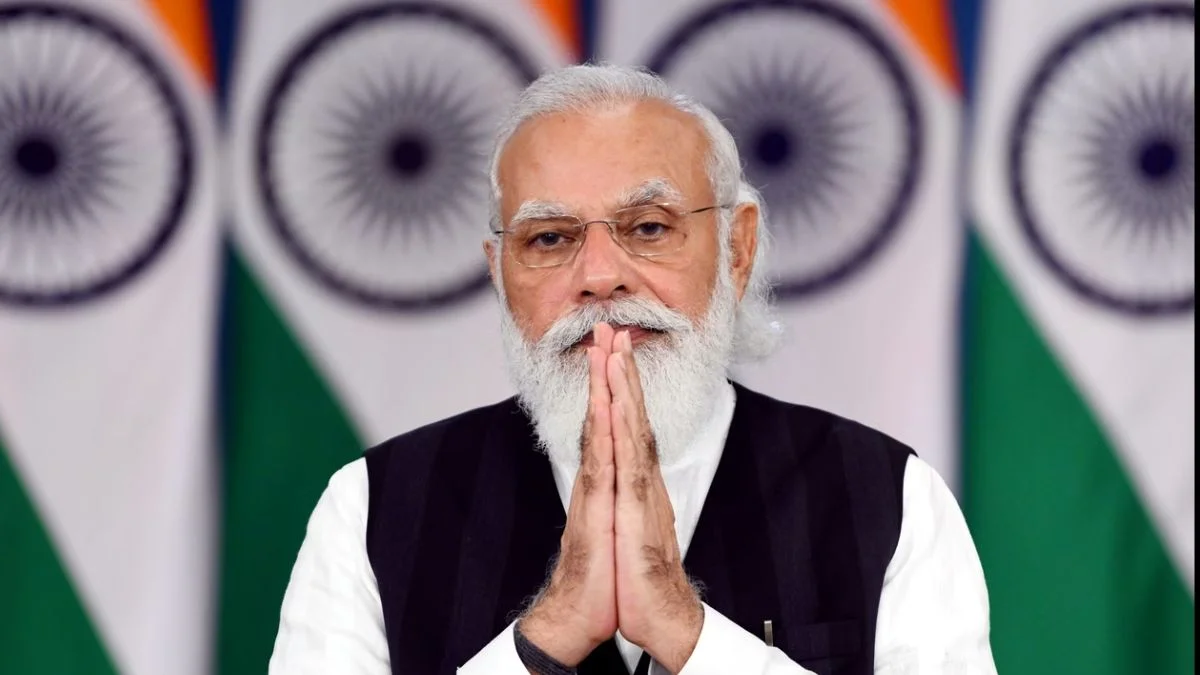

Prime Minister Narendra Modi, addressing the Rajya Sabha on Tuesday, March 24, 2026, made India’s most assertive diplomatic statement yet on the West Asia conflict, declaring that India is calling for de-escalation and the opening of the Strait of Hormuz directly with the leaders of West Asia. The statement elevates India’s role in the conflict from concerned observer to active diplomatic participant, signalling that New Delhi is not merely watching the crisis unfold but is directly engaging the region’s leadership at the highest level.
What Modi Said
The Prime Minister’s statement was brief but significant in its framing. India is calling for de-escalation and for the opening of the Hormuz strait with leaders of West Asia, he told the Rajya Sabha. The use of the word calling rather than requesting or hoping reflects a deliberate choice of language. India is not petitioning. It is advocating. And it is doing so directly with the leaders of the region, not through intermediaries or multilateral forums.
This statement, coming on the same day that CNN-News18 reported Iran’s new Supreme Leader Mojtaba Khamenei has agreed to enter negotiations with the United States, and on the same day that an Israeli official confirmed contacts for a meeting between senior American and Iranian officials in Islamabad this week, places India at the centre of a rapidly evolving diplomatic landscape.
Why This Statement Matters
Modi’s Rajya Sabha statement builds on his earlier Lok Sabha address where he declared the closure of the Strait of Hormuz unacceptable. That statement established India’s position. Tuesday’s Rajya Sabha statement reveals the mechanism: direct engagement with West Asian leaders. India is not simply broadcasting its position to the world. It is taking that position directly into conversations with the governments of the region.
The leaders India is engaging almost certainly include those of the Gulf states most directly affected by the conflict, the UAE, Saudi Arabia, Qatar, Oman, Kuwait, and potentially Iran’s own leadership through the diplomatic channels that India has carefully maintained throughout the conflict. India’s carefully preserved neutrality, refusing to condemn either side while maintaining relationships with both the United States and Iran, gives New Delhi a degree of diplomatic access that Western nations do not currently have.
Oman has historically served as one of the most important back channels between the United States and Iran in previous rounds of diplomacy. India’s engagement with Oman and other Gulf states at the leadership level, at the same moment that the Islamabad meeting and Supreme Leader-level negotiations are reportedly being arranged, suggests Indian diplomacy may be playing a constructive supporting role in the broader de-escalation architecture that is beginning to take shape.
The Hormuz Demand Is Now India’s Official Diplomatic Position
By stating in Parliament that India is calling for the opening of Hormuz with West Asian leaders directly, Modi has formally made the strait’s reopening a stated objective of Indian foreign policy rather than merely an expression of concern. That formalisation matters for India’s diplomatic leverage. When India’s Prime Minister states in the upper house of Parliament that opening Hormuz is something India is actively pursuing with regional leaders, every government in the region understands that India’s relationship management with them is now explicitly linked to whether the strait reopens.
India’s leverage in that equation is considerable. The Gulf states depend on Indian skilled workers, Indian trade relationships, Indian diplomatic support, and increasingly Indian investment. Iran values India’s neutrality, its willingness to continue limited economic engagement despite Western pressure, and its potential role as a conduit to the international community. Modi’s parliamentary statement activates that leverage explicitly, making India’s de-escalation call not just a moral position but a diplomatic instrument.
What Comes Next
India’s direct engagement with West Asian leaders, combined with the Supreme Leader-level agreement to negotiate reported by CNN-News18 and the Islamabad meeting contacts confirmed by an Israeli official, suggests that the diplomatic architecture for de-escalation is being constructed simultaneously through multiple channels. The United States is apparently talking to Iran through Pakistan-mediated contacts. India is engaging Gulf state leaders directly. Regional intermediaries including Oman and Qatar are running their own back channels.
The five day window Trump announced expires Tuesday morning IST. The Islamabad meeting is reportedly being arranged for later this week. And India’s Prime Minister has now stated in Parliament that New Delhi is actively working the phones with West Asian leaders toward de-escalation and Hormuz reopening.
The diplomatic traffic around this conflict has never been busier. Whether that traffic produces a framework before the five day window closes will determine whether the extraordinary market volatility of the past four weeks begins to reverse or whether a new and more dangerous phase of the conflict begins.
Disclaimer: This article is for informational purposes only and does not constitute financial or investment advice.

Comments are closed.