
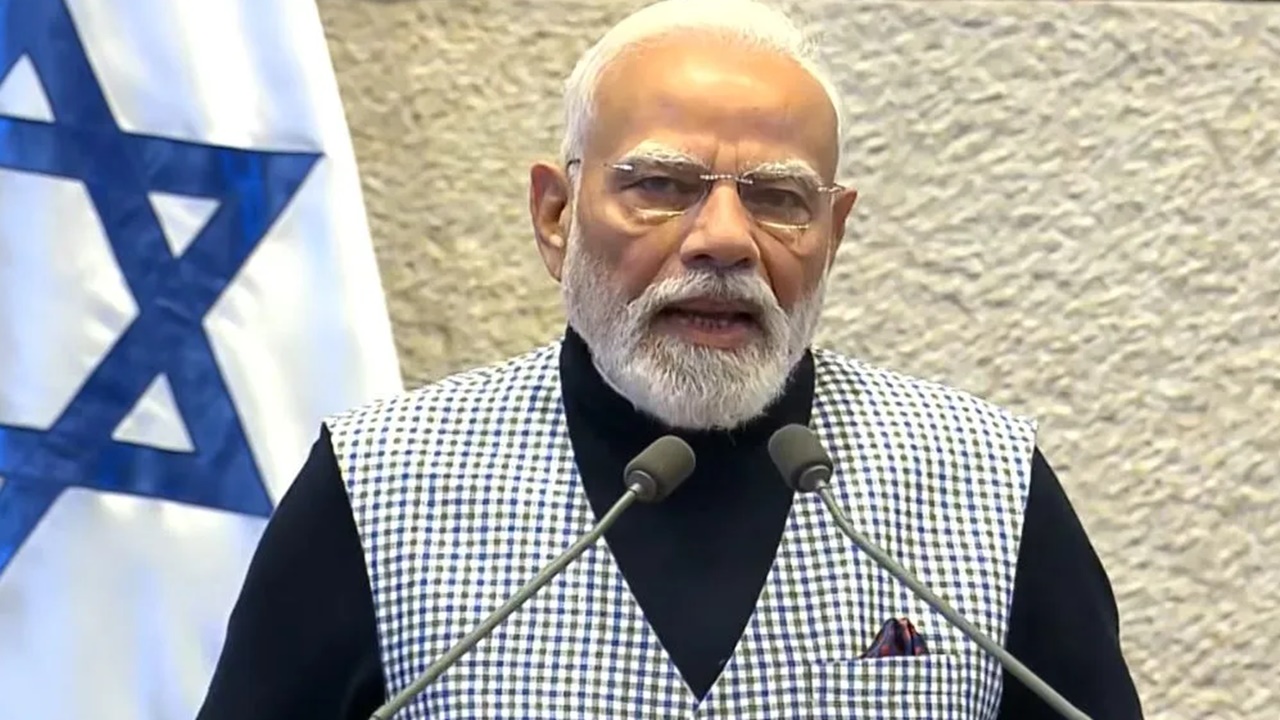
PM Modi urged Indian investors to take advantage of the announcements made in the budget, said- industries should come forward with investment and innovation.

New Delhi, 27 February. Prime Minister Narendra Modi on Friday urged Indian industry to increase investment and innovation. He said the government has laid the groundwork through aggressive capital expenditure and a consistently favorable policy environment in the Budget and now is the time for the private sector to drive the next phase of globally competitive growth.
Addressing a post-Budget webinar on ‘Technology, Reforms and Finance for a Developed India’, Modi said public capital expenditure has increased from Rs 2 lakh crore 11 years ago to more than Rs 12 lakh crore in the Union Budget 2026-27. This has laid a strong foundation for expansion. He said the higher allocation signals the private sector to invest with renewed vigor and take advantage of the Budget announcements for 2026-27.
Modi said, “Indian companies should come forward with new investments and innovation. Financial institutions should support in creating practical solutions and enhancing market confidence.” He called for close collaboration between government, industry and knowledge sector partners to translate the reforms into concrete outcomes.
“We need greater participation in infrastructure and innovation in financial models… We must strengthen project approval practices and improve the quality of appraisal,” Modi said. The government has centered India’s growth strategy over the past decade around record levels of capital expenditure. There has been a sharp increase in expenditure on highways, railways, ports, airports, digital infrastructure and energy networks to attract private investment and increase medium-term productivity.
However, the private sector has not yet fully displayed that so-called fighting spirit (animal spirit). Narendra Modi said India’s strong potential in the last decade has been driven by strong faith-based reforms and efforts to continuously improve the ease of doing business. India has adopted technology-based good governance, strengthened institutions and even today the country is on the path of reforms.
He said, “To maintain the fast pace of reforms, we need to focus not only on policy intent but also on excellent implementation. Reforms should be evaluated based on their impact on the ground. We should make extensive use of artificial intelligence, blockchain and data analytics to increase transparency, speed and accountability.” He proposed creating a ‘Reform Partnership Charter’ to formalize collaboration between government, industry, financial institutions and academia under the goal of a ‘developed India’ by 2047.
Modi said when people from government, industry and knowledge sector come together, “reforms translate into results and announcements made on paper translate into achievements on the ground.” Referring to investor-friendly policies announced by the government, he said the Foreign Direct Investment framework has been simplified and brought in more predictability. In addition, steps have been taken to deepen the bond market. He said that new low-risk financial instruments should be developed to attract sustained foreign investment.
Noting that the budget is often evaluated on various parameters, Modi said, “The national budget is not a short-term business document. It is a policy blueprint. Therefore, the effectiveness of the budget should also be assessed on concrete and meaningful parameters.” He said, “The budget ‘webinar’ organized every year after the budget is important. I wish that this webinar should not be limited to just formal discussions, but should focus on meaningful brainstorming.”

Comments are closed.