
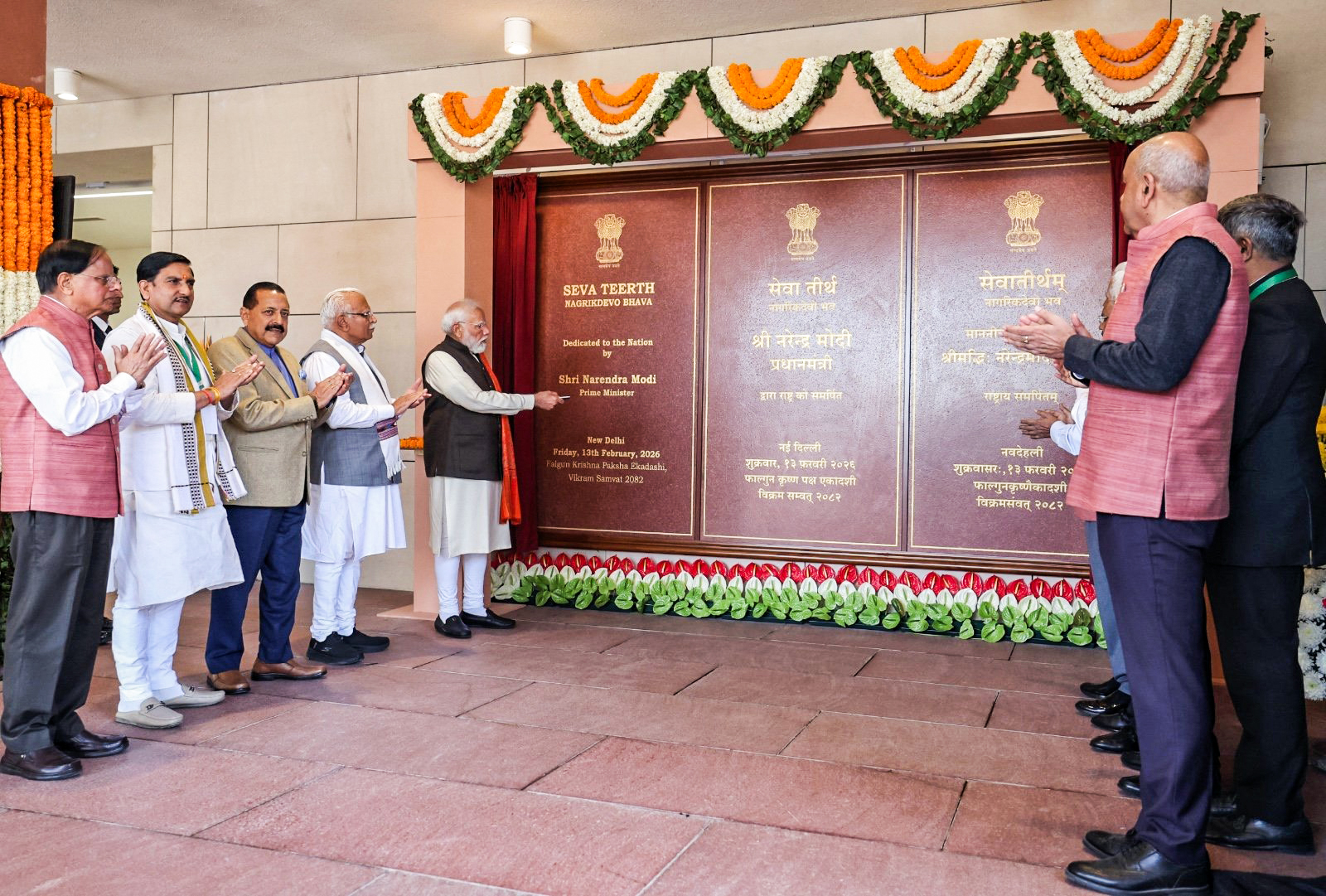
New address of PM’s office ‘Seva Teerth’: ‘Supreme Power Centre’ shifted from South Block, know the complete story of new PMO in 10 points

In the corridors of power of New Delhi, one chapter of Colony history ended and another began. South Block, which has been the symbol of the country’s executive since independence, is no longer the permanent location of the Prime Minister’s Office. Prime Minister Narendra Modi shifted its office to the new administrative complex’service pilgrimage‘Have shifted to. This is being seen not just as a change of address, but as a change in the working style, thinking and structure of governance.
For nearly 80 years, South Block was the nerve center of the country’s executive power. From there, decisions were taken from the first Prime Minister of independent India to the current leadership. Now ‘Seva Teerth’ prepared under the Central Vista Project is being described as the new center of modern, integrated and technology-based administration. The government claims that this step will ensure better coordination, faster decision making and future-proof infrastructure by bringing together scattered ministries.
The name ‘Seva Teerth’ is also a message in itself. A symbolic shift towards citizen-centric governance, service-mindedness and accountability. In such a situation, the question is not only that the address of the PMO changed, but whether it will also change the speed and effectiveness of governance? This is the real story of this historic shift.
PM Modi’s new office ‘Seva Teerth’: What changed, why important?
Prime Minister Narendra Modi has shifted his office from the historic South Block of New Delhi to ‘Seva Tirtha’. This change from South Block, which has been the center of the country’s executive for nearly 80 years, is being considered as a sign not only of the address but of the restructuring of administrative thinking and structure. This change is part of the Central Vista Project.
Know the specialty of ‘Seva Teerth’ in 10 points
1. Message in name: ‘Service’ placed in center
‘Seva Teerth’ means a holy place of service. This is being considered a symbolic initiative to emphasize citizen-centric governance and accountability.
2. The 80 year old era of South Block is over
Since the country’s independence i.e. 1947, the Prime Minister’s Office continued to operate from South Block. Since independence, every Prime Minister from Nehru, Indira, Rajiv Gandhi, Charan Singh, Narasimha Rao, Atal Bihari Vajpayee, Man Mohan Singh to Modi used to work from here. But from today onwards Modi will work in Seva Teerth. With this, this has also become the office of the country’s PM.
3. Unified Administrative Hub
Seva Tirtha i.e. the new complex has brought together several major units, which is expected to lead to better coordination in functioning and faster decision making.
4. What are the three main buildings of Seva Tirtha?
PM Modi’s office i.e. Seva Tirtha consists of three main buildings. These include 1: Prime Minister’s Office (PMO), Seva Tirtha-2, Cabinet Secretariat and Seva Tirtha-3, National Security Council Secretariat and NSA office and other offices.
5. ‘India House’ Conference Facility
A state-of-the-art conference center has been prepared in Seva Tirtha for foreign delegations and high-level meetings coming to the country, which was not available earlier.
6. Open-Plan Modern Design
The PMO’s old closed cabins and long corridors have now been replaced by open-workspaces, high-tech communication and secure digital networks.
7. High Security Infrastructure
Encrypted communication, smart access control, advanced surveillance system and emergency response system have been included in the new PMO. This has been done keeping secrecy and security in mind.
8. Green and Sustainable Building
Seva Tirtha Complex has been designed as per 4-star GRIHA standards. This includes renewable energy, water management and waste management systems.
9. Part of Central Vista
The Central Vista project includes the new Parliament House, Dutta Bhawan (Common Central Secretariat) and redevelopment of Dutta Path.
10. A sign of moving on from the colonial legacy
With this decision, the imprint of the colonial legacy with the PMO has now been left behind. The South Block, designed by Edwin Lutyens and Herbert Baker, was part of the administrative structure of the British era. The new PMO is being considered an attempt to reflect the administrative identity of modern India.
Why is this change important?
The shift of PMO to Seva Teerth is not just a change of building, but is being said to be a step towards administrative centralization, technology upgrade and future-oriented governance model. The government claims that by bringing scattered ministries into one place, operational expenses will be reduced and the decision making process will be faster.
What will change now?
This decision of PM Modi will speed up the work of the government. Coordination between all ministries will be promoted. It will be possible to lay more emphasis on digital governance. It will be possible to upgrade the security infrastructure. It is considered to be a better facility for foreign diplomatic activities.
new model of governance
‘Seva Teerth’ is being presented not just as a new address but as a new model of governance. This journey from South Block to the new complex signals a symbolic and practical change in the administrative structure of India. Now the focus will be on how much real change this new structure can bring in the speed and transparency of work.
A PMO statement said, “For decades, various key government offices and ministries functioned from fragmented and aging infrastructure spread across multiple locations in the Central Vista area. This fragmentation has led to operational inefficiencies, coordination challenges, rising maintenance costs and a degraded work environment. The new building complex will address these issues by consolidating administrative functions within modern, future-ready facilities.”

Comments are closed.