
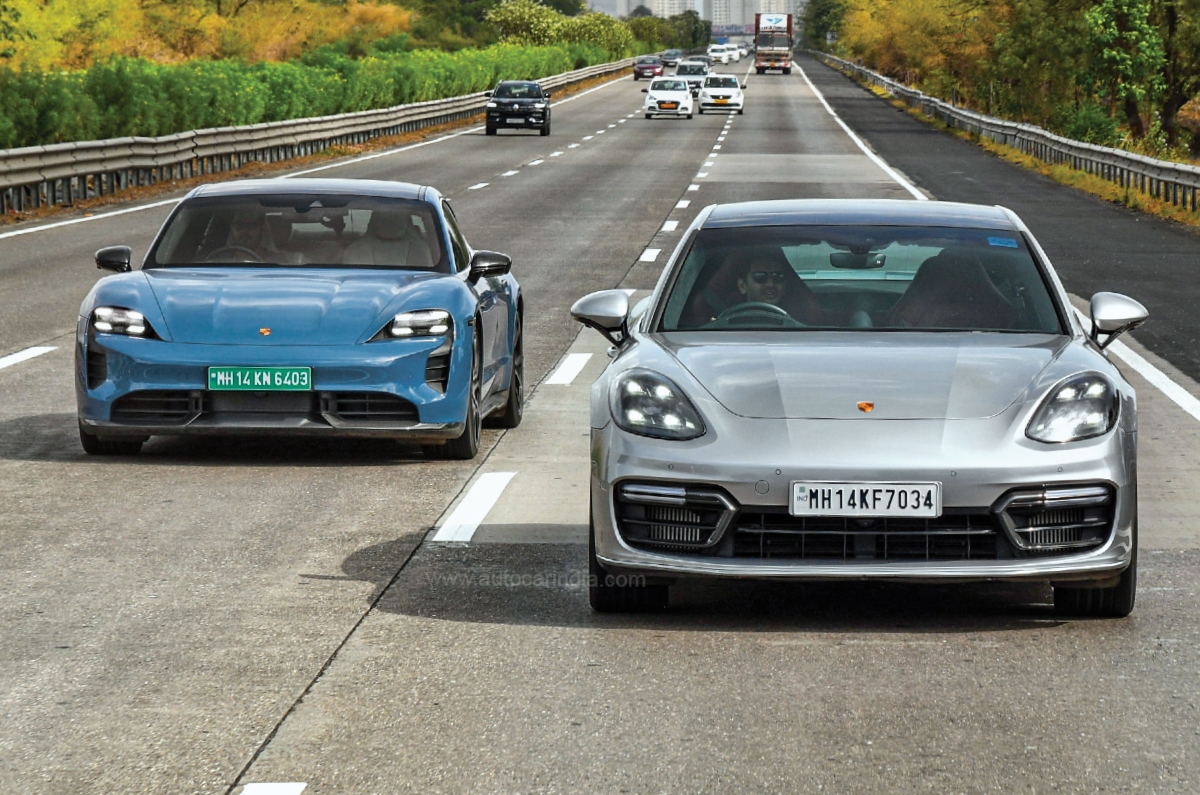

Porsche could be preparing one of the biggest changes to its luxury sedan lineup. Reports suggest the company is exploring a Panamera Taycan mergerpotentially bringing its flagship gasoline and electric sedans under a single model family.
It’s not a confirmed plan yet. But the idea reflects a larger shift inside Porsche as it navigates slowing sales, rising development costs, and a rapidly evolving electric vehicle market.
A Tough Start for Porsche’s New Leadership
The discussion comes at a delicate moment for the brand. Porsche’s new CEO, Michael Leiters, steps in just as the company faces its second straight year of declining global sales.
Deliveries dropped 10 percent in 2025following a three percent fall in 2024. One of the biggest pressure points is China, a market that once drove huge growth for the brand.
Over the past three years, Porsche has seen double-digit demand declines in Chinalargely because local EV makers are launching increasingly sophisticated cars packed with technology and priced far below European luxury rivals.
In simple terms, the competition has become faster, smarter, and cheaper.
Why Porsche Is Rethinking Its Sedan Strategy
For years, the Panamera and Taycan have lived side by side comfortably.
The Panamera has catered to buyers who still want combustion power, often with a V8 soundtrack. The Taycanintroduced in 2019, represented Porsche’s first serious step into the electric era.
But developing two completely separate luxury sedans is expensive. Platforms, software, battery tech, and powertrains all require heavy investment.
That’s why Porsche is reportedly considering merging the two lines into one flexible model family. Instead of building separate cars, the brand could create a shared architecture that supports electric, hybrid, and combustion powertrains.
It’s essentially a hedge against uncertainty in the EV market.
If One Name Survives, It’ll Likely Be Panamera
If the merger happens, the Panamera name is the stronger bet to stay.
The model has been around since 2009 and carries far deeper brand recognition among Porsche buyers. Taycan, while successful early on, is still relatively young.
Sales numbers also tell a story. After an impressive start, Taycan demand has been fading in recent years.
Global Taycan Sales
2025 – 16,339
2024 – 20,836
2023 – 40,629
2022 – 34,801
2021 – 41,296
2020 – 20,015
That drop highlights how competitive the EV market has become, especially with new high-performance electric cars emerging almost monthly.
Porsche Isn’t Giving Up on Gas Engines Yet
Despite its electric ambitions, Porsche isn’t rushing away from combustion engines.
In fact, several recent decisions point in the opposite direction.
The upcoming Macan, Boxster, and Cayman will reportedly have both electric and gasoline versions. Porsche’s upcoming three-row SUV will also launch with combustion engines rather than as an EV-only model.
Even the Cayenne is moving toward a dual strategywith electric and gas versions sold alongside each other.
And for traditionalists, Porsche has already confirmed something important: the Panamera’s V8 engine will stay alive well into the 2030s.
The Industry Is Slowing Its EV Push
What Porsche is considering reflects a broader realization across the auto industry. The shift to electric cars is happening, but not as quickly or evenly as many companies once expected.
By potentially merging the Panamera and Taycan, Porsche could create a sedan that adapts to whichever powertrain customers want, rather than betting everything on one future.
If the plan moves forward, it wouldn’t just reshape Porsche’s sedan lineup. It would signal how even the most performance-focused brands are recalibrating their path into the electric era.

Comments are closed.