

Newly appointed Union Education Minister Pralhad Joshi assumed charge on Saturday, pledging to work with “duty and humility” under Prime Minister Narendra Modi’s guidance, as the Centre prepared to introduce a bill in Parliament on Monday (July 27) to tighten the anti-paper leak law with stricter penalties and fast-track courts.
Joshi has been appointed as Education Minister following Dharmendra Pradhan’s resignation from the post on Saturday. He has been given additional charge of the Education Ministry besides his role as Consumer Affairs Minister.
“I have just got to know that the Prime Minister has given me a responsibility. I accept this responsibility with a sense of duty and humility,” he told reporters.
Also read | From JP to CJP: How Delhi remains the epicentre of India’s power-shifting protests
“In the last 12 years of Prime Minister Modi’s government, many historical achievements have been made. In the last four-five years, Dharmendra Pradhan also executed the National Education Policy…Under the guidance of the Prime Minister, I will try to perform to the best of my capacity,” he added.
Bill proposes tougher penalties
Meanwhile, seeking to amend a two-year-old anti-paper leak law, a bill that proposes to set up fast-track courts in every state for speedy trials of accused and enhances punishment is set for introduction in the Lok Sabha on Monday.
According to the Public Examinations (Prevention of Unfair Means) Amendment Bill, 2026, investigations into paper leak cases are to be completed within two months.
The bill circulated to the Lok Sabha members ahead of its introduction says that individuals involved in paper leaks or unfair means in exams will get jail terms for a minimum of 5 years and a maximum of 10 years, and a fine of up to Rs 50 lakh. For organised crimes, the bill proposes a minimum sentence of seven years and a fine of up to Rs 10 crore.
Also read | How songs of resistance have bound protestors at Jantar Mantar with generations of past dissenters
The present law has provisions for a minimum of three to five years of imprisonment to curb cheating and those involved in organised crimes of cheating face five to 10 years of imprisonment and a minimum fine of Rs 1 crore.
The bill has been listed for introduction, consideration and passage for Monday in the Lok Sabha. Bills are usually not listed for introduction and passage on the same day.
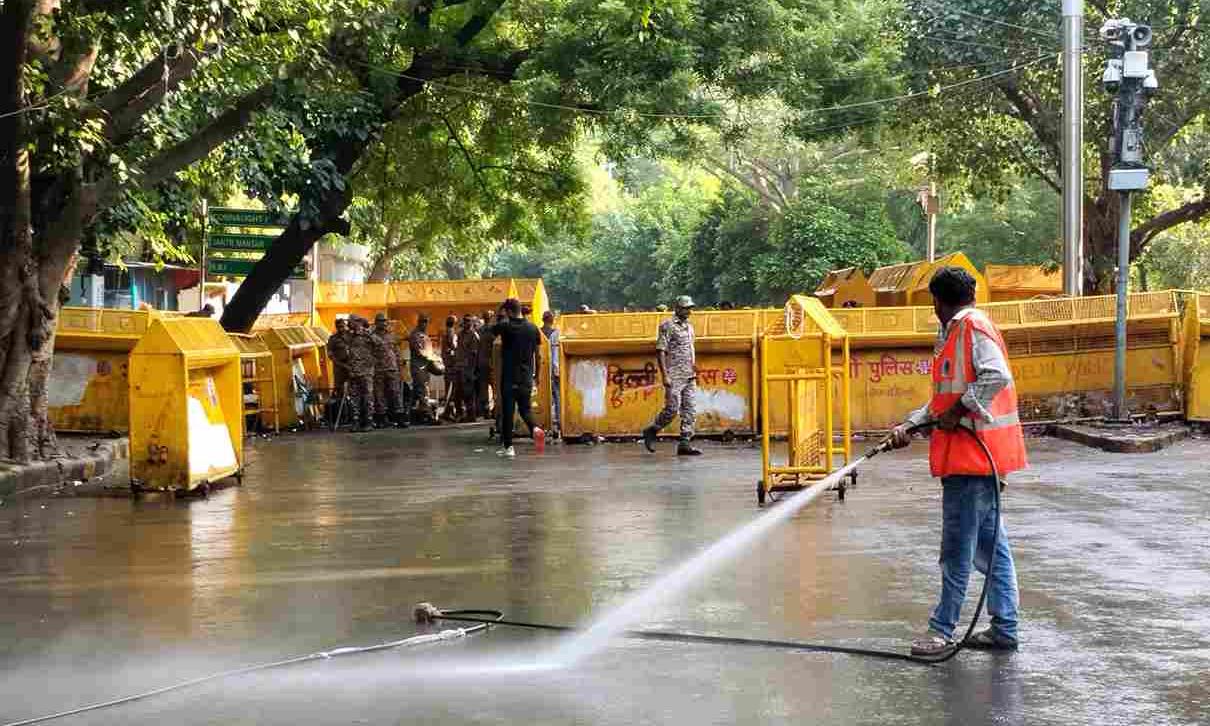
The government announced it was bringing in the proposed legislation after student protests led by the Cockroach Janta Party (CJP) over the NEET paper leak issue gained momentum in recent days.
(With agency inputs)
Scroll below for Live updates

Comments are closed.