
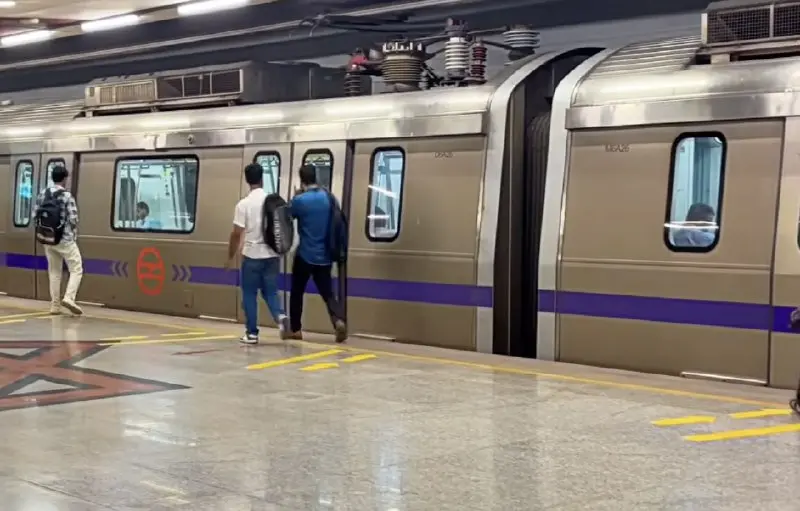

Another big step is being taken towards further strengthening public transport in the country’s capital. Delhi Metro Rail Corporation (DMRC) is working on a special plan to improve connectivity in South Delhi. The main objective of this initiative is not only to provide comfortable travel to the passengers, but also to control the increasing crowd of vehicles on the roads and the pollution caused by it. The metro network is continuously being laid in Delhi-NCR, due to which it is strengthening its place in the list of cities with the best transport system in the world.
Travel in South Delhi will be easy, there will be freedom from jam and pollution, number of interchange and feeder buses will increase.
New corridors are being prepared to expand metro services in South Delhi. These corridors have been specifically planned keeping in mind the needs of office goers and common commuters. With the commencement of these new lines, it is expected that there will be a huge decline in the number of private cars and autos on the roads. Its direct impact will be seen in the form of reduction in traffic jams and air pollution. The aim of the administration is to provide cheap and fast travel to lakhs of passengers every day. For this, not only new stations will be built, but the number of interchange stations will be increased and the arrangement of feeder buses will also be improved to reach the last mile connectivity.
Preparation to compete with cities like Shanghai and London, Delhi-NCR metro network reaches beyond 400 kilometers
Delhi Metro network has achieved a new milestone in terms of length. Now the metro lines in Delhi-NCR have expanded to more than 400 kilometers. This includes DMRC as well as Rapid Metro and other extensions. However, despite this achievement, Delhi still has a long way to go at the global level. In terms of length, Delhi Metro still lags behind the cities with the largest metro networks in the world. In cities like Shanghai, Beijing, London and Tokyo, the metro network extends from 700 to 800 kilometers, while Delhi is currently at the figure of 400 plus. Despite this, the pace at which construction work is going on, Delhi is rapidly moving towards matching these global cities.
60 lakh passengers travel daily, people of Gurugram-Faridabad and airport belt will get direct connectivity.
At present, Delhi Metro remains the lifeline of an average of 50 to 60 lakh passengers every day. This number is sure to increase further after the new lines become operational. This will reduce dependence on private vehicles, which will reduce fuel consumption and benefit the environment. The biggest benefit of this new connectivity proposed in South Delhi will be to the people living and traveling in areas like IGI Airport, Gurugram, Faridabad, Sarita Vihar, Tughlakabad and Kalindi Kunj. With the availability of interchange facilities on these routes, it is expected that there will be relief to a great extent from the severe traffic jams on Ring Road and Mehrauli-Badarpur Road.

Comments are closed.