

The trend has gained attention after overseas bloggers shared firsthand accounts of receiving fast and affordable care at Chinese hospitals, often contrasting the experience with long waits and high prices in Western healthcare systems, the South China Morning Post reported.
One widely shared case involved a British woman named Amie, who traveled to Beijing in December to treat a chronic stomach condition after failing to secure timely care through the U.K.’s public health system.
According to her videos, she booked an appointment shortly after arrival, underwent blood tests and an electrocardiogram the next day, and later received a gastroscopy during which doctors removed several polyps. She received her medical report within a week, and the entire process took 12 days.
Her total bill was 2,800 yuan, or about US$400, far below the £3,000-5,000 (US$4,100-6,800) she said a similar endoscopy would cost at a private clinic in the U.K., according to Bussiness.
Such trips have become easier as China expands visa-free access. The country currently allows 240-hour visa-free transit stays for travelers from 55 countries and grants full visa-free entry to citizens of another 48 countries, lowering barriers for short-term medical visits.
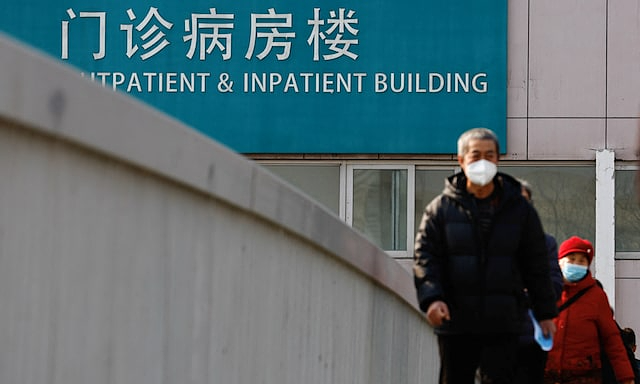
People walk on an overpass near a hospital in Beijing, China, Feb. 16, 2023. Photo by Reuters |
Online comparisons have further fueled interest. Social media users note that routine heart examinations in China can cost around US$75, compared with US$10,000 to US$20,000 without insurance in the U.S.
Emergency medical visits, including ambulance transport, blood tests and treatment, may cost about US$144 in China, while ambulance rides alone in the U.S. can reach thousands of dollars. Even basic services such as X-rays, priced at roughly US$19, have shocked foreign visitors.
Long waiting times in publicly funded systems are another recurring theme. Some users in the U.K. and Canada described delays of weeks or months for scans, consultations and follow-up care.
Beyond affordability, some patients are traveling to China for specialized procedures.
In January, a Chinese-Canadian physician identified as Kevin brought his 10-year-old daughter to Shanghai to treat a pancreatic condition. After consulting doctors in Canada, the U.S. and Japan, he said surgeons abroad recommended removing both the tumor and the child’s spleen.
Seeking a spleen-preserving option, Kevin turned to Shanghai’s Ruijin Hospital, where surgeons successfully retained the organ during an operation on Jan. 10. The child recovered well and was discharged soon afterward. The family paid about 160,000 yuan, or US$23,000, which Kevin described as acceptable given the outcome, Yicai reported.
Hospital officials say dental care, ophthalmology and traditional Chinese medicine therapies such as acupuncture and massage are among the most popular services sought by foreign patients. A senior manager at a Shanghai hospital said international visits have risen sharply in recent years but stressed that foreigners still make up a small share of total patients.
According to China’s National Health Commission, international departments at major hospitals recorded 1.28 million foreign patient visits in 2025, up 73.6% from three years earlier. By contrast, hospitals nationwide handled a combined 10 billion visits during the same period, meaning most care continues to go to domestic patients.

Comments are closed.