
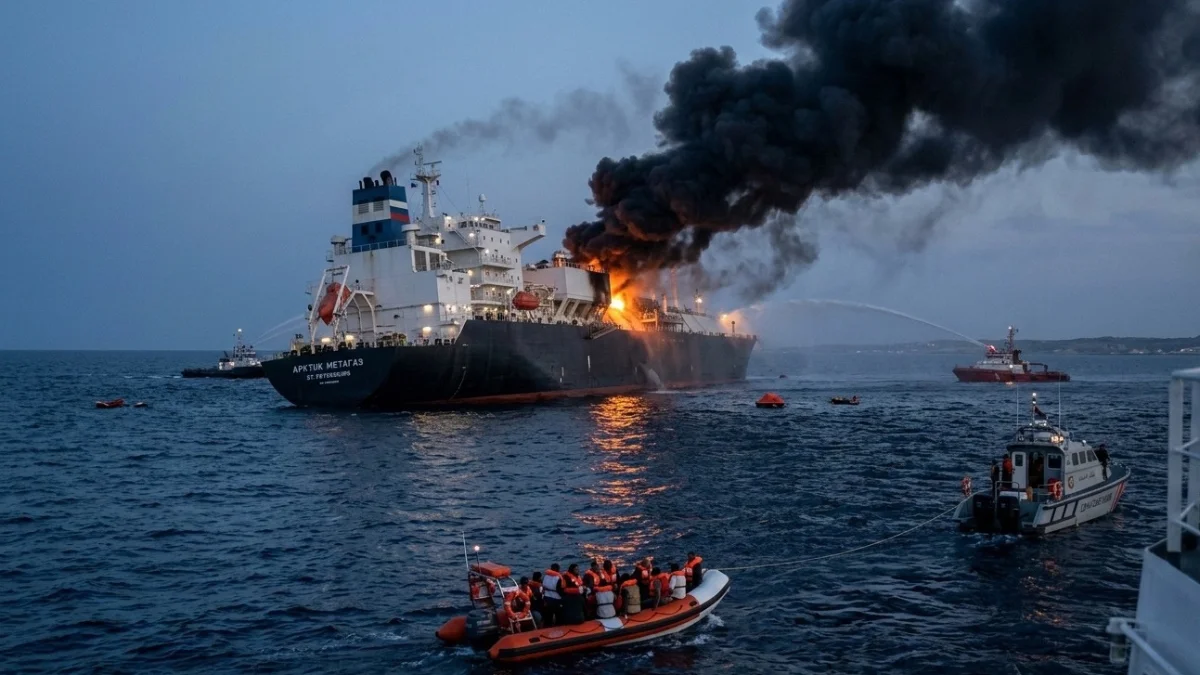

A Russian liquefied natural gas tanker sank in the Mediterranean Sea this week after a series of explosions and a large fire onboard, prompting strong accusations from Moscow against Ukraine. The vessel, named Arctic Metagaz, went down in waters between Libya and Malta after the incident occurred earlier this week.
According to Libyan maritime authorities, the tanker experienced “sudden explosions followed by a massive fire” before eventually sinking. The ship was located around 240 kilometers off the Libyan city of Sirte at the time of the incident.
Russian officials quickly blamed Ukraine for the attack. Russia’s Transport Ministry said the vessel had been targeted by Ukrainian naval drones that were reportedly launched from the Libyan coast.
President Vladimir Putin described the incident as a “terrorist attack” and said it could worsen tensions and instability in global energy markets. The tanker had been transporting tens of thousands of tonnes of liquefied natural gas from the Russian Arctic region before the incident occurred.
Despite the scale of the explosion and fire, all 30 crew members were rescued safely. Libyan authorities said the sailors were found in lifeboats and later transferred to another vessel heading toward the port city of Benghazi.
Ukrainian officials have not confirmed the allegations and did not immediately respond to the accusations from Moscow. Without independent verification, the exact cause of the explosions remains unclear.
The incident comes at a time when maritime security has become increasingly important in the wider conflict between Russia and Ukraine. In recent years, unmanned sea drones have been used in several attacks on vessels linked to Russia, particularly in the Black Sea region.
The tanker itself was reportedly under Western sanctions and has been linked to Russia’s so-called “shadow fleet,” a network of ships used to transport energy exports despite restrictions imposed by the United States and the European Union.
Beyond the immediate damage, the episode highlights the growing risks to energy infrastructure and shipping routes connected to the conflict. With energy supplies already shaped by sanctions and geopolitical tensions, incidents at sea could further complicate the global gas trade and maritime security environment.

Comments are closed.