
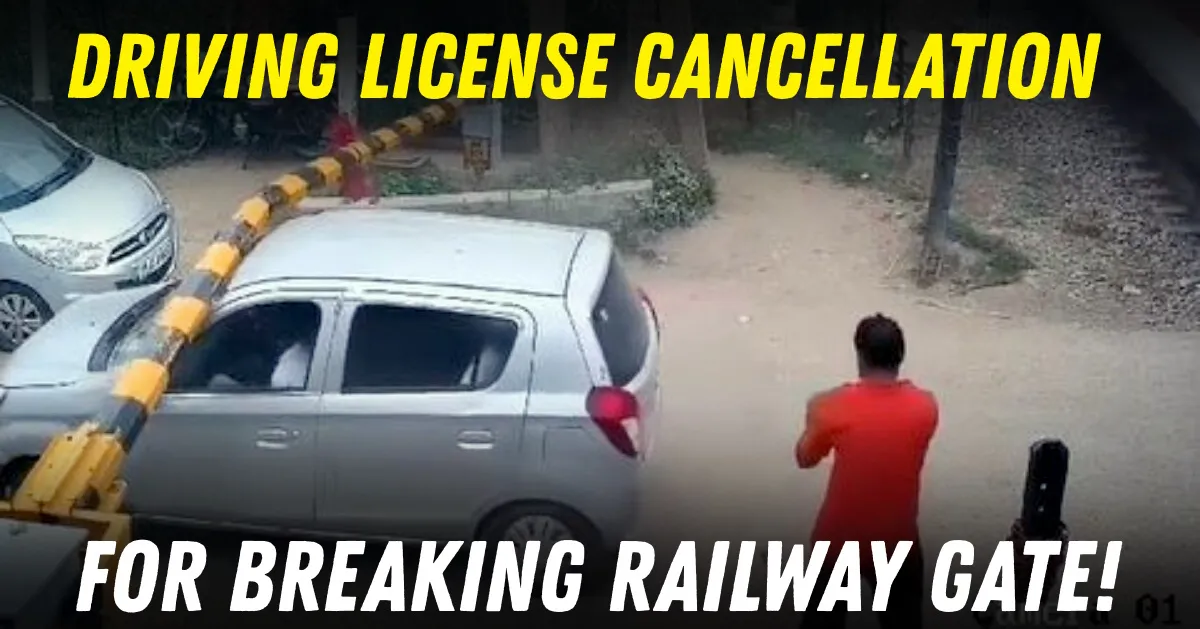

The South Western Railway zone has issued a clear warning: drive into a railway level crossing gate and face suspension or outright cancellation of your driving licence. The caution follows a pattern of incidents where vehicle drivers have rammed through closed level crossing barriers rather than waiting for a train to pass. Railway officials have stated that they will pursue action through the Motor Vehicles Act against offenders, in coordination with the Regional Transport Office.
This is not an idle threat. Under the Railways Act 1989, breaking a level crossing gate is a criminal offence punishable with up to five years of imprisonment. Crossing an unmanned level crossing negligently carries a separate penalty of up to one year.
The Motor Vehicles Act layer adds a driving licence dimension that many offenders have historically not faced, because the two enforcement agencies, railways and road transport authorities, rarely coordinated their follow-up action. That is what is changing now.
Level crossings are among the deadliest locations in the country’s transport network. According to Railway Ministry data, there were 2,263 manned level crossings and over 10,000 unmanned level crossings on the Indian rail network as recently as 2023.
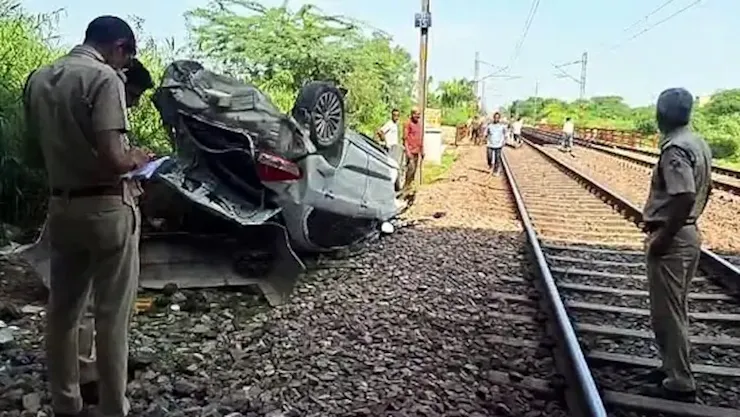
Accidents at unmanned level crossings have historically accounted for a large share of rail-related road deaths, with the National Crime Records Bureau reporting over 3,000 deaths annually at railway crossings across a recent five-year period.
Of these, a significant proportion involved vehicles either ignoring signals or physically breaking through barriers. The South Western Railway zone alone, which covers Karnataka, parts of Andhra Pradesh, and Tamil Nadu, operates hundreds of such crossings across its network.
The behaviour is not restricted to any one region. Across the country, video footage of vehicles forcing through closed level crossing barriers, sometimes seconds before a train arrives, is a regular feature of social media.
The reasons vary: impatience, the belief that a slow goods train leaves enough time to cross, overconfidence, and in some cases, genuine frustration with gates that are closed far in advance of a train passing.
Level crossing accidents remain one of the most preventable categories of rail fatalities. When a vehicle hits a barrier, it can also destabilise the gate mechanism, which in some configurations triggers safety signals up the track. In the worst cases, damaged barriers or debris on the track have caused train derailments. A single accident at a busy crossing can disrupt train operations across an entire section for hours.
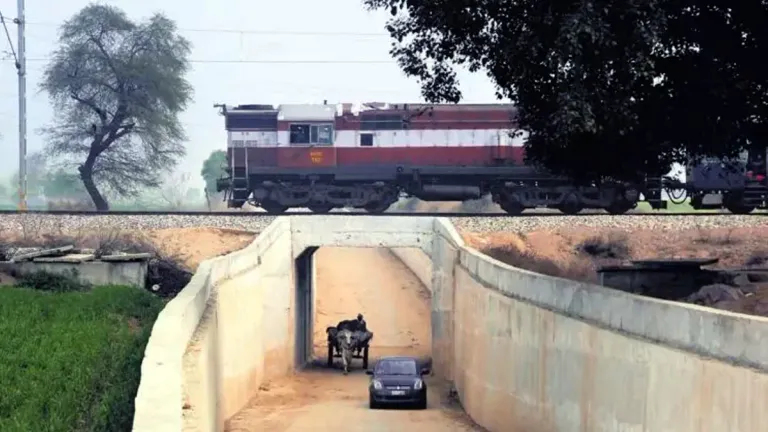
The Railways has been working to eliminate manned level crossings altogether rather than simply policing them. The Railway Board has directed all zones to expedite automatic gate closure systems at 1,228 level crossings, with a target completion deadline of June 2026.
Between 2014 and 2024, Indian Railways eliminated over 23,000 level crossings through construction of road over bridges, road under bridges, and limited-use subways. Despite this, thousands of crossings remain active, and the pace of construction of replacement infrastructure has not kept up with the original elimination targets.
A longer-term plan to eliminate all remaining level crossings by 2030 is in place, but it depends on budget allocations, land acquisition, and state government coordination on road-side infrastructure, none of which moves at uniform speed across the country.
Until that infrastructure is fully in place, the level crossing gate remains a friction point between road users and rail operations. The licence cancellation warning is the Railways’ way of signalling that it will use the tools available now, rather than waiting for the infrastructure upgrade to arrive. For drivers, a few minutes of waiting at a gate is not worth a criminal case, a derailed train, and the loss of a licence.
Comments are closed.